
Lasting joint pain relief isn’t about blaming one food group like nightshades; it’s about systematically recalibrating your body’s entire inflammatory ecosystem.
- Chronic inflammation is often fueled by hidden factors, including an imbalanced Omega-6 to Omega-3 ratio and poor sleep hygiene.
- Identifying your personal food sensitivities requires a structured elimination diet, not guesswork.
Recommendation: Begin a methodical elimination and reintroduction protocol to pinpoint your specific triggers and build a truly personalized anti-inflammatory diet.
That deep, persistent ache in your joints can feel like a constant, unwelcome companion. If you’re living with arthritis, you’ve likely heard the advice to avoid certain foods, with the nightshade family—tomatoes, peppers, potatoes, and eggplant—often singled out as the primary culprits. You may have tried cutting them out with mixed or temporary results, leaving you frustrated and wondering what to do next. This common advice, while well-intentioned, often misses the bigger picture.
What if the issue isn’t just one food group? What if your joint pain is a symptom of a larger, more complex inflammatory ecosystem within your body? True and lasting relief doesn’t come from simply demonizing a list of foods, but from understanding and methodically addressing the root causes of inflammation. This guide, from the perspective of an integrative rheumatologist, shifts the focus from a ‘good vs. bad’ food list to a process of systematic recalibration. It’s about discovering your own bio-individuality and empowering you with the tools to cool inflammation from the inside out.
We will explore the foundational pillars of an anti-inflammatory lifestyle that go far beyond nightshades. We’ll examine the critical balance of dietary fats, the profound impact of hydration, the link between sleep and pain, and most importantly, a safe and effective way to identify your personal food triggers. By the end, you will have a clear, actionable roadmap to reclaim comfort and mobility.
Summary: Your Comprehensive Guide to an Anti-Inflammatory Diet for Arthritis
- Why Your Omega-6 Intake Is Probably Too High and Causing Inflammation?
- How to Calculate Your Exact Water Needs Based on Body Weight?
- Turmeric or Ibuprofen: Which Is Safer for Long-Term Pain Management?
- The Breakfast Mistake That Causes an Energy Crash at 11 AM
- When to Stop Eating Before Bed to Prevent Acid Reflux?
- How to Conduct an Elimination Diet to Pinpoint Sensitivities?
- The Coffee Mistake at 3 PM That Ruins Your Deep Sleep Phase
- Why Quinoa Is Superior to Rice for Vegan Protein Intake?
Why Your Omega-6 Intake Is Probably Too High and Causing Inflammation?
Before we even discuss specific vegetables, we must address one of the most significant, yet often overlooked, drivers of chronic inflammation: the imbalance between omega-6 and omega-3 fatty acids. These two types of fats send opposing signals in your body. Omega-3s are anti-inflammatory, helping to soothe and repair, while an excess of omega-6s can promote a pro-inflammatory state. The ideal balance is crucial for joint health, but modern diets have skewed this dramatically. In fact, research shows that most Americans consume an omega-6 to omega-3 ratio of 16:1 or higher, when a healthier ratio is closer to 4:1.
This hidden imbalance, largely driven by the prevalence of processed vegetable oils like corn, sunflower, and soybean oil in packaged foods and restaurant meals, creates a constant, low-grade inflammatory background noise in your body. This can amplify the pain and stiffness from arthritis. The good news is that you can actively work to correct this balance. It’s not about eliminating all omega-6s, but about consciously reducing the processed sources while actively increasing your intake of powerful omega-3s.
To begin recalibrating your nutrient signaling, focus on these simple swaps:
- Replace vegetable oils (sunflower, corn, canola) with olive oil or avocado oil for cooking.
- Choose grass-fed beef over grain-fed beef, as it contains higher levels of omega-3s.
- Add fatty fish like salmon and sardines to your diet at least twice a week.
- Include a daily portion of walnuts, flaxseed, or chia seeds in your smoothies or on your yogurt.
- Reduce consumption of processed foods, which often contain hidden soybean oil.
The Power of Omega-3s in Clinical Trials
The impact of this rebalancing is not just theoretical. A major meta-analysis of 17 randomized controlled trials provided powerful evidence. It found that patients with inflammatory joint conditions who supplemented with omega-3s for 3-4 months experienced a significant reduction in joint pain intensity, morning stiffness, and their need for NSAID pain relievers. This highlights how correcting this foundational imbalance can yield tangible relief.
How to Calculate Your Exact Water Needs Based on Body Weight?
Hydration is a cornerstone of joint health, yet its importance is frequently underestimated. Your cartilage, the smooth, cushioning tissue at the ends of your bones, is composed of approximately 80% water. When you are dehydrated, your body can pull water from cartilage and other tissues, reducing its ability to absorb shock and leading to increased friction and pain. Proper hydration ensures your synovial fluid, the natural lubricant in your joints, remains viscous and effective, allowing for smoother, less painful movement. Maintaining this metabolic integrity is a simple but powerful anti-inflammatory strategy.

However, the generic advice to “drink eight glasses a day” doesn’t account for individual differences in body weight, activity level, or specific health goals like detoxification during a diet change. To optimize your joint health, you need a more personalized approach. A simple calculation can give you a much more accurate baseline for your daily water needs, which you can then adjust based on your daily activities.
Here is a precise protocol to determine and manage your hydration levels for better joint function:
- Calculate Your Baseline: Multiply your body weight in pounds by 0.67. The result is the number of ounces of water you need to drink daily. (e.g., a 150 lb person needs approximately 100 oz of water).
- Adjust for Activity: Add 12 oz of water for every 30 minutes of exercise or physical therapy you complete.
- Support Detoxification: When starting an elimination diet (like removing nightshades), increase your daily intake by an additional 16-24 oz to help your kidneys flush out metabolic byproducts.
- Monitor Your Progress: The color of your urine is an excellent indicator. It should be a pale, straw-like yellow. Dark yellow indicates a need for more water.
- Track Your Symptoms: Keep a simple log of your joint stiffness levels in the morning and evening, alongside your water intake, to see how improved hydration impacts your symptoms.
Turmeric or Ibuprofen: Which Is Safer for Long-Term Pain Management?
When a flare-up strikes, the immediate instinct is to reach for a pain reliever. For many, this means an over-the-counter nonsteroidal anti-inflammatory drug (NSAID) like ibuprofen. While effective for short-term relief, long-term, consistent use of NSAIDs carries well-documented risks, including gastrointestinal bleeding, ulcers, and kidney issues. This has led many to seek safer, more natural alternatives for managing chronic inflammation, with turmeric (and its active compound, curcumin) emerging as a leading contender.
The question then becomes: can a natural spice truly compare to a pharmaceutical drug? The evidence is surprisingly compelling. As the Arthritis Foundation highlights, the science backs up this natural approach.
A 2021 review of 15 randomized controlled trials found curcumin relieved OA pain and stiffness as well or better than NSAIDs like ibuprofen and celecoxib – minus potentially serious side effects
– Arthritis Foundation, Arthritis Foundation Review on Turmeric and Curcumin
While curcumin offers a safer long-term profile, it’s crucial to understand the trade-offs. Ibuprofen acts quickly, while curcumin’s benefits build up over several weeks. Furthermore, curcumin is not easily absorbed by the body on its own and requires a bioavailability enhancer, like black pepper (piperine) or formulation into a specialized supplement, to be effective. The following table provides a clear comparison to help you make an informed decision for your pain management strategy.
| Aspect | Curcumin (500mg 2x daily) | Ibuprofen (400mg 2x daily) |
|---|---|---|
| Pain Relief Effectiveness | Similar to NSAIDs | Established effectiveness |
| Gastrointestinal Side Effects | Minimal to none | Common (dyspepsia, ulceration risk) |
| Time to Effect | 2-4 weeks | 30-60 minutes |
| Long-term Safety | Safe up to 8g/day for 3 months | Risk of GI bleeding, kidney issues |
| Bioavailability Enhancement | Requires black pepper or special formulation | Not required |
The Breakfast Mistake That Causes an Energy Crash at 11 AM
How you start your day sets the tone for your body’s inflammatory response for hours to come. A common breakfast mistake is focusing on high-glycemic, simple carbohydrates—think white toast, sugary cereals, or even a potato-heavy hash. While these provide a quick burst of energy, they also cause a rapid spike in blood sugar, followed by a significant crash. This rollercoaster effect not only leaves you feeling sluggish and foggy-headed by mid-morning but also promotes inflammation throughout your body. Maintaining stable blood sugar is a key part of managing your metabolic integrity and keeping inflammation in check.
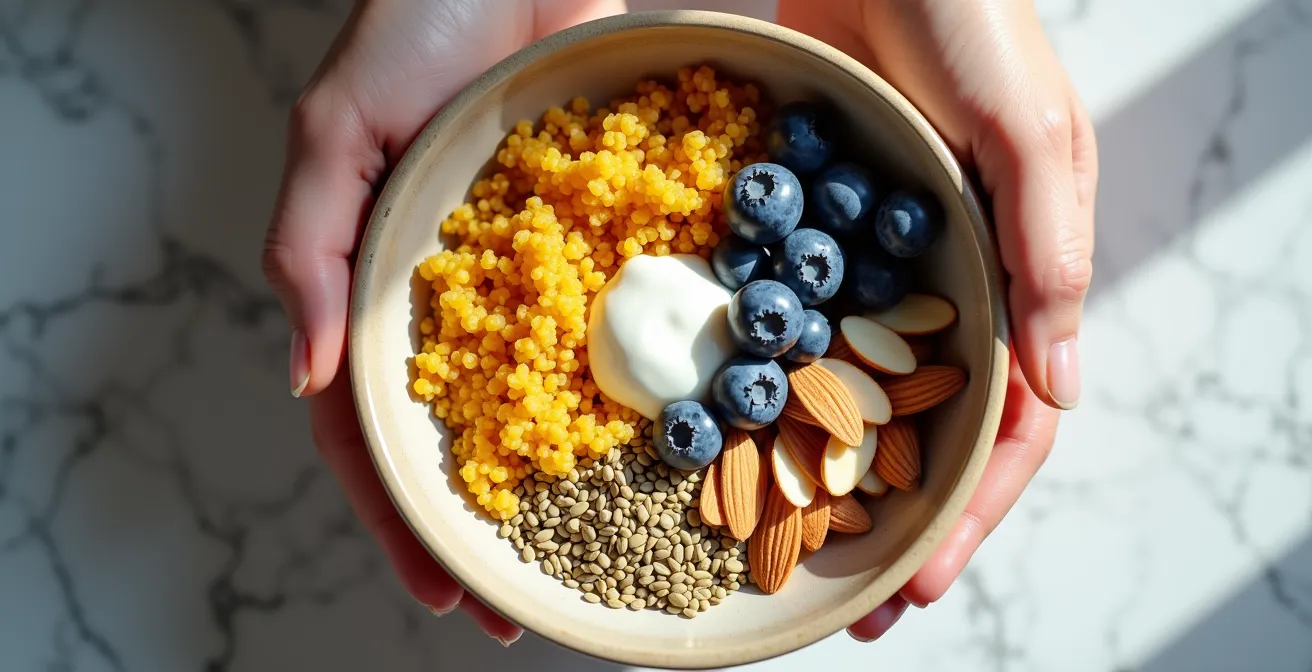
The solution is to build a breakfast that combines high-quality protein, healthy fats, and complex, fiber-rich carbohydrates. This combination slows down digestion, stabilizes blood sugar levels, and provides sustained energy, all while delivering anti-inflammatory compounds. If you are sensitive to nightshades, it’s easy to create delicious and nourishing breakfasts that avoid common triggers like potatoes and tomatoes, without sacrificing flavor or satisfaction.
Adopt this nightshade-free, anti-inflammatory breakfast protocol to start your day strong:
- Replace potato hash with a flavorful sweet potato or cauliflower hash.
- Swap tomato-based sauces or salsas with creamy avocado or fresh herb-based pestos.
- Include 20-30g of protein from sources like eggs, Greek yogurt (if dairy is tolerated), or high-quality plant-based protein powder.
- Add omega-3 rich foods like ground flaxseed, chia seeds, or walnuts to your oats or yogurt.
- Pair with complex carbohydrates like steel-cut oats or quinoa instead of white toast or processed cereals.
- Incorporate anti-inflammatory spices like turmeric, ginger, and cinnamon into your meal.
When to Stop Eating Before Bed to Prevent Acid Reflux?
The connection between what you eat and your joint pain isn’t limited to daytime meals. Your evening habits can have a profound, often overlooked, impact on your morning stiffness and overall inflammation. One of the primary culprits is acid reflux, which can be triggered or worsened by eating too close to bedtime. When you lie down with a full stomach, it’s easier for stomach acid to travel back up into the esophagus, causing the familiar burning sensation of heartburn. For some, especially those sensitive to acidic foods like tomatoes (a common nightshade), this can be a significant issue.
What many people don’t realize is that reflux can trigger systemic inflammation. A more insidious form, known as laryngopharyngeal reflux (LPR) or “silent reflux,” can occur without obvious heartburn. In this case, aerosolized stomach acid can travel up to the throat and even enter the bloodstream through the delicate tissues there. This event can trigger a low-grade, body-wide inflammatory response, potentially worsening joint pain and contributing to that feeling of being stiff and sore upon waking.
To prevent this inflammatory cascade, timing your last meal is crucial. The simple rule is to create a sufficient buffer between eating and sleeping. The general recommendation is to stop eating at least 3 hours before you lie down for bed. This gives your stomach ample time to empty its contents into the small intestine, dramatically reducing the risk of both classic and silent reflux. This single habit change can lead to better sleep, less morning stiffness, and a calmer inflammatory state overall.
How to Conduct an Elimination Diet to Pinpoint Sensitivities?
While general advice is helpful, the most powerful tool for reducing diet-related inflammation is discovering your own unique triggers. This is where the concept of bio-individuality comes into play: a food that causes a flare-up in one person may be perfectly fine for another. A systematic elimination diet is the gold standard for uncovering these personal sensitivities. It’s not about long-term restriction, but rather a short-term diagnostic tool to give you clear answers.
The process involves two main phases: an elimination phase, where you remove a group of common inflammatory foods (including nightshades, gluten, and dairy) for a set period, and a reintroduction phase, where you add them back one by one to observe your body’s reaction. This methodical approach allows you to isolate which specific foods, if any, are contributing to your symptoms. A detailed journal tracking your pain levels, stiffness, sleep quality, and mood during this process is essential for accurate results.
An elimination diet should be approached with a clear plan. Following a structured protocol ensures you gather reliable data about your body’s responses in a safe and controlled manner.
Your 5-Week Elimination Diet Action Plan
- Weeks 1-2 (Elimination): Remove ALL nightshades (tomatoes, potatoes, peppers, eggplant), plus other common inflammatory triggers like gluten and dairy from your diet completely.
- Weeks 3-4 (Observation): Continue the full elimination. During this time, diligently track your symptoms daily: pain levels (on a 1-10 scale), duration of morning stiffness, sleep quality, and overall mood.
- Week 5 (Reintroduction – Test 1): Reintroduce a single nightshade. Start with a small amount of a cooked, peeled tomato. Note any reaction.
- Days 2-3 of Test 1: If no reaction occurs, gradually increase the portion size of the cooked, peeled tomato. Continue to monitor symptoms closely.
- Wait and Repeat: After testing the first food, wait a full 3 days before introducing a different nightshade (e.g., a bell pepper). Document any reaction that occurs within 72 hours of each reintroduction.
The Coffee Mistake at 3 PM That Ruins Your Deep Sleep Phase
Quality sleep is one of the most powerful anti-inflammatory tools at your disposal, yet it’s often sabotaged by a simple afternoon habit: a late-day coffee. While that 3 PM caffeine boost might seem necessary to get through the afternoon, it can have a devastating effect on your sleep architecture, specifically your deep sleep phase. Deep sleep is when your body performs most of its critical repair work, reduces inflammation, and consolidates memories. Disrupting this phase means you wake up feeling unrefreshed and with a heightened state of inflammation, which can directly translate to more joint pain.
Caffeine has a half-life of about 5-6 hours, meaning that half the caffeine from your 3 PM coffee is still circulating in your system at 8 or 9 PM. This is often enough to prevent you from entering and sustaining the deep, restorative stages of sleep, even if you don’t have trouble falling asleep. This lack of restorative sleep creates a vicious cycle: poor sleep increases inflammation, which increases pain, which in turn makes it harder to sleep well. It’s a cycle that must be broken to achieve long-term relief.
Alkaloids in nightshade vegetables promote inflammation and worsen symptoms in people with autoimmune inflammatory disorders
– Leslie Beck, RD, Clinical Nutrition Analysis
Just as the alkaloids in nightshades can be a trigger for some, the alkaloids in coffee, particularly when consumed late in the day, act as a trigger for poor sleep and subsequent inflammation for nearly everyone. To protect your deep sleep, it’s wise to establish a firm caffeine curfew. As a general rule, avoid all caffeinated beverages after 2 PM. This gives your body enough time to metabolize the caffeine so it doesn’t interfere with your body’s essential nighttime repair processes.
Key Takeaways
- Joint pain is often a symptom of a systemic “inflammatory ecosystem,” influenced by more than just nightshades.
- Balancing your omega-6 to omega-3 fat ratio is a foundational step to reducing chronic, low-grade inflammation.
- A structured elimination diet is the most reliable method for identifying your unique food sensitivities and personalizing your diet.
Why Quinoa Is Superior to Rice for Vegan Protein Intake?
As you begin to modify your diet, particularly if you are removing staples like potatoes due to nightshade sensitivity, it’s essential to replace them with foods that are not only safe but nutritionally superior. Quinoa stands out as an exceptional choice, especially when compared to a common staple like white rice. While rice can be a good source of carbohydrates, quinoa offers a much more complete nutritional package that actively supports your body’s fight against inflammation and aids in tissue repair.
Unlike rice and most other plant-based foods, quinoa is a complete protein, meaning it contains all nine essential amino acids your body needs to build and repair tissues, including the cartilage and supportive structures around your joints. This is particularly vital for those on a vegan or plant-forward diet. Furthermore, quinoa is rich in anti-inflammatory compounds, including flavonoids like quercetin and kaempferol, and it provides a good source of fiber and minerals like magnesium, which plays a role in muscle and nerve function.
Case Study: Quinoa as a Functional Potato Alternative
The benefit of this swap is supported by expert analysis. Research from Arthritis Society Canada confirms that while nightshades like potatoes are not a problem for most arthritis patients, some individuals do report significant symptom improvement when they make specific swaps. Replacing potatoes with quinoa is a prime example. This switch provides the complete protein necessary for tissue repair and a host of anti-inflammatory compounds, all without the alkaloid content found in nightshades that may trigger symptoms in sensitive individuals.
Making the transition is simple. You can use quinoa as a base for breakfast bowls, substitute it for rice in stir-fries, or use it in salads. To enhance its benefits, rinse it thoroughly before cooking to remove its natural bitter coating (saponins) and consider cooking it in a nutrient-rich bone broth or vegetable broth instead of plain water.
To truly understand your body and begin your path to relief, the most logical next step is to embark on your own guided elimination journey. By systematically identifying your triggers, you can build a diet that calms inflammation and truly supports your long-term health and mobility.
Frequently Asked Questions About Nightshades and Arthritis
How long before bed should I stop eating to prevent reflux?
Stop eating at least 3 hours before bedtime to allow proper digestion and reduce reflux risk that can worsen inflammation.
Which nightshades are most likely to trigger nighttime reflux?
Tomatoes and tomato-based sauces are the most acidic nightshades, followed by hot peppers and paprika-seasoned foods.
Can reflux from nightshades cause morning joint stiffness?
Silent reflux (LPR) can trigger systemic inflammation through aerosolized stomach acid entering the bloodstream, potentially worsening morning joint stiffness.