
The fear of cultural appropriation often leads to travelers creating distance, when the real solution is intentional, reciprocal engagement.
- True respect isn’t a checklist of rules, but a mindset focused on understanding the “why” behind cultural practices.
- Small efforts, like learning vulnerable phrases or choosing a homestay, create disproportionately positive impacts and deeper connections.
Recommendation: Shift your focus from being a passive observer to an active participant who prioritizes human connection and economic support before personal experience.
The anxiety is familiar to any conscious traveler: a knot in the stomach as you raise your camera, a hesitation before entering a sacred space, a creeping fear that your presence is more disruptive than appreciative. You want to connect, to understand, to participate, but you’re terrified of being “that tourist”—the one who gets it wrong, offends a host, and turns a sacred tradition into a superficial Instagram post. This fear of committing cultural appropriation is valid, but it often leads to the wrong solution: withdrawal. We stay in our tourist bubbles, observing from a safe distance, and miss the very connection we came to find.
Many guides offer simple checklists: learn “hello,” dress modestly, ask for permission. While well-intentioned, this advice treats culture like a museum with a set of rules for not touching the exhibits. It misses the fundamental point. Genuine cultural exchange is not about avoiding mistakes; it’s about the intention behind your actions. It’s about recognizing that local communities are not a backdrop for your vacation, but living, breathing societies you have the privilege to momentarily join.
But what if the key wasn’t a longer list of rules, but a fundamental shift in mindset? What if, instead of focusing on what *not* to do, we focused on *how* to engage with reciprocity and humility? This guide moves beyond the platitudes. It offers a framework for transforming your interactions from transactional to relational. We’ll explore how simple choices—from the words you learn to where you lay your head at night—can either reinforce tourist barriers or build bridges of genuine understanding. By shifting your perspective, you can move from a place of fear to one of confident, respectful engagement.
This article provides a practical framework for navigating these complex interactions with confidence and respect. Below, we’ll explore specific scenarios, from dining etiquette to photography, to help you foster genuine connections on your travels.
Summary: A Guide to Ethical Cultural Engagement
- Why Learning Just 20 Words Can Change How Locals Treat You?
- Homestay or Boutique Hotel: Which Supports the Local Economy More?
- The Privacy Mistake Tourists Make When Photographing Street Vendors
- How to Eat With Your Hands in India Without Offending Your Hosts?
- When Is Tipping Considered an Insult Instead of a Reward?
- The Respect Mistake: How to Fuse Cuisines Without Insulting Tradition?
- How to Move Beyond “Tourist Bubbles” Without Being Intrusive?
- How to Travel the World Without Destroying It?
Why Learning Just 20 Words Can Change How Locals Treat You?
The standard travel advice to “learn the local language” often stops at “hello,” “goodbye,” and “thank you.” While polite, these words merely signal you are a tourist. The true transformation in how you are perceived happens when you embrace vulnerability. Learning phrases like “I am learning,” “This is new to me,” or “Can you help me?” does something powerful: it changes the dynamic from a simple transaction to a human interaction. You are no longer just a customer, but a person making a genuine effort to connect, and this effort is often met with warmth and encouragement.
This isn’t just a feeling; it’s a widely shared experience among travelers. In fact, recent tourism statistics reveal that 84% of travelers believe learning a local language is important, with over half wanting to live like a local rather than a tourist. The goal isn’t fluency, but demonstrating intentionality. When you stumble through the pronunciation of a local dish or a place name, you show respect for the culture that is hosting you. This small act of humility can open doors to conversations, shared laughter, and experiences that remain inaccessible to those who stay within the comfort of their native tongue.
The key is to move beyond transactional vocabulary. Instead of just learning how to order a coffee, learn how to compliment the person who made it. Learn the words for “delicious,” or a specific phrase of gratitude for hospitality. This small vocabulary of connection, perhaps no more than 20 thoughtful words and phrases, acts as a bridge, signaling that you see your hosts not as service providers, but as people.
Homestay or Boutique Hotel: Which Supports the Local Economy More?
Your choice of accommodation is one of the most significant economic decisions you make as a traveler. While a chic, locally-themed boutique hotel may feel like a responsible choice compared to a large international chain, the financial reality is often more complex. A homestay, where you rent a room in a local family’s home, channels your money directly into the household. This income supports the family’s daily needs, from groceries bought at the neighborhood market to school fees for their children, creating a powerful, localized economic footprint.
In contrast, even a locally-owned boutique hotel has a more diffuse economic impact. While it creates jobs, a significant portion of its revenue may go to non-local suppliers for things like linens, high-end food items, or marketing services. A homestay’s supply chain is almost hyper-local by default. This distinction is crucial for travelers seeking to maximize their positive impact. Community-based tourism initiatives where visitors stay with local families often generate significantly more direct economic benefit to communities compared to traditional hotel models.
This table illustrates the fundamental differences in how your money flows through the local economy depending on your choice.
| Factor | Homestay | Boutique Hotel |
|---|---|---|
| Direct Income to Locals | 100% to host family | Varies (20-80% if locally owned) |
| Supply Chain Impact | Usually local markets | Can source locally or import |
| Employment Generation | 1-2 family members | 5-15 local staff typically |
| Cultural Exchange | High – direct interaction | Moderate – structured interactions |
| Infrastructure Pressure | Minimal | Higher utility usage |
Ultimately, choosing a homestay is an act of reciprocal engagement. You receive an unparalleled authentic experience and a deeper cultural understanding, while the host family receives the full economic benefit of your stay. It transforms accommodation from a simple service into a meaningful exchange that supports the community from the ground up.
The Privacy Mistake Tourists Make When Photographing Street Vendors
A bustling market, with its vibrant colors and expressive faces, is a photographer’s dream. Yet, it’s also a minefield of ethical blunders. The most common mistake is treating vendors and artisans as part of the scenery—objects to be captured. A telephoto lens, used to snatch a “candid” shot from a distance, creates an uncomfortable dynamic of observation without consent. It turns a human being and their livelihood into an aesthetic for your travel album. A more respectful approach reframes the entire situation from a photo opportunity to a human interaction.
Before you even think about your camera, approach the stall with the intention of being a customer. Show interest in the crafts, ask a question, or make a small purchase. This simple act establishes a foundation of respect and acknowledges the person’s work. Once a connection is made, asking for a photo feels like a natural extension of a positive interaction, rather than a demand. This shifts the focus from a transaction (I give you nothing and take your picture) to an interaction (we connect, and a photo may be part of that).
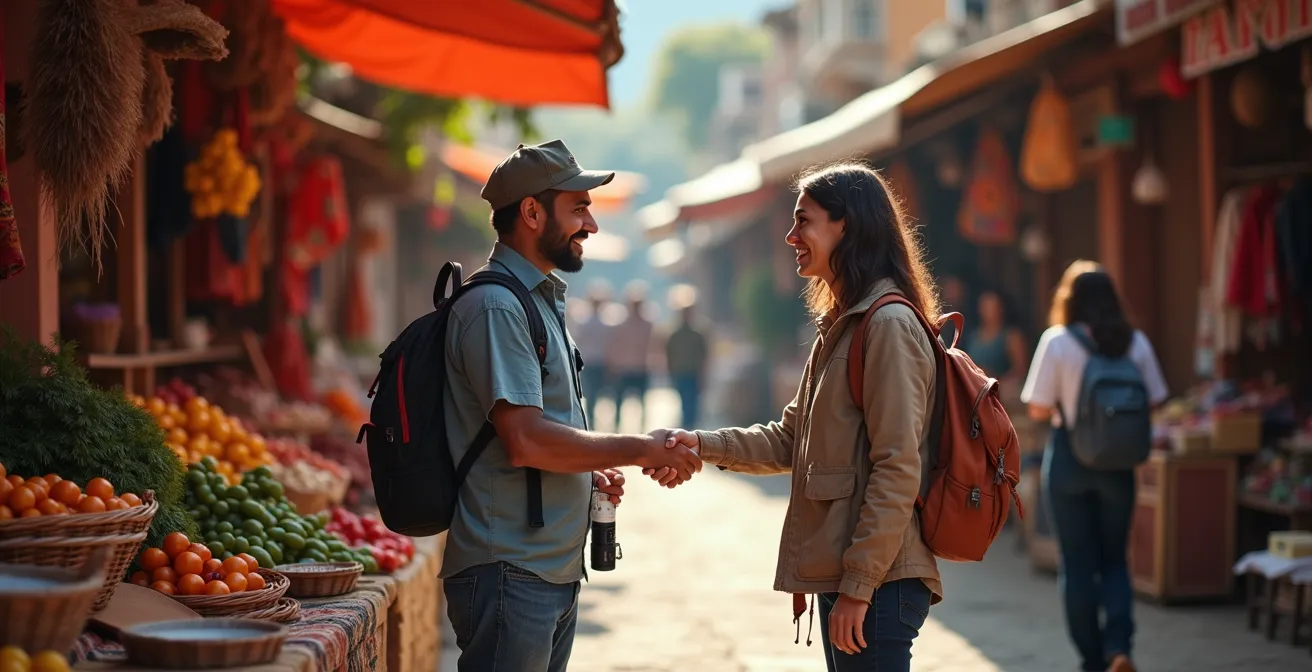
As the image above illustrates, the most meaningful exchanges happen when the camera is put away, and the focus is on the person-to-person connection. The goal is to receive enthusiastic consent, not just reluctant permission. A nod or a shrug may mean “yes,” but it could also signal discomfort. Look for a genuine smile and positive body language. After taking a photo, always show it to them. This simple act of sharing reinforces the reciprocal nature of the exchange and gives them a chance to see how they are portrayed.
How to Eat With Your Hands in India Without Offending Your Hosts?
Sharing a meal is one of the most universal forms of cultural connection, but the etiquette surrounding it can be deeply nuanced. In many parts of the world, including India, the Middle East, and parts of Africa, eating with one’s hands is the norm. For a traveler, participating is a powerful sign of respect, but doing it incorrectly can cause unintended offense. The single most important rule is the distinction between the right and left hands. In these cultures, the left hand is traditionally reserved for personal hygiene, making it taboo to use it for eating, passing food, or even gesturing at the table. Always use your right hand exclusively.
Beyond this crucial rule, the key is observation and mimicry. Before you dig in, watch your hosts. How do they use their fingers to mix rice and curry? Typically, only the fingertips are used, and the food should not pass the first knuckle. They will form a small, neat parcel of food and use their thumb to push it into their mouth. Don’t rush. Mirror their pace and the size of their portions. Your initial attempts may be clumsy, and that’s perfectly okay. The effort is what matters most.
Research confirms that this effort yields tangible results. A study on cultural dining found that tourists who attempt traditional eating methods, even imperfectly, report 40% more positive interactions with local hosts. A smile and a self-deprecating comment like, “I’m still learning!” can turn a moment of awkwardness into one of shared laughter and connection. Your hosts will almost certainly appreciate your willingness to step out of your comfort zone and embrace their way of life, often leading to more guidance and deeper conversation.
When Is Tipping Considered an Insult Instead of a Reward?
In many Western cultures, tipping is an expected and appreciated way to show gratitude for good service. Applying this custom globally, however, can lead to awkwardness or even genuine offense. In countries like Japan or South Korea, excellent service is considered a standard part of the job, and wages are set accordingly. Offering a tip can imply that you believe the worker’s salary is insufficient, which can be seen as an insult to both the employee and their employer. It can cause embarrassment and a flurry of polite but firm refusals.
This is not a minor cultural quirk; it’s a fundamental difference in social contracts and the perception of service work. In fact, cross-cultural hospitality studies demonstrate that 73% of service workers in non-tipping cultures report feeling uncomfortable when tourists insist on leaving a tip. They are caught between their cultural norm of refusing and the tourist’s insistence, creating a stressful situation. The traveler’s well-intentioned gesture of generosity is received as a social burden.
Before you travel, a quick search on local tipping customs is essential. In many places where tipping isn’t standard, there are other, more appropriate ways to show appreciation. A sincere verbal “thank you,” a compliment to the manager about a specific staff member, or a positive online review can be far more meaningful. The table below highlights some key differences.
| Country/Region | Tipping Custom | Alternative Appreciation |
|---|---|---|
| Japan | Considered insulting – implies inadequate wages | Bow, verbal thanks, return business |
| South Korea | Not expected, can cause embarrassment | Compliment to management, online review |
| New Zealand | Uncommon, only for exceptional service | Genuine verbal appreciation |
| China | Traditionally refused, changing in tourist areas | Small gift from home country |
| Nordic Countries | Service charge included, tipping rare | Round up bill slightly if exceptional |
The lesson here is profound: our own cultural definition of “politeness” is not universal. True respect lies in adapting to the host culture’s norms, not imposing our own, even when our intentions are good.
The Respect Mistake: How to Fuse Cuisines Without Insulting Tradition?
Food is a story, and for many cultures, traditional dishes are sacred texts. They carry the history, geography, and identity of a people. For a traveler, chef, or food blogger, being inspired by global cuisines is natural, but there’s a fine line between fusion and appropriation. The mistake is to “discover” a dish, strip it of its context, and re-brand it without acknowledging its origin. Calling a dish “inspired by” a culture while changing its core techniques and failing to credit its source is a form of erasure. It treats a deep-rooted tradition as a mere collection of flavors to be remixed.
Respectful culinary fusion, on the other hand, is an act of collaboration, even if the collaboration is with history itself. It starts with deep research and a genuine desire to understand. Why is this ingredient used? What does this dish signify? Who traditionally makes it and for what occasions? The goal is to honor the source while telling a new story. This means crediting the original dish by name, explaining its cultural significance, and being transparent about your own creative interpretation.
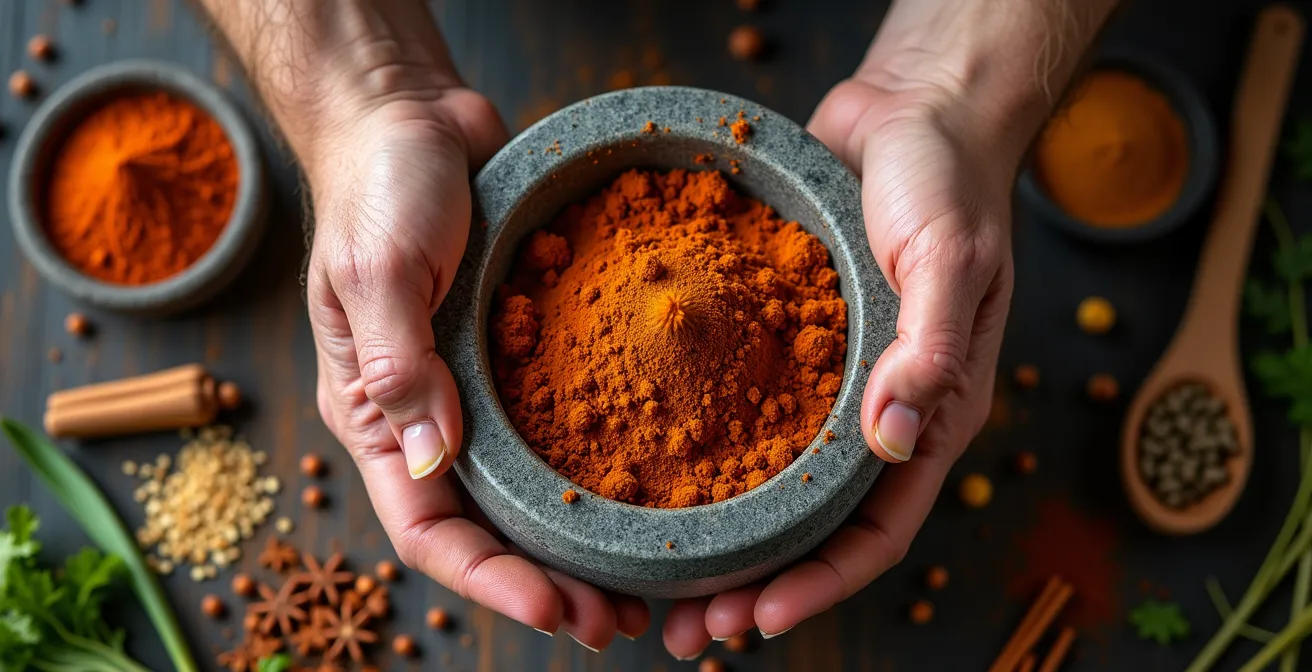
True appreciation involves celebrating the tradition, not just borrowing its appeal. It means maintaining the core flavor profiles and techniques that define the dish, even as you add your own twist. The most ethical approach involves directly collaborating with chefs from that culture, sharing recognition, and even profits. The following framework can help guide you in creating culinary fusions that celebrate rather than appropriate.
Your Action Plan for Respectful Culinary Fusion
- Research Significance: Investigate the historical and cultural importance of each dish before you adapt it.
- Credit the Source: Always name the original dish, its region, and the cultural context in your menu, blog, or social media.
- Collaborate Authentically: Partner with chefs or home cooks from the culture rather than appropriating their recipes independently.
- Maintain Core Identity: Preserve the key flavor profiles and cooking techniques that are fundamental to the dish’s character.
- Share the Story: Don’t just present the final product; narrate its journey from a traditional recipe to your unique interpretation.
By following these steps, you shift from being a consumer of culture to a respectful storyteller, ensuring that the tradition is honored and its story is amplified, not silenced.
How to Move Beyond “Tourist Bubbles” Without Being Intrusive?
Every traveler has seen them: the invisible walls that separate tourist zones from local life. The desire to step outside these “bubbles” is strong, but so is the fear of being intrusive or voyeuristic. Simply wandering into a residential neighborhood with a camera can feel like an invasion of privacy. The key to breaking out respectfully is a gradual approach built on benign presence and structured interaction. It’s about making yourself a familiar and non-threatening part of the landscape before seeking deeper connection.
Start in public or semi-public spaces where your presence is natural. Frequent the same local coffee shop each morning. Read a book on a bench in a neighborhood park. Shop at the same small market for a few days in a row. These small, repeated actions build recognition. A nod from the barista, a smile from a shopkeeper—these are the first threads of connection. You become “the visitor who reads in the park,” not just another anonymous tourist. This approach allows locals to engage on their own terms, if they choose to, without feeling pressured.
The next step is to join structured community activities. Taking a language class, a cooking course, or a craft workshop provides a formal framework for interaction. These settings are designed for cultural exchange, giving you a legitimate reason to be there and interact with locals. A study of community-based tourism programs confirmed this, showing that participants in structured activities report a 60% deeper cultural understanding compared to passive observation. These activities give the local community control over the boundaries of the interaction, ensuring the exchange is comfortable and welcome for them, transforming you from an outsider looking in to a temporary member of a shared activity.
Key Takeaways
- Respectful travel is an active mindset of reciprocal engagement, not a passive checklist of rules.
- Your economic choices, such as opting for a homestay, have a direct and powerful impact on local communities.
- Prioritize human interaction over the impulse to capture a photo; the best connections are made when the camera is away.
How to Travel the World Without Destroying It?
The ultimate goal of a conscious traveler is to leave a place as good as, or better than, they found it. This responsibility extends beyond environmental impact to the cultural and social fabric of a destination. It means recognizing that your journey doesn’t end when you board the plane home. The stories you tell, the photos you share, and the businesses you continue to support all have a lasting effect. Traveling without destroying means becoming a responsible ambassador for the places you’ve visited.
As travel and culture creators, we have a responsibility to use our platforms to amplify historically underrepresented voices and stories.
– Wanderful Anti-Oppression Toolkit, Blog post on cultural appropriation in travel
This responsibility starts with how you frame your experience. When sharing on social media or with friends, focus on stories that challenge stereotypes rather than reinforcing them. Instead of a generic photo of a “tribal” person, share the story of the contemporary artist you met and promote her online shop. Protecting vulnerable places is also crucial; think twice before geotagging a pristine, non-touristy location that could be overwhelmed by sudden popularity. Your role is to amplify and support, not to “discover” and expose.
This mindset of long-term ambassadorship means acknowledging your privilege as a traveler and using it for good. If you make a cultural mistake, own it. Share what you learned from the experience. This humility is far more powerful than pretending to be a perfect traveler. Continue to support the communities you connected with by buying from their artisans online, donating to local preservation projects, or sharing their stories in a way that gives them agency. In the end, traveling the world without destroying it is about understanding that you are a guest, and the best guests show their gratitude long after the visit is over.
To truly embrace this mindset, the next logical step is to proactively research the specific cultural norms of your next destination and begin building a small vocabulary of connection.
Frequently Asked Questions on Ethical Travel
Why is the right hand specifically important in many cultures?
In Islamic, Hindu, and many African cultures, the left hand is traditionally associated with hygiene purposes, making the right hand the only acceptable choice for eating, greeting, or exchanging items.
How do I know the proper technique for eating with hands?
Observe your host’s technique closely – typically using fingertips only, forming small portions, and never letting food pass the first knuckle. Mirror their pace and portion size.
What if I make a mistake while learning?
Most hosts appreciate genuine effort. If you err, a simple smile and ‘I’m still learning’ in the local language usually generates understanding and often helpful guidance.