The truth about “clean beauty” is that individual ingredients matter less than the integrity of the entire formula and the structural loopholes in regulations that brands exploit.
- The term “Parfum” can legally hide hundreds of unlisted chemicals, and “preservative-free” is a dangerous myth for water-based products.
- Packaging isn’t just for aesthetics; it dictates product stability, and pump bottles are often designed to waste up to 20% of the product.
Recommendation: Stop chasing short, “natural” ingredient lists and start analyzing your routine for cumulative irritants and formulation weaknesses to truly protect your skin.
You’ve been there. Standing in the aisle, turning a beautifully packaged serum over in your hands, trying to decipher the cryptic list of ingredients on the back. You’re a conscious consumer, determined to avoid toxic chemicals and deceptive marketing. You’ve been told to look for “natural” ingredients, avoid anything you can’t pronounce, and celebrate “preservative-free” labels. As a cosmetic formulator, I’m here to tell you that this advice isn’t just wrong—it’s actively steering you into the very traps you’re trying to avoid.
The beauty industry thrives on a specific kind of confusion it has created. It has taught you to fear safe, synthetic preservatives while selling you “natural” concoctions that can become breeding grounds for bacteria. It has you debating the merits of a glass jar versus a plastic tube, all while distracting you from the real question: does the packaging protect the formula from degrading into uselessness? The focus on individual ingredients is a smokescreen. True cosmetic literacy isn’t about memorizing a “good” and “bad” list.
What if the key wasn’t in the ingredients themselves, but in understanding the formulator’s intent? What if you could see past the “clean beauty” facade and recognize the structural loopholes, the chemical realities, and the profit-driven decisions that shape the product in your hands? This is about learning to think like a chemist. It’s about understanding the product as a complete system—from the choice of preservative to the type of pump used—and finally seeing the story the brand doesn’t want you to read.
This guide will deconstruct the industry’s biggest myths, section by section. We’ll explore the hidden world behind the word “fragrance,” reveal the truth about cruelty-free certifications, and explain why your ten-step routine might be doing more harm than good. Prepare to look at your bathroom shelf in a whole new light.
Summary: How to Read an Ingredient List Like a Chemist?
- Why “Parfum” on a Label Can Hide 100+ Undeclared Chemicals?
- Glass or Recycled Plastic: Which Has a Lower Carbon Footprint in Shipping?
- Leaping Bunny or PETA: Which Logo Guarantees No Animal Testing in China?
- The Mold Risk of Using “Preservative-Free” Mascara After 3 Months
- How to Scrape the Last 20% of Product Out of Pump Bottles?
- How to Sterilize Tap Water Anywhere to Avoid Buying Plastic Bottles?
- Prebiotics vs. Probiotics: Which Is Missing From Your Diet?
- Why Using 10 Products is Destroying Your Skin Barrier?
Why “Parfum” on a Label Can Hide 100+ Undeclared Chemicals?
The single word “Parfum” or “Fragrance” on an ingredient list is perhaps the most significant loophole in cosmetic regulation. Legally, it’s considered a trade secret, allowing companies to bundle a complex cocktail of scent chemicals without disclosing any of them individually. While you might imagine a simple blend of rose and sandalwood, the reality is that this term can conceal a list of over 3,000 potential chemicals. It’s a black box, and you have no way of knowing what’s inside.
The issue isn’t just the lack of transparency; it’s the potential health risks. Many of these hidden ingredients are linked to allergies, dermatitis, and respiratory distress. Worse, the industry’s own data is alarmingly incomplete; an analysis of the International Fragrance Association’s list reveals that a staggering 98% of fragrance chemicals have significant gaps in their safety data. You are essentially the guinea pig for compounds that haven’t been fully vetted.
As formulators, we use fragrance to create a “premium” experience, but it often serves to mask the unpleasant smell of raw ingredients. The push for “unscented” products is a step in the right direction, but be wary. A product labeled “fragrance-free” must have no added fragrance, but one labeled “unscented” may contain masking fragrances to neutralize odors. The only way to be certain is to ensure the word “Parfum” or “Fragrance” is completely absent from the INCI list.
Glass or Recycled Plastic: Which Has a Lower Carbon Footprint in Shipping?
The debate between glass and plastic is a classic example of greenwashing’s misdirection. Consumers are encouraged to focus on recyclability and carbon footprint, but from a chemist’s perspective, this misses the most critical point: formula integrity. The primary job of packaging is to protect the active ingredients from their enemies—light, oxygen, and contamination. If it fails, you’re paying for a product that is, at best, ineffective and, at worst, harmful.
Glass feels luxurious and is infinitely recyclable, but it’s heavy, increasing shipping emissions. More importantly, clear glass offers zero protection from light. Oxygen is another major culprit, especially for volatile ingredients. A product in a wide-mouthed jar is exposed to a fresh rush of oxygen with every use, rapidly degrading its contents. Recycled plastic, especially in an airless pump, is often the superior choice for preserving the formula, even if it feels less “eco-luxe.”
Case Study: Vitamin C Serum Packaging Analysis
A stability study on L-ascorbic acid (Vitamin C) serums provides a stark example. The study revealed that serums stored in clear glass jars lost 40% of their potency within just three months due to light exposure. In contrast, the exact same formula housed in an opaque, airless pump maintained 95% of its potency after six months. This demonstrates unequivocally that the packaging choice directly dictates product effectiveness. For oxygen-sensitive actives, airless pump technology is non-negotiable for maintaining formula integrity, justifying its potentially higher environmental or financial cost.
So, the next time you choose a product, look beyond the material. Is it in an opaque container? Is it an airless pump or a tube that minimizes air exposure, rather than an open jar? Protecting the formula is the most sustainable choice because it prevents product (and money) from being wasted.
Leaping Bunny or PETA: Which Logo Guarantees No Animal Testing in China?
For conscious consumers, a “cruelty-free” logo is a non-negotiable symbol of ethical commitment. However, not all bunnies are created equal. The landscape of cruelty-free certification is complex, especially concerning sales in mainland China, which historically required animal testing for most imported cosmetics. Understanding the difference between the major certifying bodies—like Leaping Bunny and PETA—is crucial to ensure your money is truly supporting brands that align with your values.
The key difference lies in the rigor of their verification processes. PETA’s “Beauty Without Bunnies” program largely relies on a brand’s self-declaration. Leaping Bunny, however, requires brands to commit to a fixed cut-off date for testing, open their supply chain to independent audits, and obtain declarations from their ingredient suppliers. This makes Leaping Bunny the gold standard for verification. Furthermore, while the situation is evolving, as China’s updated CSAR regulations now exempt most “general” imported cosmetics from mandatory testing, the risk of post-market testing still exists, and a brand’s specific policies on handling that risk are critical.
| Certification | Finished Product Testing | Ingredient Testing | Supplier Verification | China Sales Policy |
|---|---|---|---|---|
| Leaping Bunny | Prohibited | Prohibited | Required audits | Allowed with conditions |
| PETA | Prohibited | Self-declaration | Statement only | Varies by brand pledge |
| Choose Cruelty-Free | Prohibited | Prohibited | Third-party verification | Not allowed |
Ultimately, a logo is only as strong as the standards behind it. A brand selling in China might still be certified by PETA if they find a way to bypass pre-market testing, but Leaping Bunny’s audit requirements provide a much higher level of assurance that no part of the supply chain is complicit in animal testing, anywhere in the world.
The Mold Risk of Using “Preservative-Free” Mascara After 3 Months
The “preservative-free” trend is one of the most dangerous marketing ploys in the beauty industry, born from chemophobia and misinformation. As a formulator, my primary responsibility is to ensure a product is safe. For any formula containing water (listed as “Aqua” on the INCI), a robust preservative system is not optional—it is a matter of public health. Water is the source of life, not just for us, but for bacteria, mold, and yeast.
A “preservative-free” water-based product is a ticking time bomb. Every time you open it, you introduce new microbes. Mascara is particularly high-risk because the wand directly touches your eye area and is then re-inserted into the dark, wet tube—the perfect breeding ground. The PAO (Period After Opening) symbol on a product (e.g., “6M” for six months) is calculated based on a product that is properly preserved. A “preservative-free” claim on a water-based product with a 12M PAO is a massive red flag.
Case Study: Microbial Growth in “Natural” Mascara
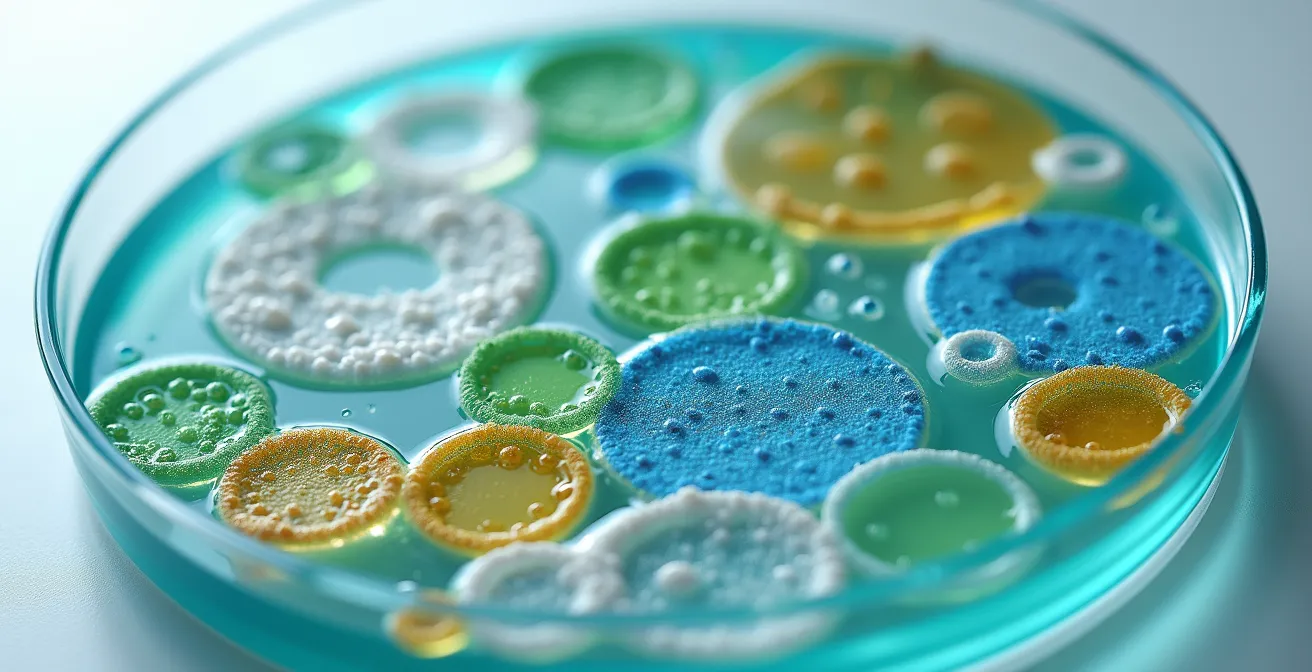
A microbiological study that tested various “preservative-free” water-based mascaras yielded horrifying results. It found that 87% of the mascaras showed bacterial contamination above safe limits after just 3 months of normal use. The products, which listed Aqua as a primary ingredient but lacked a broad-spectrum preservative system, showed contamination levels of 10^5 CFU/g (colony-forming units per gram). This is dramatically higher than the acceptable safety limit of 10^3 CFU/g for products used around the eye area. Using such a product is equivalent to painting a bacterial culture directly onto your eyelashes.
Don’t fall for the fear-mongering around preservatives like Phenoxyethanol. These ingredients are used in tiny, regulated concentrations and are essential for your safety. The real danger isn’t the preservative; it’s the mold you can’t see.
How to Scrape the Last 20% of Product Out of Pump Bottles?
Have you ever furiously pumped a bottle, knowing there’s still plenty of lotion or serum inside that you just can’t reach? This isn’t an accident; it’s a design feature. This is what I call “financial greenwashing”: formulation and packaging choices that intentionally lead to product waste, forcing you to repurchase sooner. The viscosity of a product is carefully engineered. Thickeners like Carbomer or Xanthan Gum are added to create a rich, luxurious feel, but they also make the product cling stubbornly to the bottle’s walls, especially in containers with a narrow dip-tube pump.
Case Study: Rheology and Product Waste Analysis
A laboratory analysis of popular moisturizers revealed the scale of this problem. It was found that products with high concentrations of common thickeners left an average of 23% of the product clinging to the bottle walls, inaccessible via the pump. For a high-end serum or cream, this can amount to $15-25 of wasted product per bottle. Brands using these viscosity modifiers in traditional dip-tube bottles are not just selling you a product; they are selling you a system designed for waste, hidden under the guise of a “premium” texture.
So, how do you fight back and get what you paid for? You have to be willing to get a little destructive. The goal is to get the product out of its prison. Here are a few chemist-approved methods:
- Use Cosmetic Spatulas: For lotions and creams, long, thin silicone spatulas are your best friend. They are flexible enough to reach the corners and scrape down the sides.
- Dilute and Shake: For thinner serums, add a few drops (1-2ml) of distilled water (not tap water!) to the bottle, shake vigorously, and you’ll get a few more days of use out of a slightly diluted product.
- Cut the Bottle: This is the most effective method. Use a sharp craft knife or sturdy scissors to carefully cut the plastic bottle horizontally about a third of the way from the bottom. This gives you direct access to scrape out every last bit.
- Store Safely: Once you’ve cut a bottle open, transfer the remnants to a small, clean, airtight jar or store the two halves of the bottle inside a sealed zip-lock bag to prevent contamination and drying out.
- Choose Wisely Next Time: When purchasing, favor airless pumps (look for the piston at the bottom that pushes product up) or simple squeeze tubes, which are designed for minimal waste.
How to Sterilize Tap Water Anywhere to Avoid Buying Plastic Bottles?
The simple answer is: you don’t. And you shouldn’t. The idea of using tap water in your skincare, whether to dilute a product or “activate” a powder, is a pervasive and dangerous DIY myth. From a formulator’s perspective, water is the single most important and complex ingredient in a formula. The water we use—typically deionized or distilled—is incredibly pure for a reason. Tap water, on the other hand, is a chemical soup that can wreck a sophisticated formula.
The primary issue is the presence of metal ions. According to water quality analyses, tap water contains 50-200 ppm of calcium and magnesium ions. These minerals can interact with ingredients in your cosmetics, destabilizing emulsions and reducing the effectiveness of preservatives. More importantly, they act as catalysts for oxidation, rapidly degrading sensitive active ingredients like Vitamin C. Using tap water is like pouring an accelerant on your product’s aging process.
Case Study: The Rapid Oxidation of Vitamin C with Tap Water
A lab test vividly illustrates this danger. When a 10% L-ascorbic acid serum was mixed with tap water, it accelerated the oxidation process by 300% within 24 hours. The serum, normally stable, turned a dark yellow, indicating its active ingredient had become useless. The same serum mixed with purified, deionized water showed almost no degradation. The culprit? Trace amounts of copper ions in the tap water, at a concentration of just 1 part per million, were enough to trigger this rapid breakdown.
If you need to mix a product or want travel-friendly options, don’t turn to the tap. Instead, seek out well-formulated alternatives designed for this purpose. A chemist’s travel kit would include:
- Waterless or Solid Formulas: Cleansing balms, oil-based serums, and powder-to-foam cleansers eliminate the water problem entirely.
- Products with Chelating Agents: Look for ingredients like Disodium EDTA or Tetrasodium Glutamate Diacetate on the INCI list. These ingredients bind to metal ions, effectively neutralizing the threat from any residual water.
- Micellar Waters: These are formulated with purified water and are designed to be used without rinsing, making them ideal for travel or situations with questionable water quality.
Prebiotics vs. Probiotics: Which Is Missing From Your Diet?
The skin microbiome has become one of the hottest topics in skincare, and with it, a wave of products claiming to be packed with “probiotics.” Brands market these as live, beneficial bacteria that will balance your skin’s ecosystem. This is, for the most part, a marketing fantasy. Understanding the true definitions of pre-, pro-, and postbiotics is key to seeing through the hype.
Here’s the truth from a formulator’s standpoint: it is nearly impossible to keep live probiotic bacteria alive in a typical cosmetic product sold on a shelf at room temperature. They require refrigeration and have a shelf life of weeks, not the 1-2 years expected of a standard cosmetic. The water-based environment and preservative systems necessary for safety would kill them instantly. So what are you actually buying?
True live probiotics cannot survive in a traditional water-based cosmetic formula without refrigeration and have a shelf life of weeks, not years. What’s marketed as ‘probiotics’ are actually postbiotic lysates.
– Dr. Marie Drago, Gallinée Founder and Pharmacist
You’re almost always buying postbiotics—the beneficial metabolic byproducts of bacteria (like ferments and lysates) or simply the dead bacterial cell fragments. While postbiotics have proven benefits for the skin, it is disingenuous to market them as live probiotics. Prebiotics, on the other hand, are much more stable and scientifically sound. They act as “food” or “fertilizer” for the good bacteria already living on your skin, helping your native microbiome thrive.
| Type | Definition | INCI Examples | Stability | Effective Concentration |
|---|---|---|---|---|
| Prebiotics | Food for beneficial bacteria | Alpha-Glucan Oligosaccharide, Inulin | Stable in formulas | 0.5-2% |
| Probiotics | Live bacteria (rare in cosmetics) | Lactobacillus (usually lysate) | Cannot survive in most formulas | N/A – usually dead |
| Postbiotics | Bacterial metabolites/fragments | Lactobacillus Ferment Lysate | Very stable | 1-5% |
When you’re looking to support your skin’s microbiome, don’t look for the promise of “live cultures.” Instead, search the INCI list for proven prebiotics like Inulin and Oligosaccharides, or beneficial postbiotics like Lactobacillus Ferment Lysate. These are the ingredients that actually have a chance of working from a formulation chemistry perspective.
Key takeaways
- “Fragrance” on a label is a regulatory loophole that can hide thousands of unvetted chemicals. “Preservative-free” is a dangerous myth for any product containing water.
- Packaging’s primary role is protecting the formula’s integrity from light and air. The wrong packaging can render active ingredients useless in months.
- Not all “cruelty-free” logos are equal. Leaping Bunny’s independent audit requirement provides far greater assurance than self-declarations.
Why Using 10 Products is Destroying Your Skin Barrier?
The “more is more” philosophy, championed by complex 10-step routines, is one of the most pervasive and damaging trends in modern skincare. It’s built on the idea that you can layer multiple single-active products to achieve better results. From a formulation standpoint, this is a recipe for disaster. Your skin barrier is a delicate, lipid-based shield with a specific pH, and bombarding it with a dozen different products creates a state of constant chemical chaos.
The real danger isn’t in any single product, but in the cumulative exposure. Each product may be formulated to be “gentle,” but when you layer them, you’re creating a new, untested formula directly on your face. You might be exposing your skin to irritating fragrances from eight different sources, drying alcohols from five, and multiple types of exfoliating acids that, when combined, strip your skin barrier raw. This leads to increased trans-epidermal water loss (TEWL), sensitivity, redness, and breakouts—often the very issues you’re trying to fix.
Case Study: Cumulative Irritation from Multi-Product Routines
A 12-week clinical study tracked two groups: one using a 10+ product routine and another using a minimalist 4-product routine. The results were telling. The multi-product group showed a 68% increase in trans-epidermal water loss, a key indicator of a damaged skin barrier. An audit of their routines revealed the source of the problem: cumulative exposure. Fragrance was present in 8 out of 10 products and denatured alcohol in 5 out of 10. This compound assault was overwhelming the skin’s ability to maintain its integrity, despite each individual product being marketed as safe and gentle.
The solution is a radical simplification. A chemist’s approach is to build a routine based on function, not product count. You need to cleanse, hydrate/protect, target specific concerns, and shield from the sun. That’s it. Often, this can be achieved with just 3-4 well-formulated products that are designed to work together, rather than a chaotic collection of single-ingredient serums.
Your Action Plan: The 5-Step Minimalist Routine Audit
- Audit Your Arsenal: Create a spreadsheet and list every product in your current routine. Next to each, paste its full INCI list. This will give you a stark visual of your total chemical exposure.
- Identify Redundancies: Use the search function to highlight common irritants across all lists. How many times do “Parfum/Fragrance,” “Alcohol Denat.,” or “Limonene” appear? This reveals your cumulative exposure.
- Verify Core Functions: Does your routine effectively cover the four pillars? 1. A single, pH-balanced cleanser. 2. One moisturizer that hydrates (e.g., Glycerin), protects (e.g., Squalane), and seals (e.g., Shea Butter). 3. A maximum of two targeted active ingredients. 4. A dedicated broad-spectrum SPF 30+.
- Check for Chemical Clashes: Research your primary actives. Are you layering ingredients known to conflict, such as high-strength Vitamin C with copper peptides, or multiple different exfoliating acids at high concentrations?
- Build Your Minimalist Plan: Based on your audit, consolidate your routine into 3-4 products. Replace three different hydrating serums with one comprehensive moisturizer. Choose one or two key actives and find them in a single, well-formulated serum.
To truly reclaim control over your skin’s health, the logical next step is to apply this minimalist framework and begin auditing your own products for redundancies and cumulative irritants.