
The key to reducing social media anxiety isn’t deleting your apps—it’s transforming your feed from a source of stress into a tool for empowerment.
- Passive scrolling triggers physiological stress responses like shallow breathing and cortisol spikes.
- Intentional curation involves actively choosing content that aligns with your values and reframing what you see.
Recommendation: Start by identifying one trigger—like vacation photos or morning email checks—and apply a specific, protective strategy from this guide today.
You close the Instagram app, but the feeling lingers. A vague sense of dissatisfaction, a spike of envy, or a wave of exhaustion from an endless stream of bad news. You feel overwhelmed, perhaps even lonelier than before you opened it. This experience is incredibly common for young adults navigating a digital world saturated with curated perfection and relentless information.
The standard advice often feels simplistic and unhelpful: “just take a digital detox” or “unfollow accounts that make you feel bad.” While well-intentioned, this counsel ignores the deep-seated psychological and even physiological hooks that keep us scrolling. It fails to address the core issue: our relationship with our feeds is often passive and reactive, leaving us vulnerable to comparison, anxiety, and information overload.
But what if the solution wasn’t about radical avoidance, but about strategic engagement? The true path to reducing social media anxiety lies in shifting from a passive consumer to an active, intentional curator of your digital environment. It’s about understanding the specific neuro-physiological triggers behind your scrolling habits—from the way your breathing changes when a notification pops up to the hormonal shifts caused by early morning screen time—and building a protective barrier around your mental well-being.
This guide will deconstruct these hidden stressors one by one. We will explore the mechanisms behind digital anxiety and provide you with a psychologist-backed framework to transform your social media feed from a source of anxiety into a space that you control, one that can even support your personal growth.
This article provides a structured approach to reclaiming your digital peace of mind. The following summary outlines the key areas we will explore to help you build a healthier relationship with your social media.
Summary: A Guide to Curating Your Digital Well-Being
- Why Seeing Vacation Photos Triggers Anxiety and How to Stop It?
- How to Set Up “Do Not Disturb” Modes That Actually Work?
- Reading News or Doomscrolling: Which Is Damaging Your Mental Health?
- The Breathing Mistake You Make When Checking Notifications
- When to Announce Your Digital Detox to Avoid Social Pressure?
- Why Checking Email Before 10 AM Increases Daily Cortisol Levels?
- Why Does “Zoom Fatigue” Affect Retention Rates in Online Courses?
- When to Turn Off Slack: The 2-Hour Rule for Peak Performance?
Why Seeing Vacation Photos Triggers Anxiety and How to Stop It?
That pang of anxiety you feel when seeing a friend’s seemingly perfect beach vacation is a well-documented phenomenon. With research showing that 72% of travelers share vacation photos on social media, these images are a constant presence in our feeds. The core psychological mechanism at play is upward social comparison, where we measure our own lives against the curated highlights of others. This constant comparison can lead to feelings of inadequacy, envy, and anxiety, creating a deficit between our perceived reality and an idealized online world.
A 2025 study highlighted this effect, finding that social media images focused on people (portraits) lead to significantly higher online social anxiety than images focused on objects or scenery. The reason? It’s much easier to compare your life to another person’s than to a landscape. This confirms that the anxiety isn’t just about the vacation itself, but about the social performance surrounding it.
However, you can shift from a state of reactive envy to one of intentional engagement. The goal is to transform your feed from a gallery of comparison into a source of inspiration. This requires a conscious effort to reframe your perspective and curate your content. Instead of passively absorbing content that triggers negative feelings, you can actively shape your feed to align with your personal values and goals.
Here are a few protective strategies to regain control:
- Curate Your List: Actively review your follower list. Unfollow or mute accounts that consistently trigger negative emotions, regardless of who they are. Your peace of mind is the priority.
- Filter Your Content: Use features like Instagram’s “Favorites” to prioritize posts from close friends and accounts that genuinely inspire you, pushing comparison-inducing content to the background.
- Reframe as a Tool: Transform platforms like Instagram or Pinterest into personal planning tools. Instead of feeling envy, save that vacation photo to a “Future Trip Ideas” board. This turns a passive trigger into an active, positive step toward your own goals.
- Practice Mindfulness: When envy arises, acknowledge the feeling without judgment. Then, consciously reframe it. “That looks like a beautiful experience” is a more empowering thought than “My life is boring in comparison.”
How to Set Up “Do Not Disturb” Modes That Actually Work?
Your phone’s “Do Not Disturb” (DND) or Focus modes are your first line of defense against the relentless barrage of notifications that fuel anxiety. However, many people set them up in a way that is easily bypassed or too restrictive, leading them to be disabled. An effective DND strategy isn’t about complete disconnection; it’s about creating intentional digital boundaries that protect your focus and peace without isolating you from what truly matters.
The key is to move beyond the default settings and customize your modes based on context. A “Work Focus” mode should be different from a “Personal Time” or “Sleep” mode. For example, during work, you might allow notifications only from specific apps like Slack or your calendar, while blocking all social media. Conversely, a “Mindful Morning” mode could block everything except a meditation app or your alarm.
To make these modes stick, they must be both powerful and practical. This means configuring emergency bypass features for close family members, so you don’t feel the low-grade anxiety of being completely unreachable. Schedule these modes to turn on and off automatically based on your daily routine—for example, a “Wind Down” mode could activate every night at 9 PM, dimming your screen and silencing non-essential alerts to signal to your brain that it’s time to disconnect.
Visually reinforcing your commitment to these boundaries can also be surprisingly effective. Placing your phone face down is a powerful, physical signal to yourself and others that you are unavailable. It removes the temptation of a constantly lighting-up screen and helps you reclaim your cognitive space.
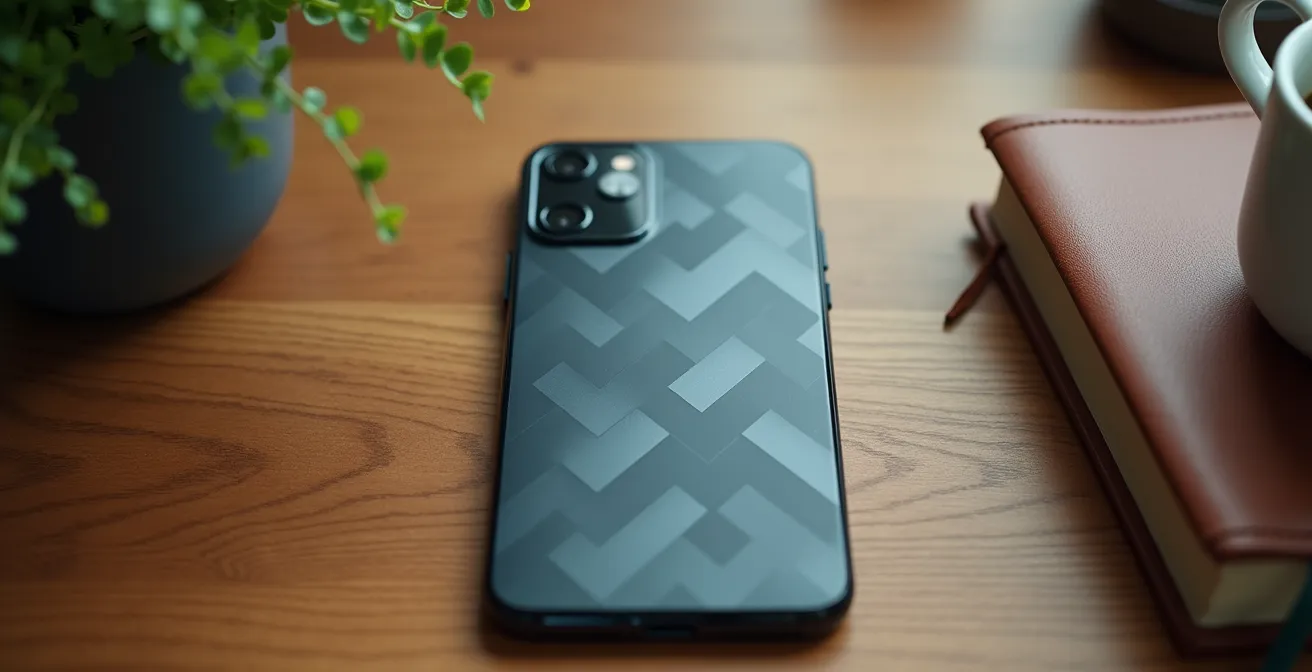
As this image suggests, a protected workspace is calm and conducive to focus. By making your DND modes a seamless and reliable part of your daily life, you transform them from a temporary fix into a sustainable practice for managing digital-induced anxiety and reclaiming your attention.
Reading News or Doomscrolling: Which Is Damaging Your Mental Health?
There’s a critical difference between staying informed and “doomscrolling.” The first is an active process of gathering specific information. The second is a passive, compulsive pattern of consuming an endless stream of negative news, which can be profoundly damaging to your mental health. This behavior keeps your nervous system in a state of high alert, feeding a cycle of anxiety and helplessness. The impact is significant, as a 24% decrease in depression symptoms was observed in individuals after just a one-week break from social media, highlighting the powerful effect of our scrolling habits.
Doomscrolling thrives on the brain’s negativity bias and the variable reward system of social media algorithms, which are designed to keep you engaged. Unlike reading a finite article, the infinite scroll creates a “cognitive loop” where you’re always searching for a piece of information that will either resolve your anxiety or confirm your fears, but never finding it.
The solution is to replace this passive, reactive consumption with conscious and intentional news gathering. This means setting clear boundaries around how, when, and for how long you engage with news content. It’s about treating information like a meal, not an all-you-can-eat buffet. By defining your limits, you can stay informed without sacrificing your mental well-being.
To break the doomscrolling cycle, consider these strategies for healthier news consumption:
- Set Hard Time Limits: Use app timers to cap your daily exposure to news and social media apps like Instagram, TikTok, or YouTube to 15-30 minutes. When the timer goes off, you’re done for the day.
- Practice “Cognitive Closure”: End every news session with a clear, actionable takeaway. This could be donating to a cause, sharing a helpful resource, or simply deciding, “I am informed on this for today.” This creates a sense of completion and breaks the endless loop.
- Schedule Your Consumption: Designate specific, short windows for checking the news (e.g., 10 minutes after breakfast) and avoid it at vulnerable times, like right before bed or as soon as you wake up.
- Monitor Your Mood: Pay close attention to how you feel while scrolling. If you notice a dip in your mood or a rise in anxiety, that’s your signal. Close the app immediately. This helps you identify your personal threshold for healthy engagement.
The Breathing Mistake You Make When Checking Notifications
One of the most insidious effects of our digital habits is something you likely do without even noticing: you hold your breath. This phenomenon, known as “screen apnea” or “email apnea,” is a physical stress response to digital stimuli. When you focus intently on a screen, check a notification, or read an important email, your breathing often becomes shallow or you momentarily stop breathing altogether. Research by former Microsoft executive Linda Stone first brought this to light, revealing that an astonishing 80% of people exhibit screen apnea while engaged with their devices.
This disruption in breathing sends a signal to your brain that you are in a state of threat, activating the body’s fight-or-flight response. It can lead to an accumulation of carbon dioxide, increased heart rate, and a cascade of stress hormones. Over time, this chronic, low-grade stress state contributes significantly to feelings of anxiety, fatigue, and an inability to focus. You might finish a session of answering emails feeling inexplicably drained—this is why.
The 20% of participants in Stone’s research who didn’t exhibit screen apnea were often professionals trained in breath control, like musicians and athletes. This reveals a crucial insight: conscious breathing is a trainable skill that can counteract the negative physiological effects of screen time. By bringing awareness back to your breath, you can actively regulate your nervous system and remain calm amidst the digital noise.
The goal is to interrupt the automatic “apnea” response and replace it with a mindful breath. Before opening an app or after reading a stressful message, take a moment to pause. This simple act of conscious breathing can reset your physiological state from one of stress to one of calm control.

As illustrated here, placing a hand on your chest or abdomen can help you reconnect with the physical sensation of breathing. The simple act of taking one slow, deep breath—in through the nose, out through the mouth—can be a powerful antidote to the anxiety triggered by your digital interactions.
When to Announce Your Digital Detox to Avoid Social Pressure?
Deciding to take a digital detox or a break from social media is a powerful step toward protecting your mental health, especially when you feel overwhelmed. In fact, a Passport Photo Online study found that 58% of vacationers admit social media negatively affected their holiday, underscoring the need for intentional disconnection. However, the decision to unplug often comes with an unexpected source of anxiety: social pressure. You might worry that friends will feel ignored, that you’ll miss out on important information, or that your silence will be misinterpreted.
The key to a successful, stress-free detox is managing expectations. The communication strategy you choose depends on your audience and the nature of your relationships. There is no one-size-fits-all answer, but you can choose between a “soft launch,” a “hard announcement,” or a hybrid approach to navigate these social dynamics effectively.
A “soft launch” involves quietly reducing your activity without a formal announcement. This is ideal for casual acquaintances and the broader social media public, as it avoids drawing unnecessary attention and allows for a natural, low-pressure transition. A “hard announcement,” on the other hand, involves a clear post or direct message explaining your absence. This is best for close friends, family, and work teams who rely on you for communication, as it sets clear boundaries and prevents misunderstandings.
Choosing the right strategy ensures your break is restorative, not another source of stress. The following table breaks down when and how to use each approach to maintain your relationships while protecting your peace.
| Strategy | Best For | Approach | Benefits |
|---|---|---|---|
| Soft Launch | Casual contacts, acquaintances | Gradually reduce response time without announcement | Less pressure, natural transition |
| Hard Announcement | Close friends, family, work teams | Clear post or message about offline period | Sets clear expectations, prevents misunderstandings |
| Hybrid Approach | Mixed social circles | Private messages to close contacts, soft launch for others | Balances transparency with privacy |
Why Checking Email Before 10 AM Increases Daily Cortisol Levels?
The habit of reaching for your phone to check emails the moment you wake up is one of the most detrimental things you can do for your daily anxiety levels. During the first hour of your day, your body naturally experiences the “cortisol awakening response,” a sharp increase in the stress hormone cortisol designed to help you wake up and become alert. When you immediately flood your brain with external demands, problems, and notifications from your inbox, you are essentially hijacking this natural process. This triggers an exaggerated and prolonged stress response, setting a tone of reactivity and anxiety for the entire day.
Instead of starting the day in a state of proactive control, you begin by reacting to others’ agendas. This puts your nervous system on the defensive before you’ve even had a chance to ground yourself. This morning routine sabotages your focus, depletes your mental energy, and trains your brain to associate waking up with a sense of urgency and threat. The positive impact of changing such a small digital habit can be immense.
As Mitch Prinstein, chief science officer for the American Psychological Association, noted regarding behavior changes, the results can be profound. In a discussion about a one-week social media break, he said:
It usually takes eight to 12 weeks of intensive psychotherapy to see those kinds of reductions in mental health symptoms. So if you can get those with just one week of change in behavior, wow!
– Mitch Prinstein, American Psychological Association
Protecting the first 60-90 minutes of your day from digital inputs is a non-negotiable strategy for reducing anxiety. This “proactive hour” should be dedicated to activities that ground you, not drain you. By replacing the email check with a mindful routine, you take back control of your morning and, by extension, your entire day.
Your Action Plan: Reclaiming Your First Hour
- Start with a simple breathing exercise before touching any device, focusing on the expansion and contraction of your abdomen.
- Engage in physical activities like stretching, getting sunlight, or hydrating before any screen time.
- Schedule your first email check for after your “proactive hour”—a block of time dedicated to your most important personal or professional task.
- Set a timer for your first email session to prevent it from consuming your morning.
- While working, maintain 10% of your attention on your breath to prevent screen apnea and regulate your nervous system.
Why Does “Zoom Fatigue” Affect Retention Rates in Online Courses?
The exhaustion you feel after hours of video calls, often termed “Zoom fatigue,” is a real neurological phenomenon with significant consequences, particularly in online learning environments. This fatigue directly impacts cognitive functions like memory and attention, which are crucial for retaining information. When students are mentally drained, their ability to encode and recall what they’ve learned plummets, leading to lower retention rates in online courses.
Several factors contribute to this mental drain. First, sustained, direct eye contact in video calls is intense and unnatural, keeping our brains in a hyper-aware state. Second, seeing your own face on screen constantly can be stressful and distracting, leading to increased self-consciousness. Finally, the “gaze of multiple moving headshots” creates a sense of being constantly watched, which can trigger social anxiety and a low-grade fight-or-flight response. This state of hyper-vigilance is mentally exhausting.
The breathing issue of “Zoom apnea” is also a major contributor. As with email apnea, people tend to breathe more shallowly or hold their breath during video calls, starving their brains of oxygen and exacerbating feelings of anxiety and fatigue. A case study with healthcare professionals highlighted that this constant state of being “under the gaze” was a primary driver of workplace anxiety during the shift to remote work.
To combat this, ergonomics experts recommend several protective strategies. Taking structured breaks away from the screen every 90 minutes is essential for cognitive recovery. Simple chair yoga stretches can help release physical tension and reset posture. Most importantly, investing in proper ergonomic seating that supports an open posture is critical for maintaining healthy breathing patterns during long calls. By addressing both the psychological and physiological stressors of video calls, students and educators can create a more sustainable and effective online learning environment.
Key Takeaways
- Your digital anxiety is often a physiological response to triggers like notifications and comparison, not just an emotional one.
- Shifting from passive consumption to intentional curation is the most effective strategy for taking back control of your mental well-being.
- Simple, conscious habits—like mindful breathing, setting DND modes, and protecting your mornings—can create a powerful buffer against digital stress.
When to Turn Off Slack: The 2-Hour Rule for Peak Performance?
In the modern workplace, tools like Slack are designed for constant connectivity, but this very feature can be a major source of anxiety and a killer of productivity. The pressure to be perpetually available creates a fragmented workday, where deep, focused work is constantly interrupted by notifications. This state of “always-on” alertness keeps your nervous system on high alert, making it impossible to achieve the state of flow required for peak performance.
The solution lies in setting firm boundaries, such as the “2-Hour Rule.” This isn’t about working for only two hours; it’s about scheduling uninterrupted, 90- to 120-minute blocks of “Deep Work” where all communication tools, especially Slack, are turned off. This practice is supported by research on the benefits of limiting digital distractions. A two-week experiment at Iowa State University found that students who limited social media to 30 minutes daily scored significantly lower for anxiety, depression, and loneliness, while also reporting a brighter outlook on life. This demonstrates the powerful mental health benefits of reclaiming your time and attention.
Implementing Deep Work blocks requires clear communication with your team to manage expectations. It’s not about being unresponsive; it’s about being strategically unavailable to be more productive. By signaling your focus periods, you create a predictable rhythm that allows your colleagues to know when they can and cannot expect an immediate response. This fosters a healthier work culture that values focused effort over constant availability.
To successfully integrate this practice, your team can establish clear communication protocols:
- Schedule and Signal: Block out Deep Work sessions on your shared calendar and update your Slack status to something like “Focusing for 90 mins – will respond after.”
- Define Urgency: Create a team-wide understanding of what constitutes a true emergency. Use Slack for non-urgent matters, but have a designated channel (like a text or call) for genuinely time-sensitive issues that can’t wait.
- Set No-Slack Times: Establish clear boundaries for non-work hours, such as during meals or in the evenings, to allow for genuine disconnection and recovery.
Your journey toward a healthier relationship with technology doesn’t require drastic measures. It begins with the small, intentional decision to reclaim your attention. Start by implementing just one of these strategies today—whether it’s protecting your first hour or taking a single mindful breath before opening an app—and begin to curate a digital life that serves your peace, rather than stealing it.