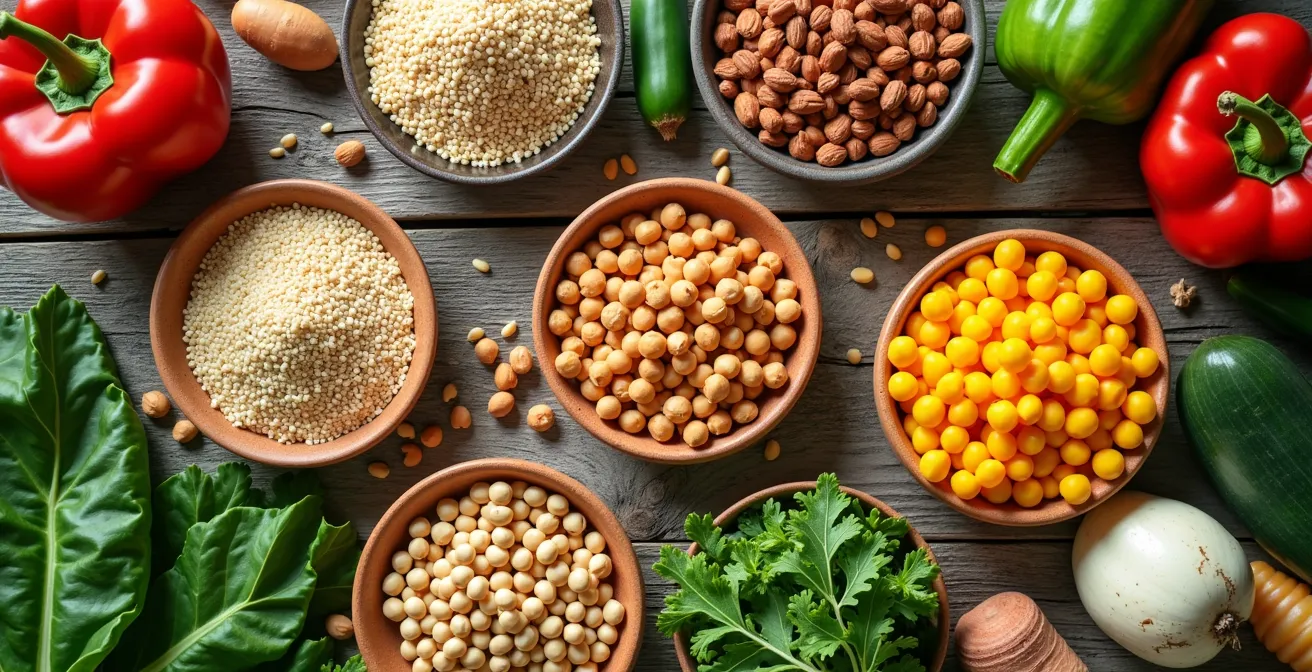
In summary:
- Focus on nutrient-dense whole foods over ultra-processed meat alternatives to avoid hidden sodium and additives.
- Master the nutritional mechanics of plants by pairing foods correctly to maximize protein quality and vitamin absorption.
- Prioritize gut health with fermented foods and a gradual increase in fiber to support both physical and mental well-being.
- Use smart preparation and storage techniques, like embracing frozen vegetables, to preserve nutrients and save time.
The decision to move towards a plant-based diet often comes from a place of wanting to improve your health. Yet, for many who are used to eating meat, this desire is met with a persistent fear: the fear of weakness, fatigue, and nutrient deficiencies. You hear the advice to “eat more beans,” but a nagging voice wonders if it’s truly enough. Will you get enough protein? Will you feel satisfied? This concern is valid, especially when navigating a world of conflicting information.
Many beginners fall into common traps. They either subsist on simple salads, missing crucial nutrients, or they lean heavily on ultra-processed vegan products that can be loaded with sodium and additives. They might not realize that the nutritional quality of “fresh” produce can degrade significantly by the time it reaches their kitchen, or that not all plant proteins are created equal. The key to a successful transition isn’t about deprivation or simply swapping one food for another.
This guide offers a different perspective, rooted in nutritional science. We will move beyond the basics and delve into the nutritional mechanics of a plant-based diet. It’s not about what you’re giving up; it’s about understanding how to build a powerful, nutrient-dense plate that fuels your body and puts those fears of deficiency to rest. We’ll explore how to choose the right ingredients, prepare them for maximum benefit, and support your overall health, starting from the gut up.
To guide you through this transition with confidence, this article breaks down the essential strategies. We will cover everything from protein quality and smart vegetable preparation to avoiding common pitfalls and boosting your gut health for a truly holistic approach.
Summary: How to Switch to a Plant-Based Diet Without Nutrient Deficiencies?
- Why Quinoa Is Superior to Rice for Vegan Protein Intake?
- How to Roast Root Vegetables So Even Kids Will Eat Them?
- Fresh or Frozen Spinach: Which Retains More Vitamins After Cooking?
- The “Plant-Based” Burger Mistake That Spikes Your Sodium Intake
- When to Prep Your Ingredients to Keep Salads Fresh for 5 Days?
- How Does Poor Gut Health Trigger Anxiety and Mood Swings?
- Day 1 or Day 10:Why Are Traditional Banks Closing 15% of Their Branches Annually?
- Why Are Fermented Foods More Effective Than Probiotic Pills?
Why Quinoa Is Superior to Rice for Vegan Protein Intake?
One of the biggest concerns when switching to a plant-based diet is protein. The fear of not getting “enough” or “complete” protein is widespread. While beans and lentils are excellent sources, understanding the concept of amino acid profiles is crucial. Most plant proteins are “incomplete,” meaning they are low in one or more of the nine essential amino acids our bodies can’t produce. This is where quinoa stands out significantly from staples like rice.
Quinoa is one of the few plant foods that is a complete protein, containing all nine essential amino acids in significant amounts. This makes it an incredibly efficient protein source, especially for those transitioning away from animal products. In contrast, rice is low in the amino acid lysine, meaning it must be paired with other foods like beans to form a complete protein profile. From a purely practical standpoint, quinoa provides a more direct and potent protein package in a single ingredient.
The nutritional differences become even clearer when looking at the numbers. As the following comparison shows, quinoa not only offers more protein per serving but also packs a greater punch in essential minerals like iron and magnesium, which are vital for energy and muscle function. This data is confirmed by a detailed nutritional comparison that highlights quinoa’s robust profile.
| Nutrient (per cup cooked) | Quinoa | Brown Rice | White Rice |
|---|---|---|---|
| Protein | 8g | 5g | 4g |
| Lysine (limiting amino acid) | High | Low | Low |
| Fiber | 5g | 4g | 1g |
| Iron | 2.8mg | 0.8mg | 0.4mg |
| Magnesium | 118mg | 86mg | 19mg |
Choosing quinoa over rice isn’t just a minor upgrade; it’s a strategic move to ensure your body receives high-quality, readily available protein, making your transition smoother and more nutritionally secure. It simplifies meal planning while directly addressing one of the primary anxieties associated with plant-based eating.
How to Roast Root Vegetables So Even Kids Will Eat Them?
A successful plant-based diet isn’t just about nutrition; it’s also about enjoyment. If your vegetables are bland and unappetizing, sticking to the plan becomes a chore. Roasting is a fantastic technique to bring out the natural sweetness in root vegetables like carrots, sweet potatoes, and beets through caramelization. However, achieving that perfect crispy-on-the-outside, soft-on-the-inside texture that even picky eaters love requires a few specific steps that also enhance their nutritional value.
The secret lies in controlling moisture and using the right additions. Many people simply toss vegetables in oil and roast them, but a professional approach yields far better results. It involves not just high heat, but also a pre-cooking step and the use of ingredients that boost both flavor and nutrient absorption. For example, using an oil like avocado oil isn’t just for preventing sticking; its fat content is essential for your body to absorb the fat-soluble vitamins (A, D, E, and K) present in the vegetables.

As you can see in the texture, proper caramelization creates a deeply satisfying flavor. This method transforms simple vegetables into a dish that feels like a treat. To achieve this consistently, follow a clear plan that layers flavor and optimizes both texture and nutrition at every stage, turning a basic side dish into a nutritional powerhouse.
Your Action Plan: Perfect, Kid-Friendly Roasted Root Vegetables
- Parboil cut vegetables for 5 minutes to gelatinize starches for a crispy-outside, soft-inside texture.
- Toss with avocado oil, which is essential for the absorption of fat-soluble vitamins, not just for flavor.
- Add nutritional yeast for a boost of B12 and a cheesy, umami flavor that kids often love.
- Roast at 425°F (220°C) to achieve caramelization without creating harmful advanced glycation end-products.
- Finish with mushroom powder instead of just salt for an added dose of vitamin D and a deeper savory flavor.
Fresh or Frozen Spinach: Which Retains More Vitamins After Cooking?
There’s a common belief that “fresh is always best,” leading many health-conscious individuals to bypass the freezer aisle. However, when it comes to nutrient retention, especially for delicate leafy greens like spinach, the reality is more complex. The journey of “fresh” produce from farm to table can be long, and during this time, crucial vitamins degrade. This is particularly true for water-soluble vitamins like folate and vitamin C.
Frozen vegetables, on the other hand, are typically blanched and flash-frozen within hours of being harvested. This process locks in nutrients at their peak. Research on vitamin retention demonstrates that frozen spinach retains about 80% of its folate, whereas “fresh” spinach stored in a refrigerator for eight days may only have 53% of its original folate content. This means that by the time you cook it, the frozen option can be significantly more nutritious.
This isn’t just theoretical; it has been documented in controlled studies. By understanding the science of post-harvest nutrient loss, you can make smarter choices that maximize your vitamin intake without breaking the bank. Frozen produce is not only often more nutrient-dense but also reduces food waste and offers year-round convenience.
Case Study: The Penn State Study on Spinach Nutrient Degradation
Researchers at Penn State University conducted a study to track nutrient loss in fresh spinach. They found that spinach stored at a standard refrigerator temperature of 39°F (4°C) lost 47% of its folate content after just eight days. The study monitored vitamin C, folate, and carotenoids, revealing that the typical timeline from harvest to consumption for fresh spinach leads to substantial nutrient losses. In contrast, frozen spinach, which is processed immediately after picking, maintained its nutrient levels far more effectively, proving to be a superior choice for preserving these key vitamins.
Embracing frozen produce is a strategic way to ensure you’re getting the vitamins you need. It counters the common fear of nutritional gaps and provides a reliable, cost-effective way to keep your diet rich in essential nutrients, regardless of the season.
The “Plant-Based” Burger Mistake That Spikes Your Sodium Intake
When first switching to a plant-based diet, it’s tempting to rely on convenient meat substitutes like plant-based burgers. They seem like an easy one-to-one swap, promising the familiar texture and taste of meat. However, this convenience often comes with a hidden nutritional cost: an alarmingly high sodium content. Many of these products are ultra-processed foods, engineered for flavor at the expense of health.
Nutritional analyses consistently reveal this issue. A single ultra-processed plant-based patty can contain a significant portion of your recommended daily sodium limit. According to data from consumer watchdog groups, these burgers often pack 310-460mg of sodium, with some brands reaching nearly 20% of the daily value in just one patty. Over time, this can contribute to high blood pressure and other health issues, undermining the very reason you chose to go plant-based.
Furthermore, the ingredient lists can be concerning. Many contain phosphate additives, which can inhibit the body’s ability to absorb essential minerals like iron—a nutrient of particular concern for those on a plant-based diet. To avoid this common pitfall, it’s crucial to become a savvy label-reader and prioritize whole-food alternatives. A burger made from black beans, lentils, or mushrooms that you can see and recognize will almost always be a better choice. Here are some key guidelines for making healthier selections:
- Look for products with less than 240mg of sodium per serving.
- Prioritize patties made from whole foods (like black beans or lentils) over those based on isolated proteins.
- Check the ingredient list for phosphate additives, which can hinder iron absorption.
- Avoid products that use artificial colorings like titanium dioxide.
- For complete control, make your own patties at home using whole legumes, nuts, and vegetables.
Making a conscious choice to opt for whole-food-based options or homemade versions ensures your transition to a plant-based diet truly supports your health goals, rather than trading one set of problems for another.
When to Prep Your Ingredients to Keep Salads Fresh for 5 Days?
One of the biggest practical hurdles to maintaining a plant-based diet is the time it takes to prepare fresh meals. Meal prepping is the solution, but if done incorrectly, you can end up with soggy salads and oxidized, nutrient-depleted ingredients. The key to a successful five-day meal prep is not just *what* you prep, but *when* you prep it, based on the biochemical stability of each ingredient.
Different plant components degrade at different rates. Sturdy vegetables like carrots and celery are resilient, while delicate greens and fruits like avocado oxidize and turn brown almost immediately after being cut. Similarly, soaking nuts and seeds is a crucial first step to reduce phytic acid, an “anti-nutrient” that can bind to minerals like iron and zinc, preventing their absorption. By timing your prep work according to these properties, you can maximize both freshness and nutrient bioavailability throughout the week.
A strategic timeline ensures that every component of your meal is at its peak when you’re ready to eat. This approach also makes assembly quick and easy, removing the daily friction that can make healthy eating feel like a burden. The “salad in a jar” method is a perfect application of this principle, using layers to protect delicate ingredients from the dressing until the last minute.
- Day 1 (e.g., Sunday): Soak nuts and seeds overnight to neutralize phytic acid and improve digestibility. On the same day, chop sturdy vegetables like carrots, celery, bell peppers, and cabbage and store them in airtight containers.
- Day 2-3 (e.g., Monday/Tuesday): Cook grains (quinoa, brown rice) and legumes (chickpeas, lentils) in bulk. Once cooled, store them in the refrigerator.
- Day of Eating: This is when you should cut delicate items that oxidize quickly, such as avocado, apple, and pear. Leafy greens should also be added just before serving if possible.
- Jar Layering Technique: When assembling salads for the week, pour the dressing in the bottom of the jar first. Follow with a layer of grains, then proteins (like chickpeas), then your sturdy chopped vegetables. Finally, top with delicate leafy greens to keep them away from the moisture.
This systematic approach transforms meal prep from a guessing game into a science, ensuring your meals are as nutritious and delicious on Friday as they were on Monday.
How Does Poor Gut Health Trigger Anxiety and Mood Swings?
When transitioning to a plant-based diet, the focus is often on physical health—weight loss, heart health, and nutrient intake. However, the connection between our food and our mood is incredibly powerful, and it’s mediated by the trillions of microbes in our gut. This connection is known as the gut-brain axis, a complex communication network that directly links what happens in our digestive system to our mental and emotional state.
A healthy gut microbiome, rich in diverse beneficial bacteria, produces neurotransmitters like serotonin and dopamine, which are crucial for mood regulation. When you drastically change your diet, especially by rapidly increasing fiber, you can disrupt this delicate ecosystem. This can lead to bloating, gas, and discomfort, but it can also trigger surprising psychological symptoms like anxiety, irritability, and mood swings as your gut bacteria struggle to adapt. The sudden shift can cause a temporary imbalance, favoring bacteria that produce inflammatory compounds over those that support a stable mood.
The solution is not to avoid fiber, which is essential for long-term gut health, but to introduce it gradually. This gives your microbiome time to adjust and for beneficial, fiber-loving bacteria to flourish. This principle is not just a theory; it’s observed in practice, providing a clear roadmap for a smooth mental and physical transition.
Case Study: The Gradual Fiber Transition for Mood Stability
A documented clinical case highlights the importance of a slow transition. A patient attempting a rapid switch to a high-fiber, plant-based diet reported significant bloating and increased anxiety. The strategy was adjusted to an incremental approach, increasing daily fiber intake by just 5 grams per week. This allowed the patient’s gut bacteria to adapt properly. Within four weeks, not only did the digestive issues resolve, but the patient also reported a noticeable improvement in mood stability and a reduction in anxiety, demonstrating the critical and direct impact of the gut-brain axis during a dietary change.
By respecting your gut’s need for adaptation, you support not only your digestive comfort but also your mental resilience, ensuring that your journey to better health feels good from the inside out.
Day 1 or Day 10:Why Are Traditional Banks Closing 15% of Their Branches Annually?
In a world of rapid change, established systems can quickly become obsolete. Just as we see traditional banks, the old guards of finance, closing their physical branches in response to a digital shift, we can see a parallel in our understanding of nutrition. The “traditional” meat-centric diet, long considered the bedrock of a strong physique, is being re-evaluated. Its foundations are being challenged by a growing body of evidence supporting a different, more flexible system: plant-based eating.
The question of “Day 1 or Day 10” in this context becomes a metaphor. It’s not about the specific day you decide to make a change, but about recognizing that the landscape itself is shifting. The old model is shrinking not because it’s inherently “bad,” but because a more efficient, sustainable, and personalized alternative is becoming more accessible. People are realizing they no longer need to be tied to a single, rigid system to achieve their goals.
This shift in perspective is the true “Day 1.” It’s the moment you stop seeing a plant-based diet as a restrictive departure from the norm and start seeing it as an upgrade to a more advanced and resilient operating system for your body. The old structures of thought—that strength only comes from meat or that plants are inherently insufficient—are the “branches” that are quietly closing, making way for a new understanding of health.
Key takeaways
- True strength on a plant-based diet comes from understanding protein quality and amino acid profiles, not just quantity.
- Avoiding common traps like high-sodium processed alternatives is just as important as eating more vegetables.
- A successful transition supports both body and mind by prioritizing gut health through gradual changes and fermented foods.
Why Are Fermented Foods More Effective Than Probiotic Pills?
To support the gut-brain axis and ensure a healthy microbiome, many people turn to probiotic supplements. While these pills can be beneficial in specific situations, they are a far less effective strategy than incorporating fermented foods into your diet. Probiotic pills offer a high dose of a few specific, isolated strains of bacteria. Fermented foods, in contrast, provide a diverse community of live microorganisms within a complete food matrix.
This “food matrix” is the crucial difference. When you eat sauerkraut, kimchi, or tempeh, you’re not just getting probiotics. You are consuming a synergistic package that includes prebiotics (the fiber that feeds good bacteria), vitamins created during the fermentation process (like Vitamin K2), and beneficial compounds called postbiotics. These postbiotics, such as short-chain fatty acids (SCFAs), are metabolic byproducts of the fermentation process that have powerful anti-inflammatory effects and serve as a direct energy source for the cells lining your colon.
Furthermore, the fermentation process itself enhances nutrition. It neutralizes “anti-nutrients” like phytic acid, which increases the bioavailability of minerals like iron and zinc, making them easier for your body to absorb. A pill simply cannot replicate this complex, synergistic effect. The following comparison breaks down the key advantages of whole fermented foods.
| Factor | Fermented Foods | Probiotic Pills |
|---|---|---|
| Nutrient Creation | Creates new B-vitamins, K2 | No nutrient creation |
| Anti-nutrient Reduction | Neutralizes phytic acid | No effect |
| Postbiotic Content | Rich in SCFAs | Minimal/none |
| Mineral Bioavailability | Enhanced absorption | No enhancement |
| Food Matrix Benefits | Complete food synergy | Isolated strains only |
By choosing fermented foods over isolated supplements, you are adopting a more holistic and powerful strategy to cultivate a resilient and diverse gut microbiome. This approach provides a wider range of benefits that support everything from digestion and immunity to mood regulation.
Armed with this nutritional knowledge, your journey into plant-based eating is not a leap of faith, but a series of confident, informed choices. The next logical step is to begin applying these principles. Start by redesigning one meal this week, focusing on incorporating a complete protein like quinoa or a serving of fermented food, and build from there.