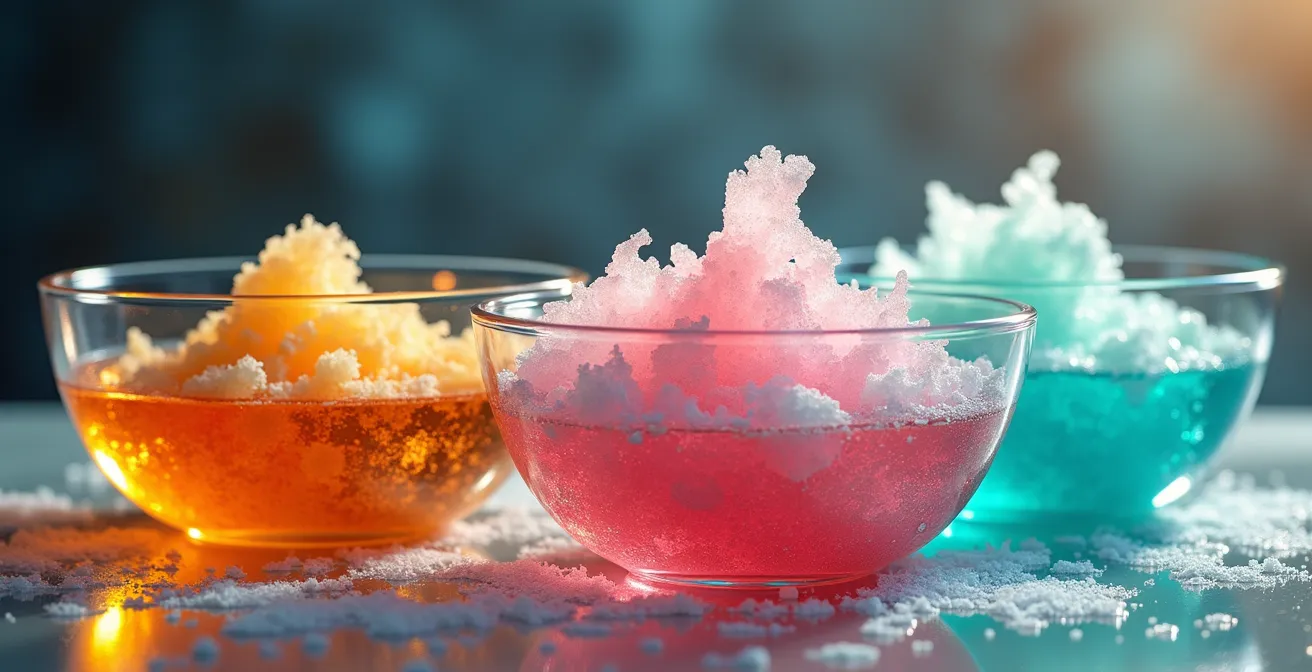
Mastering agar-agar is not about following recipes; it’s about understanding and controlling its unique physical chemistry.
- Agar’s distinct setting and melting behavior (thermal hysteresis) is a powerful, controllable tool, not a flaw to work around.
- It forms a physical polymer network that can stabilize foams, emulsions, and create firm gels with scientific precision.
Recommendation: Start treating agar-agar as a scientific instrument in your vegan kitchen to precisely engineer texture and structure.
The moment of truth for any vegan dessert maker: the unmolding. You’ve followed the recipe for a coconut panna cotta to the letter, substituting gelatin with agar-agar. But instead of a firm, delicate wobble, you’re left with a soupy puddle or a texture so rubbery it could bounce. This frustration is a common rite of passage. The internet is filled with conflicting advice: “use a 1:1 ratio,” “boil it for exactly one minute,” or simply “hope for the best.” These tips treat agar-agar as a mere stand-in for gelatin, which is a fundamental misunderstanding of its nature.
The truth is, agar-agar is not gelatin’s understudy; it’s a completely different actor with its own unique set of skills. To truly master it, you can’t just be a cook; you must become a home food chemist. The key isn’t in substitution ratios, but in understanding the principles of this remarkable hydrocolloid derived from red algae. Its power lies in its unique physical properties, particularly its thermal hysteresis—the significant gap between its melting and gelling temperatures. This single property, when understood, unlocks a world of culinary creation far beyond simple gelatin replacement.
This guide will deconstruct agar-agar from a chemist’s perspective. We will move beyond basic gelling and explore how its molecular behavior is a model for understanding much broader scientific concepts. We will investigate how it can create perfectly stable foams, rescue broken emulsions, and even serve as a tangible metaphor for the principles of quantum mechanics. By the end, you won’t just know how to make a jelly that sets; you’ll have a new framework for thinking about the structure, texture, and science of food itself.
This article will guide you through a series of culinary experiments and scientific principles, all viewed through the lens of agar-agar. The following summary outlines the key concepts we will deconstruct to transform your kitchen into a laboratory.
Summary: The Experimentalist’s Guide to Agar-Agar and Molecular Principles
- Caviar or Ravioli: Which Spherification Technique Is Easier for Beginners?
- Why Your Culinary Foam Collapses in 30 Seconds and How to Fix It?
- The Temperature Mistake That Breeds Bacteria in Sous-Vide Cooking
- How to Fix a Broken Mayonnaise Using Just Water?
- When to Pair White Chocolate With Caviar for Molecular Harmony?
- Why “Parfum” on a Label Can Hide 100+ Undeclared Chemicals?
- Schrödinger’s Cat Explained: How Can a Bit Be 0 and 1 at the Same Time?
- Why Does Food Taste Better When Plated on Round White Dishes?
Caviar or Ravioli: Which Spherification Technique Is Easier for Beginners?
Spherification, the process of turning liquids into spheres, is a cornerstone of molecular gastronomy. The two primary methods, basic and reverse spherification, typically use sodium alginate and calcium. These techniques create delicate spheres with liquid centers (“ravioli”), but they are notoriously finicky, requiring precise pH levels and careful handling. For a beginner, the failure rate can be discouraging. The question is not just about choosing a shape, but choosing a reliable process.
From a chemical standpoint, a far more accessible entry point is using agar-agar. Instead of a chemical reaction, agar spherification relies on a physical change: a rapid temperature drop. By dripping a warm, flavored agar solution into cold oil, you create solid, jelly-like pearls, often called “agar caviar.” While this method does not produce a liquid center, its simplicity and predictability make it vastly superior for beginners. The process is forgiving and doesn’t depend on the liquid’s acidity or calcium content.
According to an analysis comparing the methods, using a 1.5% agar solution dripped into frozen oil is a highly reliable technique. The primary consideration is flavor; because agar forms a tight polymer network, it has poor flavor release compared to the bursting sensation of alginate spheres. Therefore, the base liquid must be intensely flavored. This makes agar spherification an excellent exercise in balancing flavor concentration while mastering a fundamental technique. For a beginner, achieving consistent, beautiful “caviar” with agar provides a confident first step into a larger scientific world.
Why Your Culinary Foam Collapses in 30 Seconds and How to Fix It?
A culinary foam is essentially a gas (air) trapped within a liquid. Its stability depends entirely on the strength and longevity of the bubble walls. In many simple foams, like a citrus air, the bubbles are stabilized only by proteins or surfactants present in the liquid, which are often weak. They quickly succumb to gravity and drainage, causing the foam to collapse into a puddle. The solution isn’t to whip it harder; it’s to introduce a structural scaffold at the molecular level.
This is where hydrocolloids like agar-agar become indispensable. When dispersed in the liquid base, agar doesn’t just thicken it; it creates a microscopic polymer network. As air is incorporated, this network weaves itself into the bubble walls, providing physical reinforcement and dramatically increasing viscosity. This added structure prevents the liquid from draining away and stops the small bubbles from merging into larger, unstable ones—the primary cause of collapse.

Unlike other stabilizers, agar has a unique advantage: it works in both hot and cold preparations. A small concentration, typically between 0.25% and 1.0%, is sufficient to create a dense, stable foam that can hold its shape for an extended period. The following table provides a comparative analysis of common foam stabilizers, highlighting agar’s versatility.
This comparative data on foam stabilizers shows how different agents perform under various conditions.
| Stabilizer | Concentration Range | Temperature Stability | Foam Type |
|---|---|---|---|
| Agar | 0.25% – 1.0% | Hot and Cold | Dense, wet foam |
| Gelatin | 0.4% – 1.7% | Cold only | Light to dense |
| Lecithin | 0.25% – 1.0% | Cold only | Light, airy |
| Methylcellulose | 1.0% – 3.0% | Hot only | Thick, stable |
The Temperature Mistake That Breeds Bacteria in Sous-Vide Cooking
Sous-vide cooking promises perfectly cooked food by maintaining a precise water temperature. However, its greatest strength is also its biggest vulnerability. Many home cooks make the critical mistake of trusting their circulator’s digital display without verification. An inaccurate thermostat, even if off by just a few degrees, can place food in the “danger zone” (4°C to 60°C or 40°F to 140°F), where pathogenic bacteria like *Listeria* and *Salmonella* multiply rapidly. Cooking chicken at a displayed 63°C might actually be cooking it at 58°C, a temperature insufficient for pasteurization.
How can a home cook verify their equipment without a laboratory-grade thermometer? The answer, once again, lies in the precise physical properties of agar-agar. Agar exhibits an extremely reliable phase transition. It must be heated to around 85°C-95°C (185°F-203°F) to fully dissolve, but it will only set into a firm gel upon cooling to a narrow temperature range of 32°C-40°C (90°F-104°F). This predictable gelling point can be used as a scientific calibration tool.
According to molecular gastronomy research, agar reliably sets at 40°C and melts at 85°C. This property, known as thermal hysteresis, makes it a perfect benchmark. If your sous-vide is set to 40°C, a 1% agar solution should transition from liquid to a semi-solid gel. If it sets when the display reads 44°C, your machine is running cold by 4 degrees—a dangerous margin. Regularly performing this simple calibration ensures your cooking temperatures are not just displayed, but scientifically accurate, transforming a simple ingredient into a crucial food safety device.
Action Plan: Calibrating Your Sous-Vide for Food Safety
- Create a 1% agar solution in distilled water for a pure calibration test.
- Heat the solution to 90°C (194°F) in a saucepan, ensuring the agar is fully dissolved.
- Pour the hot solution into a small, clear, sealed container and place it in your sous-vide bath.
- Set your circulator to 40°C (104°F). The agar should begin to form a noticeable gel at this exact temperature.
- If gelling occurs at a significantly different displayed temperature, you now know the offset of your machine and must adjust your cooking settings accordingly to ensure pasteurization.
How to Fix a Broken Mayonnaise Using Just Water?
A “broken” mayonnaise is an emulsion that has failed. The oil and water phases, once finely dispersed, have separated back into a greasy, curdled mess. The common kitchen hack is to start a new emulsion with a teaspoon of water or mustard and slowly whisk the broken mixture back in. This can work by providing a new aqueous phase to disperse the oil droplets. However, it’s a temporary fix that doesn’t address the underlying structural instability, especially in vegan mayonnaises that lack the powerful emulsifying proteins of egg yolk.
A food chemist’s approach is not to fix the break, but to prevent it from ever happening. The problem is a lack of a robust stabilizing structure. By incorporating a tiny amount of agar-agar (around 0.2% concentration) into the aqueous phase (the water, lemon juice, or vinegar), you build a powerful safety net. When heated and then cooled, the agar forms a microscopic but highly effective polymer network throughout the liquid. This physical web acts as a barrier, preventing the oil droplets from coalescing, which is the root cause of a broken emulsion.
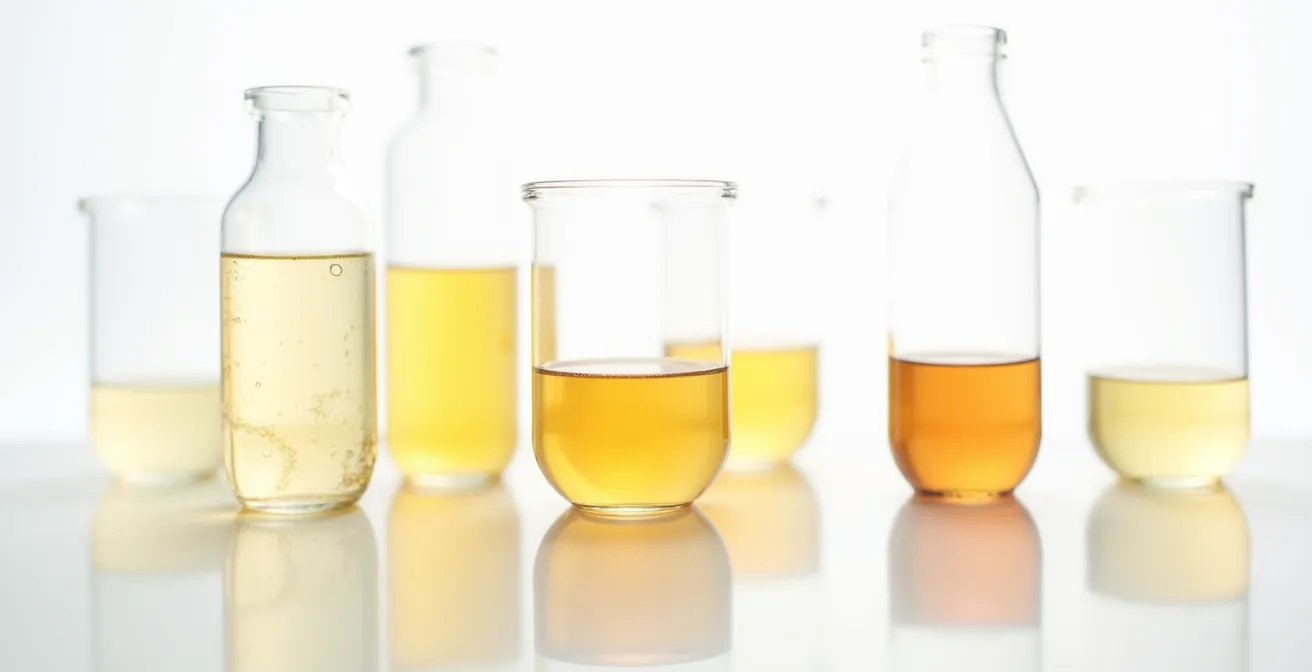
This technique provides far superior stability compared to simple re-emulsification. As data from an analysis of emulsion stabilization methods shows, physical barriers created by hydrocolloids offer longevity that other methods cannot match.
| Method | Mechanism | Stability Duration | Works with Vegan Mayo |
|---|---|---|---|
| Water Re-emulsification | Dilution and re-mixing | Minutes to hours | Yes |
| Lecithin Addition | Surfactant action | Days | Yes |
| Agar Network (0.2%) | Physical barrier | Weeks | Yes |
| Xanthan Gum (0.1%) | Viscosity increase | Days to weeks | Yes |
When to Pair White Chocolate With Caviar for Molecular Harmony?
The pairing of white chocolate and caviar, pioneered by chefs like Heston Blumenthal, is a classic of molecular gastronomy. It works because both ingredients share key flavor compounds (amines), creating an unexpected harmony. However, the pairing presents a physical challenge: temperature. Traditional sturgeon caviar must be served chilled, and its delicate texture would be destroyed by heat. This limits the pairing to a cold-on-cold application, which mutes some of the aromatic potential of the rich, fatty white chocolate.
This is where the unique properties of agar-agar enable a new dimension of sensory experience. By creating a “caviar” from a savory liquid (like a dashi or soy broth) using agar spherification, we are no longer bound by the thermal limitations of fish roe. Agar’s signature thermal hysteresis means that once gelled, it remains solid until it reaches a high temperature of around 85°C (185°F). This allows a chef to create warm umami pearls and serve them at 60°C (140°F).
When these warm agar pearls are paired with chilled, delicate shavings of white chocolate, a stunning temperature and texture contrast is achieved. The warmth of the pearls releases volatile aromatic compounds, while the chocolate begins to melt slowly on the tongue, creating a dynamic mouthfeel that is impossible with traditional caviar. As noted by Chef Grant Achatz, a master of this domain, this is only possible because of agar’s specific properties.
The molecular pairing works because agar’s unique thermal properties allow us to serve warm ‘caviar’ that won’t melt the chocolate, while the neutral taste of agar doesn’t interfere with the delicate flavor interplay.
– Chef Grant Achatz, Modernist Cuisine Symposium 2023
Why “Parfum” on a Label Can Hide 100+ Undeclared Chemicals?
In the world of cosmetics and fragrances, the term “parfum” or “fragrance” is a legal loophole. It is considered a trade secret, allowing manufacturers to include a proprietary blend of potentially hundreds of synthetic and natural chemicals without disclosing them individually. For the consumer, this creates an opaque system where it’s impossible to know what you are applying to your skin. This lack of transparency is a stark contrast to the world of food additives, which, despite public skepticism, operates on a principle of precise identification.
Consider our key ingredient, agar-agar. On a food label in Europe, it is not hidden behind a generic term. It is clearly identified by its E-number: E406. This code doesn’t obscure information; it provides it. E406 refers specifically to a well-characterized polysaccharide extracted from red algae. Its properties, source, and safety have been rigorously evaluated. A case study in labeling, this demonstrates how transparent classification empowers consumers. Unlike a vague term like “natural flavor,” which can also be a proprietary blend of many compounds, E406 refers to a single, consistent substance.
The safety of E406 is a matter of public record. For instance, The European Food Safety Authority concluded in 2016 that its consumption presents no safety concerns for the general population at typical use levels. This is the power of a transparent system. While “parfum” forces a consumer to trust a brand’s secret formula, “E406” allows a consumer to trust a publicly verified scientific consensus. Agar-agar, in this context, becomes a symbol of what transparent ingredient labeling should be.
Schrödinger’s Cat Explained: How Can a Bit Be 0 and 1 at the Same Time?
Schrödinger’s Cat is a thought experiment designed to illustrate a paradoxical principle of quantum mechanics: superposition. In the quantum world, a particle can exist in multiple states at once (like a cat being both alive and dead) until the moment it is measured or observed. At that point, it “collapses” into a single, definite state. This concept of existing in an undefined state of potential can feel impossibly abstract. Yet, we can create a tangible metaphor for it in the kitchen using agar-agar.
Consider a 1% agar solution heated to 90°C. The polysaccharide chains are fully dissolved and moving freely in the water—this is its liquid “sol” state. Now, let it cool. As it passes 50°C, it is still fully liquid. It is below its melting point, yet above its gelling point. In a metaphorical sense, the solution is in a state of superposition: it has the potential to be a gel, but the collapse into that state has not yet been triggered. It is neither fully a stable liquid nor a stable solid; it’s in a bistable state of potential.

The act of “measurement” in our kitchen experiment is temperature. The moment the solution’s temperature drops below 40°C (the gelling point), the system collapses. The polysaccharide chains rapidly link up to form a rigid polymer network, and the solution resolves into a single, definite state: a solid gel. The gradual cooling process is the observation that forces the potential to become reality. This dramatic phase transition from an indeterminate liquid state to a definite solid state provides a powerful, hands-on demonstration of the core idea behind Schrödinger’s famous cat.
Your Plan: A Kitchen Experiment in Quantum Collapse
- Prepare three identical 1% agar solutions, heated to 90°C to ensure full dissolution.
- Rapidly cool the first solution in an ice bath. Observe the near-instantaneous formation of a solid gel as it quickly passes the 40°C threshold.
- Allow the second solution to cool slowly at room temperature. Note the gradual but definite transition as it reaches its gelling point.
- Maintain the third solution in a water bath at 50°C. It will remain in its liquid “superposition” state indefinitely, holding the potential to become a gel.
- Finally, drop the temperature of this third solution below 40°C. You will witness the “state collapse” as it transforms into a solid gel, forced by the “measurement” of temperature.
Key Takeaways
- Agar-agar’s true power is its thermal hysteresis: it melts around 85°C but only sets below 40°C, a property that enables advanced culinary techniques.
- At its core, agar is a structural tool; its microscopic polymer network provides stability to gels, foams, and emulsions with scientific precision.
- Mastering agar requires a chemist’s mindset: controlling variables like concentration and temperature is more important than simply following a recipe.
Why Does Food Taste Better When Plated on Round White Dishes?
The long-standing belief in gastronomy is that food plated on round, white dishes is perceived as tasting better. Studies in sensory science suggest this is due to several psychological factors. The color white provides maximum contrast, making the food’s colors appear more vibrant and appealing. The round shape is thought to be more “harmonious” and focuses the diner’s attention toward the center. This traditional wisdom treats the plate as a passive canvas for the food.
However, a food chemist asks a different question: what if the plate was no longer a passive canvas, but an active participant in the flavor experience? Using agar-agar, we can completely subvert the traditional notion of plating. Instead of porcelain, we can create an edible “plate” from a firm, clear agar gel. This transparent disc becomes the base upon which the other components of the dish are arranged. But its function is not merely structural.
Because agar itself is flavorless, it is a perfect medium for carrying other flavors. Imagine a classic caprese salad served not on a white plate, but on a crystal-clear, basil-infused agar disc. Or consider delicate pieces of sushi resting on a savory, miso-flavored agar base. In this paradigm, the “plate” itself becomes an integral part of the flavor journey. The question is no longer about which color dish enhances perception, but how the dish itself can introduce a new layer of taste, texture, and temperature. This is the ultimate expression of integrated culinary design, moving beyond psychology and into the realm of applied food science.
Action Plan: Designing Edible Jewel Box Presentations
- Prepare a 0.8% agar solution with a flavorful, clear liquid (like a consommé or infused water) for a firm, crystal-clear gel.
- To add visual flair without clouding the gel, use minimal amounts of natural colorants like beet or spinach juice.
- Pour a thin layer (approx. 3mm) into a flat mold to create the base “plate” and let it set.
- Create stunning visual effects by suspending delicate herbs, edible flowers, or micro-vegetables in a second layer of liquid agar poured over the set base.
- Serve the final dish on this edible architecture, transforming the plate from a container into a core component of the meal itself.
By starting to view agar-agar and other ingredients through the lens of their physical properties, you are no longer just a cook following instructions. You are a designer of experience, an architect of texture, and a chemist in your own kitchen laboratory. The next logical step is to begin your own structured experiments.