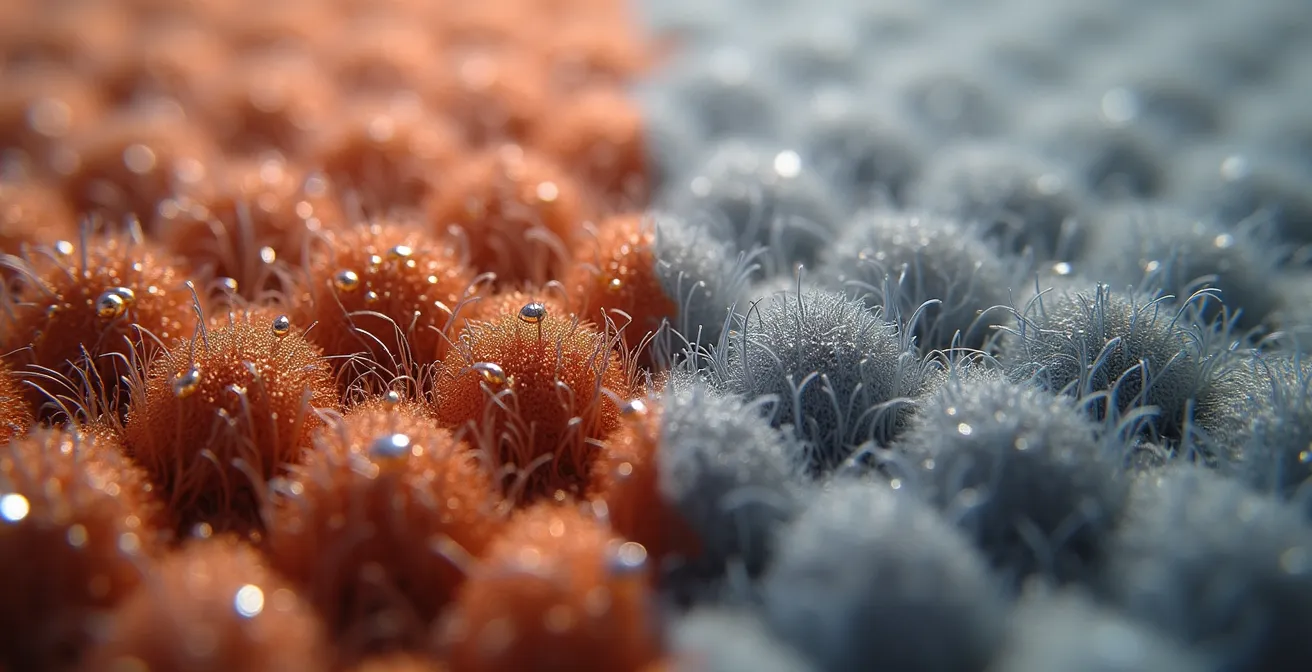
The shift from cotton to copper-infused fabrics isn’t just a trend; it’s a fundamental upgrade in material science, creating a complete performance ecosystem for the modern athlete.
- Superior moisture and thermal management go beyond simple wicking to actively regulate body temperature during intense exercise.
- Inherent antimicrobial properties of copper provide permanent odor control, enhancing hygiene and confidence.
- Advanced fabric engineering offers greater durability and a path toward a more sustainable and data-driven future for activewear.
Recommendation: Evaluate your activewear not as a simple garment, but as a piece of performance equipment where material integrity and bio-interactivity are key.
For decades, the athlete’s choice was simple: cotton. It was comfortable, breathable, and familiar. However, as training intensity and our understanding of human physiology have evolved, the limitations of traditional fabrics have become glaringly obvious. Cotton absorbs moisture, becoming heavy and cold, while basic synthetics often promise performance but deliver issues like odor retention and rapid degradation. The conversation around activewear has been stuck on generic terms like “moisture-wicking” and “breathable,” failing to address the deeper needs of a serious athlete.
But what if the next leap in performance isn’t just about keeping you dry? What if your apparel could become an active part of your performance ecosystem, interacting with your body’s biology to regulate temperature, eliminate bacteria, and even pave the way for more accurate biometric data? This is the paradigm shift being driven by advanced material science. We are moving beyond passive fabrics to bio-interactive textiles, where materials like copper are not just woven in for show but are engineered for a functional purpose.
This article deconstructs the invisible engineering that defines elite activewear. We will move beyond the marketing claims to explore the fundamental physics of moisture management, compare cutting-edge thermoregulation technologies, and confront the inconvenient truths of fabric durability and environmental impact. Ultimately, you will understand why copper-infused textiles represent not just an alternative to cotton, but a new chapter in what athletes can and should expect from their gear.
To understand this evolution, we will explore the core principles of fabric engineering, from fundamental mechanics to the future of smart apparel. The following sections break down each critical component of this performance ecosystem.
Summary: The Engineering Behind Smart Activewear: Why Copper is Outperforming Cotton
- How Does Capillary Action Keep You Dry During a Marathon?
- Phase Change Materials or Merino Wool: Which Regulates Body Temp Better?
- The Microplastic Mistake: How Washing Your Gym Clothes Pollutes Oceans?
- Why Your “High-Tech” Leggings Pill After Three Washes?
- When Will Mushroom Leather Be Durable Enough for Footwear?
- HIIT or Heavy Lifting: Which Boosts Metabolism Longer After the Workout?
- Apple Watch or Garmin: Which Detects Arrhythmia More Accurately?
- How to Burn More Calories in 20 Minutes Than in an Hour of Jogging?
How Does Capillary Action Keep You Dry During a Marathon?
The term “moisture-wicking” is ubiquitous in activewear, but the science behind it is a precise physical phenomenon: capillary action. Unlike cotton, which acts like a sponge and holds moisture against the skin, performance synthetics are engineered to function as a transport system. Imagine millions of tiny, hollow tubes woven together. When sweat is produced, the forces of cohesion (water molecules sticking to each other) and adhesion (molecules sticking to the fiber’s surface) pull the moisture into and along these channels, moving it from the high-humidity environment near your skin to the fabric’s outer surface where it can evaporate.
The effectiveness of this process is not accidental; it’s a result of deliberate fiber engineering. The shape, size, and spacing of the fibers are designed to maximize this pull. For a marathon runner, this is critical. A water-saturated cotton shirt can become heavy, cause chafing, and, in cooler conditions, lead to a dangerous drop in body temperature as the trapped moisture chills. A fabric with optimized capillary action, however, maintains its light weight and keeps the skin surface relatively dry, allowing the body’s natural cooling mechanism—evaporation—to function efficiently without compromising comfort or performance.
Industry standards, such as the AATCC 197 test, quantify this wicking performance by measuring how far moisture travels up a fabric strip in a set time. Fabrics designed for high-intensity athletics must demonstrate a high vertical wicking distance, a key indicator of their ability to manage sweat effectively. This is the foundational piece of material science that separates true performance gear from simple athletic-style clothing. It’s not magic; it’s physics engineered at a microscopic level.
Phase Change Materials or Merino Wool: Which Regulates Body Temp Better?
Once moisture management is solved, the next frontier is active thermoregulation. The body works tirelessly to maintain its core temperature, and your apparel can either help or hinder this process. Two dominant technologies are Phase Change Materials (PCMs) and natural merino wool. PCMs are microcapsules integrated into a fabric that absorb heat when you’re hot (turning from solid to liquid within the capsule) and release it when you’re cold (solidifying again). They act like a dynamic thermal buffer. Merino wool, conversely, is a natural wonder. Its fibers can absorb a large amount of moisture vapor before feeling wet, and the very structure of the fiber generates a small amount of heat as it absorbs moisture, a process known as “heat of sorption.”
Both are excellent, but they serve slightly different contexts. PCMs excel in environments with fluctuating intensity, like interval training, by actively managing sharp spikes in heat. Merino wool is a champion of insulation and comfort over long durations in variable weather, making it ideal for hiking or long-distance running. However, a third dimension is emerging: bio-interactivity. This is where copper-infused fabrics enter the conversation. While not a thermoregulator in the same way as PCMs or wool, copper’s high thermal conductivity helps to dissipate heat away from hotspots on the skin, contributing to a more even temperature distribution.
More importantly, copper introduces a permanent hygienic benefit that the others cannot match. As a naturally antimicrobial agent, it actively destroys odor-causing bacteria. In fact, independent laboratory testing confirms that high-quality copper-infused textiles can achieve a 99.9% reduction in bacteria within hours. This means that while PCMs manage heat and wool manages moisture and warmth, copper adds a crucial layer of active hygiene, making the fabric itself part of a healthier performance ecosystem.
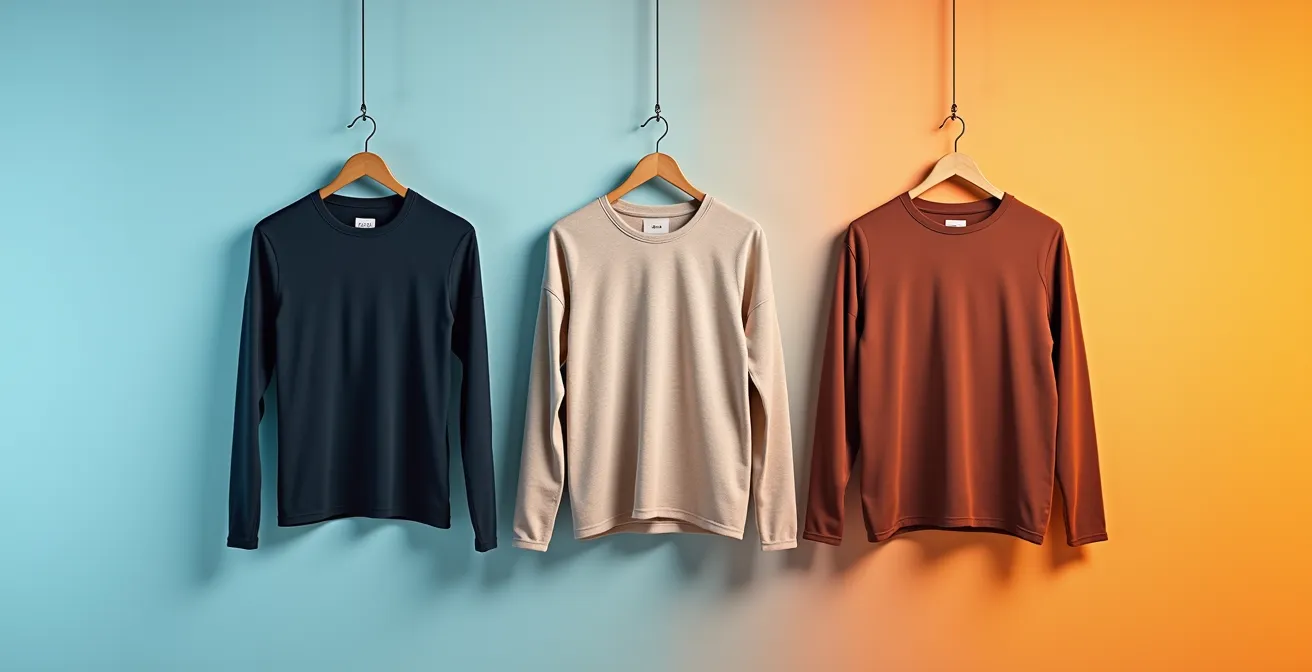
Ultimately, the choice is not just about which is “better,” but which combination of technologies best serves the athlete’s needs. The future of thermoregulation lies in hybrid designs that leverage the best of each material class—the active buffering of PCMs, the natural comfort of wool, and the hygienic, conductive properties of copper.
The Microplastic Mistake: How Washing Your Gym Clothes Pollutes Oceans?
The rise of synthetic performance wear has come with a hidden environmental cost: microplastic pollution. Every time you wash your polyester, nylon, or elastane gym clothes, they shed microscopic plastic fibers. These fibers are too small to be caught by standard wastewater treatment plants and flow directly into rivers and oceans. Once in the environment, they are ingested by marine life, accumulating in the food chain and posing a significant threat to ecosystems. The scale of the problem is staggering; some research shows that a single load of laundry containing synthetic clothes can release up to 700,000 individual microfibers.
This issue creates a paradox for the environmentally conscious athlete. The very fabrics that offer superior performance are also contributing to a global pollution crisis. This isn’t just an abstract problem; it’s a direct consequence of the materials we choose to wear during our workouts. The responsibility lies not only with consumers but also with the manufacturers who design these fabrics.
Governments are beginning to take action, recognizing the severity of the issue. A landmark example comes from France, which is leading the charge with innovative legislation. The French government’s anti-waste law for a circular economy includes a groundbreaking measure to combat this form of pollution.
Case Study: France’s Pioneering Microfiber Legislation
In a world-first legislative move, French Secretary of State Brune Poirson spearheaded a law targeting microfiber pollution. As of January 2025, all new washing machines sold in France must be equipped with a dedicated filter designed to capture microplastic fibers released from synthetic textiles during the wash cycle. This makes France the first country to mandate a technological solution at the appliance level, directly addressing the pathway of pollution from our homes to the waterways and setting a precedent for other nations to follow.
This highlights the importance of material integrity. Fabrics that are better constructed with higher-quality, longer-filament fibers tend to shed less. Furthermore, bio-interactive materials like copper-infused textiles offer an indirect solution: their antimicrobial properties mean they require less frequent washing, thereby reducing the overall number of microfibers released over the garment’s lifetime.
Why Your “High-Tech” Leggings Pill After Three Washes?
Pilling—the formation of small, fuzzy balls on the surface of a fabric—is a common frustration for anyone who has invested in “high-tech” activewear. It’s often mistaken for a sign of low quality, but the reality is more technical. Pilling is a direct result of the fabric’s construction, specifically the type of fibers used. Many fabrics, even expensive ones, are made from staple fibers, which are short, individual fibers twisted together to form a yarn. During wear and washing, friction causes the ends of these short fibers to work their way out of the yarn, where they tangle together to form pills.
In contrast, fabrics made from filament fibers—long, continuous strands—are far more resistant to pilling. Because there are no short ends to come loose, the surface of the fabric remains smooth even after repeated use and laundering. This is a clear example of “engineered obsolescence” versus “material integrity.” A manufacturer can create a soft, comfortable fabric using cheaper staple fibers, knowing it will look and feel great in the store but will quickly degrade, prompting the consumer to buy a replacement. A focus on material integrity, however, prioritizes long-term performance by selecting filament fibers and tighter, more resilient knit constructions.
The choice between these fiber types has a massive impact on the garment’s lifespan and, as discussed previously, its environmental footprint, as pilling is a visible form of fiber shedding. An athlete seeking durable, long-lasting gear should look beyond the marketing and understand the physical properties that contribute to a garment’s resilience. Fortunately, there are specific qualities you can look for to assess a fabric’s durability and minimize the risk of pilling and shedding.
Action Plan: Auditing Fabric for Maximum Durability
- Material Construction: Prioritize tightly knit or woven fabrics over loose constructions, as the dense structure physically locks fibers in place.
- Yarn Quality: Seek out garments made with high-twist yarns. The tighter twist provides greater strength and significantly improves resistance to pilling.
- Fiber Type: Opt for fabrics described as using filament fibers (long, continuous strands) instead of staple fibers (short, spun fibers) whenever possible.
- Fabric Treatments: Consider garments with specific anti-pilling or coating treatments, which can create a protective layer that reduces fiber release.
- Density Check: Feel the fabric. Denser, heavier weaves and knits generally have better material integrity and are less prone to surface degradation over time.
When Will Mushroom Leather Be Durable Enough for Footwear?
As we confront the environmental impact of traditional synthetics, the search for sustainable alternatives is accelerating. At the forefront of this innovation is mycelium, the root structure of fungi, which can be grown and processed to create a material that mimics leather. This “mushroom leather” represents a significant leap forward in bio-fabrication, offering a potentially biodegradable and cruelty-free alternative to both animal hides and petroleum-based synthetics. The promise is enormous: a material grown, not manufactured, that could drastically reduce the carbon footprint of the fashion and footwear industries.
The challenge, however, lies in durability. Early iterations of mushroom leather have struggled to match the tensile strength, abrasion resistance, and water repellency of traditional leather or high-performance synthetics. For an application as demanding as athletic footwear, which must withstand immense and repeated stress, current mushroom leathers are not yet viable. Scientists and material engineers are working to solve this by optimizing the species of fungi used, the growth conditions, and the finishing processes to enhance the material’s structural integrity.
This quest for durable biomaterials is driven by the urgent need to move away from our reliance on polluting plastics. According to research, our dependence on synthetic materials for clothing is a massive environmental issue, with synthetic clothing contributing an estimated 7.4 million metric tons of microplastics to the environment annually. Materials like mushroom leather, once they achieve the necessary performance benchmarks, could be a game-changer.
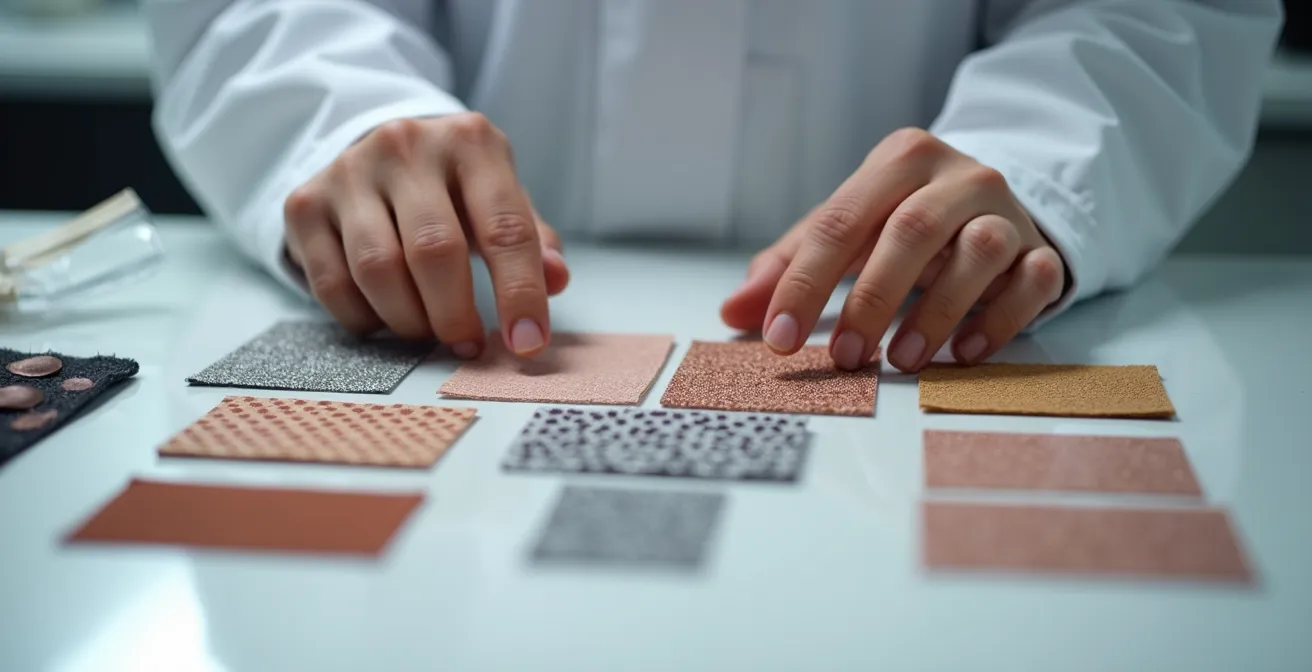
While copper-infused fabrics represent the peak of current performance synthetics, mushroom leather and other biomaterials represent the next horizon. The question is not *if* they will be durable enough for footwear, but *when*. Continued investment in material science will eventually bridge this gap, leading to a new generation of high-performance, truly sustainable activewear.
HIIT or Heavy Lifting: Which Boosts Metabolism Longer After the Workout?
The debate between High-Intensity Interval Training (HIIT) and heavy lifting for metabolic benefit often focuses on the workout itself, but the intensity of these training styles places extreme demands on your apparel’s thermoregulation capabilities. Both HIIT and heavy lifting sessions significantly elevate core body temperature and induce heavy sweating. The key difference is the pattern of heat production. HIIT involves short, explosive bursts of maximum effort followed by brief recovery, creating rapid thermal spikes. Heavy lifting involves sustained tension and shorter, more powerful efforts, leading to a more gradual but intense build-up of heat.
In both scenarios, ineffective apparel becomes a performance-limiting factor. If a fabric fails to manage moisture and heat, the body is forced to divert energy from muscular effort to thermoregulation. Cardiovascular strain increases as the heart works harder to pump blood to the skin for cooling, leading to premature fatigue. This is where the concept of a performance ecosystem becomes tangible. Your ability to complete that final set of squats or push through the last HIIT interval is directly influenced by your gear’s ability to create a stable microclimate around your skin.
As the TCA Athletic Wear Technology Team explains, the efficiency of this system is paramount. By effectively managing sweat, the right fabric allows an athlete to maintain a more optimal body temperature, which is crucial for sustaining peak performance.
By efficiently moving sweat away from the skin and allowing it to evaporate quickly, these fabrics help athletes maintain an optimal body temperature during physical activities.
– TCA Athletic Wear Technology Team, The Science Behind Moisture-Wicking Fabrics in Athletic Wear
Therefore, the question isn’t just “HIIT or heavy lifting?” but “Is my gear engineered to support the unique thermal demands of my chosen training style?” For intense workouts that produce significant heat and sweat, fabrics with advanced wicking and high thermal conductivity, like copper-infused textiles, provide a distinct advantage by helping the body regulate its temperature more efficiently, allowing you to focus energy on the workout itself.
Apple Watch or Garmin: Which Detects Arrhythmia More Accurately?
While athletes debate the merits of wrist-worn wearables like the Apple Watch and Garmin for tracking metrics like heart rate, a far more profound technological shift is happening at the intersection of textiles and electronics. The question of arrhythmia detection accuracy highlights a fundamental limitation of current devices: they primarily rely on photoplethysmography (PPG), which uses light to estimate blood flow at the wrist. This can be prone to inaccuracies caused by motion, sweat, and skin tone. The future of accurate, continuous biometric monitoring lies not on the wrist, but within the fabric of our clothes.
This is where data-driven textiles come into play, enabled by conductive fibers like copper. By embedding these highly conductive yarns directly into a compression shirt or sports bra, the garment itself can become a sensor. It can function like a wearable electrocardiogram (EKG), measuring the heart’s actual electrical signals across the chest—a far more accurate method for detecting irregularities like arrhythmia than the optical estimates from a watch. The credibility of copper in medical monitoring is already well-established; for instance, textiles enhanced with Cupron’s copper technology have been used in dozens of US hospitals for over 6.3 million patient days, demonstrating their safety and efficacy in demanding healthcare environments.
The key to this technology is not just using copper, but *how* it’s integrated. Topical sprays or superficially infused treatments wash out and lose effectiveness, offering neither permanent conductivity nor lasting antimicrobial benefits. True material integrity comes from embedding the copper within the fiber itself, making its properties a permanent part of the textile.
| Method | Durability | Effectiveness | Wash Resistance |
|---|---|---|---|
| Embedded Copper | Permanent – entire lifespan | Consistent antimicrobial properties | Withstands multiple washes |
| Infused Copper | Moderate – may diminish over time | Decreases with wear and washing | Effectiveness reduces with repeated washing |
| Spray-On Copper | Least durable | Requires frequent reapplication | Easily wears off with washing |
So, while we compare Apple Watch and Garmin today, the real question for the future is: when will our shirts provide more accurate health data than any device we wear on our wrist? The answer lies in the development of these advanced, bio-interactive, data-driven textiles.
Key takeaways
- True performance activewear is an engineered system, not just a piece of clothing. It actively manages moisture, temperature, and hygiene.
- Material integrity is paramount. Fiber type (filament vs. staple) and construction (knit density, yarn twist) determine a garment’s durability, pilling resistance, and environmental impact.
- The future of activewear is bio-interactive and data-driven, with conductive fibers like copper paving the way for garments that double as highly accurate health monitors.
How to Burn More Calories in 20 Minutes Than in an Hour of Jogging?
The secret to burning more calories in less time lies in workout intensity. High-Intensity Interval Training (HIIT) is scientifically proven to be vastly more effective for this than steady-state cardio like jogging. By pushing your body to its maximum capacity for short bursts, you trigger a significant “afterburn” effect, where your metabolism remains elevated for hours post-workout. However, your ability to reach and sustain this level of intensity is not just a matter of willpower; it is fundamentally supported or limited by your performance ecosystem.
This is where all the engineering principles we’ve discussed converge. To perform at your peak during a grueling 20-minute HIIT session, every component must function flawlessly. First, your apparel’s capillary action must immediately pull sweat away to prevent overheating and discomfort. Second, its thermoregulation properties must help dissipate the massive amount of heat generated, keeping your core temperature stable. Finally, and crucially for long-term use and confidence, the fabric’s bio-interactive properties come into play.
Garments without effective antimicrobial technology quickly become a breeding ground for odor-causing bacteria. This not only creates an unpleasant experience but can also lead to hesitation in pushing to the max. Copper-infused fabrics solve this problem at a molecular level. By continuously killing microbes on contact, the fabric remains fresh, even after intense sweating. This self-sterilizing property means the garment can be worn with confidence and requires less frequent washing, which aligns with both convenience and sustainability goals. It allows the athlete to focus entirely on performance, free from the distraction or self-consciousness of odor.
In essence, to unlock the full metabolic potential of a 20-minute HIIT workout, you need gear that works as hard as you do. An engineered garment that manages moisture, regulates heat, and guarantees hygiene is not a luxury—it is the essential foundation that enables you to push your physiological limits and achieve superior results.
Begin upgrading your performance ecosystem today by choosing activewear engineered with material integrity and bio-interactive properties to support your most intense workouts.