
Reaching for a probiotic pill to fix your gut may seem logical, but in my clinical experience, it often overlooks the true source of healing.
- Fermented foods provide a complete ‘synbiotic matrix’—a living ecosystem of diverse bacteria, their fuel (prebiotics), and beneficial byproducts (postbiotics) that supplements lack.
- The unregulated supplement industry often fails to deliver the promised potency, whereas the natural fermentation process selects for the most resilient and effective microbial strains.
Recommendation: Prioritize whole, traditionally fermented foods as your primary gut health intervention, using targeted supplements only for specific, short-term clinical needs.
If you’re grappling with digestive discomfort, bloating, or irregular moods, you’ve likely been advised to take a probiotic. The logic seems sound: your gut is out of balance, so adding “good” bacteria should fix it. This has fueled a multi-billion dollar supplement industry promising a quick fix in a convenient capsule. Patients in my practice often arrive with a bag full of these pills, frustrated by the lack of lasting results. They’ve been sending troops into battle without supplies, a strategy doomed to fail.
The common approach focuses on simply increasing the number of bacteria, but this is a profoundly reductionist view of gut health. A healthy microbiome isn’t just a collection of bacteria; it’s a thriving, complex, and resilient ecosystem. The real question isn’t how many bacteria we can swallow, but how we can cultivate a rich and diverse internal garden that sustains itself. This is where the ancient wisdom of fermentation offers a solution that modern science is only beginning to fully appreciate.
The fundamental difference lies in a simple concept: you can’t restore a forest by scattering a handful of seeds from a single type of tree. You need the soil, the fungi, the insects, and the complex web of life that supports growth. Fermented foods are that complete ecosystem in a jar. They don’t just deliver probiotics; they deliver a holistic intervention designed by nature to rebuild and nourish your gut from the ground up. This article will deconstruct the science behind why this living matrix is profoundly more effective than its sterile, isolated counterpart.
To understand the mechanisms at play, we will explore the intricate connections between your gut and overall well-being, compare the building blocks of microbial health, and uncover the common dietary mistakes that sabotage your progress. This guide will provide a clear framework for using food as your primary medicine to restore true digestive harmony.
Contents: Why Fermented Foods Outperform Probiotic Supplements
- How Does Poor Gut Health Trigger Anxiety and Mood Swings?
- Prebiotics vs. Probiotics: Which Is Missing From Your Diet?
- The Sugar Mistake That Feeds Bad Bacteria and Causes Bloating
- How to Conduct an Elimination Diet to Pinpoint Sensitivities?
- When to Start Taking Probiotics During an Antibiotic Course?
- How Does Salt and Water Turn Cabbage Into a Superfood?
- The “Plant-Based” Burger Mistake That Spikes Your Sodium Intake
- Why Your Omega-6 Intake Is Probably Too High and Causing Inflammation?
How Does Poor Gut Health Trigger Anxiety and Mood Swings?
The notion that your gut and brain are in constant communication—the “gut-brain axis”—is no longer a fringe theory; it’s established medical science. Your gut is home to a vast network of neurons, often called the “second brain,” which produces a significant portion of your body’s neurotransmitters, including about 95% of its serotonin. When the gut microbiome is in a state of imbalance, or dysbiosis, it directly impacts this communication highway, often leading to mood disturbances, anxiety, and even depression.
The primary mechanism behind this disruption is inflammation. A gut dominated by pathogenic bacteria produces inflammatory molecules that can cross into the bloodstream and even breach the blood-brain barrier, triggering neuroinflammation. This low-grade, chronic inflammation is a key driver of mood disorders. The solution, therefore, is not just to manage symptoms but to quell the inflammation at its source: the gut. This is where a diet rich in fermented foods demonstrates its profound therapeutic potential.
Fermented foods are powerful anti-inflammatory agents. A landmark 10-week diet of high-fermented foods not only increased microbiome diversity but also led to a measurable decrease in 19 different inflammatory proteins in the blood. By repopulating the gut with beneficial microbes that actively reduce inflammation, these foods directly calm the gut-brain axis, leading to improved mood regulation and mental clarity. Unlike a pill, which offers a transient dose of bacteria, fermented foods initiate a sustainable shift toward an anti-inflammatory gut ecosystem.
Prebiotics vs. Probiotics: Which Is Missing From Your Diet?
In the conversation about gut health, the terms “probiotics” and “prebiotics” are often used interchangeably, but they represent two distinct and equally crucial components. Probiotics are the beneficial live microorganisms themselves. Prebiotics, on the other hand, are the specific types of dietary fiber that these beneficial microbes feed on. A probiotic supplement provides the “seeds,” but without the “fertilizer” of prebiotics, they are unlikely to survive and thrive in the competitive environment of your gut.
This is the most significant failing of most probiotic pills. They are an incomplete solution. Fermented foods, however, are a naturally perfect synbiotic matrix: they contain both the beneficial probiotic bacteria and the prebiotic fibers from the original vegetable or dairy source. The bacteria are delivered in their native environment, complete with the exact food they need to colonize and flourish. This synergy is a key reason for their superior efficacy.

Furthermore, the sheer scale of microbial life in fermented foods dwarfs what’s found in the average supplement. While a high-potency probiotic pill might contain 10-50 billion colony-forming units (CFUs), a small four to six-ounce serving of fermented vegetables like sauerkraut can contain around 10 trillion bacteria. This isn’t just a quantitative difference; it’s a qualitative one. You are introducing a diverse, populous, and self-sustaining community, not just a few isolated strains, which creates a more powerful and resilient shift in your microbiome’s composition.
The Sugar Mistake That Feeds Bad Bacteria and Causes Bloating
One of the most common dietary mistakes I see in patients with bloating and digestive distress is a high intake of sugar and refined carbohydrates. While you may be focused on adding “good” bacteria, you could be simultaneously feeding the “bad” ones. Pathogenic yeasts, like Candida, and harmful bacteria thrive on sugar. It’s their preferred fuel source, allowing them to multiply rapidly, produce gas, and contribute to the very dysbiosis you’re trying to correct. A diet high in sugar is like pouring gasoline on the fire of gut inflammation.
This is where the reliability of your probiotic source becomes critical. Many people turn to supplements, assuming they are a controlled, reliable dose of beneficial microbes. However, the supplement industry is notoriously under-regulated. In fact, a Consumer Labs analysis found that 5 of the 19 top-selling probiotic supplement brands tested did not contain the number of live microorganisms stated on their label. Some had far less, meaning you may not be getting the therapeutic dose you paid for, while still consuming a diet that feeds the harmful bacteria.
In contrast, while the process is natural, high-quality fermented foods offer a more transparent and biologically robust solution. Reputable producers, for instance, use third-party lab testing to verify their products contain a high concentration of beneficial bacteria, often up to 14 billion CFUs of lactic acid bacteria per serving. More importantly, the fermentation process itself is a form of natural quality control. Only the strongest, most resilient strains of bacteria can survive the acidic environment, ensuring you’re consuming microbes that are fit for the challenging journey through your digestive tract. This is a level of “viability testing” that no factory can replicate.
How to Conduct an Elimination Diet to Pinpoint Sensitivities?
For individuals with chronic digestive issues, an elimination diet can be a powerful diagnostic tool to identify trigger foods. The process involves removing common culprits (like gluten, dairy, soy, and corn) for a period of 3-4 weeks and then systematically reintroducing them one by one to observe the body’s reaction. However, during the restrictive phase, it’s important to continue supporting gut health, and this is where a strategic approach to fermented foods and probiotics is essential.
While a strict elimination phase might temporarily limit diverse fermented foods, it can be an opportune time to use a targeted, high-quality probiotic supplement to maintain microbial balance without introducing confounding variables. Once the reintroduction phase begins, single-ingredient fermented foods become your best ally. For example, when reintroducing cabbage, you could use traditional sauerkraut. For dairy, you could use plain kefir. This allows you to test your tolerance to both the food and its fermented version, which can sometimes be better tolerated due to the breakdown of compounds like lactose.
This approach is particularly valuable for conditions like Irritable Bowel Syndrome (IBS). A recent meta-analysis has shown that fermented milk products with probiotic properties may serve as a viable alternative therapy for managing IBS symptoms. By carefully integrating these foods, you not only identify triggers but also actively introduce beneficial microbes that can improve tolerance over time.
Action Plan: Using Fermented Foods in Your Elimination Diet
- Initial Phase: During the strict elimination period, consider a soil-based or other hypoallergenic probiotic supplement to support your gut without adding new food variables.
- Reintroduction: Use pure, single-ingredient fermented foods for testing. Start with a small amount (e.g., one teaspoon of sauerkraut) to test your reaction to a new food category.
- Histamine Check: If you suspect histamine intolerance, begin with lower-histamine fermented options like certain yogurts or kefirs before moving to higher-histamine foods like aged sauerkraut or kimchi.
- Monitor & Record: Keep a detailed journal of the food reintroduced, the amount, and any symptoms (digestive, skin, mood) that appear within 72 hours.
- Diversify Post-Diet: Once your trigger foods are identified and removed, focus on building a diverse diet rich in a wide variety of well-tolerated fermented foods to enhance microbial resilience.
When to Start Taking Probiotics During an Antibiotic Course?
Antibiotics are a cornerstone of modern medicine, but they are indiscriminate. While targeting a harmful infection, they also decimate the beneficial bacteria in your gut, creating a microbial vacuum that can lead to antibiotic-associated diarrhea (AAD) and long-term dysbiosis. The question is not *if* you should support your gut during this time, but *how* and *when*.
This is one of the few scenarios where I specifically recommend a targeted probiotic supplement over fermented foods. The goal here is acute damage control, and certain strains have been clinically proven to be effective. The most well-researched is a beneficial yeast called Saccharomyces boulardii. It’s not killed by antibiotics, so it can be taken concurrently to occupy space in the gut, prevent pathogenic overgrowth, and reduce the risk of diarrhea. Indeed, clinical trial data shows that only 9.5% of patients receiving S. boulardii experienced diarrhea, compared to 22% of those receiving a placebo. To be effective, start the probiotic on the first day of the antibiotic course and continue it for at least a week after finishing.
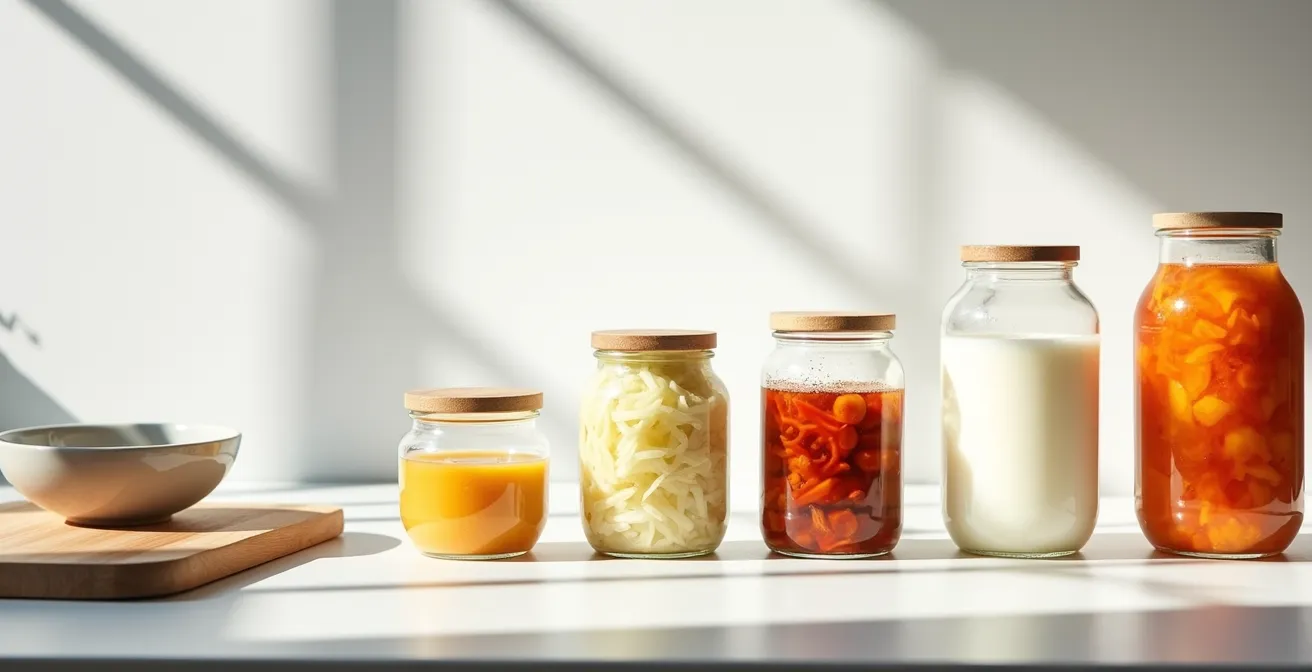
Once the antibiotic course is complete, your focus must shift from damage control to active rebuilding. This is where fermented foods retake center stage. Your gut is now a ‘clean slate,’ ready for repopulation. Introducing a wide variety of fermented foods—kefir, kimchi, sauerkraut, yogurt—will provide a diverse array of beneficial bacteria to re-establish a healthy, resilient ecosystem. Using a supplement provides a few known species, but using a variety of fermented foods provides the thousands of unique strains needed to rebuild a truly robust microbial forest.
How Does Salt and Water Turn Cabbage Into a Superfood?
The transformation of humble cabbage into the probiotic powerhouse of sauerkraut is a masterful act of ecological engineering, orchestrated by nothing more than salt and water. This process, known as lacto-fermentation, creates an environment where beneficial bacteria thrive and pathogenic ones cannot survive. The salt draws water out of the cabbage, creating a brine. Submerged in this brine, the cabbage is protected from oxygen, which allows anaerobic (non-oxygen-requiring) Lactobacillus species to begin their work.
These bacteria consume the natural sugars in the cabbage and, as a byproduct, produce lactic acid. This acid is a natural preservative, further inhibiting the growth of spoilage microbes. But the magic doesn’t stop there. As the bacteria feast, they produce a range of beneficial compounds known as postbiotics. One of the most important of these is butyrate, a short-chain fatty acid that serves as the primary fuel source for the cells lining your colon. Research demonstrates that butyrate causes an increased expression of tight junction proteins, which are the molecules that seal the gaps between intestinal cells, thus maintaining the integrity of the gut barrier and preventing “leaky gut.”
Furthermore, the brine itself becomes a complex, living ecosystem. A fascinating analysis of sauerkraut brine reveals it contains bacteriophages—viruses that selectively target and eliminate weaker or less-desirable bacteria. This process of “microbial Darwinism” ensures that the strains that ultimately dominate the ferment are the most robust and best adapted. This is a level of natural selection for efficacy that a lab-grown, single-strain probiotic pill simply cannot replicate. You are not just getting bacteria; you are getting the victors of a microbial competition, conditioned for survival.
The “Plant-Based” Burger Mistake That Spikes Your Sodium Intake
In an effort to eat healthier, many people are turning to plant-based meat alternatives. While well-intentioned, this often means swapping a whole food for an ultra-processed food (UPF). These products are frequently packed with sodium, emulsifiers, and artificial binders that can be detrimental to gut health. The sodium in a UPF is there purely for flavor enhancement, whereas the salt in traditionally fermented foods serves a critical biological function: controlling the fermentation to ensure safety and select for beneficial microbes.
The impact on your gut microbiome is starkly different. Emulsifiers found in many processed foods, such as polysorbate 80 and carboxymethylcellulose, have been shown to erode the protective mucus layer of the gut, disrupt microbial balance, and promote inflammation. Fermented foods do the opposite. A 10-week diet rich in fermented foods has been found to not only increase gut bacteria diversity but also decrease markers of inflammation. This distinction is crucial for anyone seeking to improve their health through diet.
The following table illustrates the fundamental differences between these two categories of food. It highlights why choosing whole, traditionally prepared foods is always superior to relying on an industrially manufactured product, even if it carries a “plant-based” health halo.
| Characteristic | Ultra-Processed Foods | Fermented Foods |
|---|---|---|
| Sodium Purpose | Flavor enhancement only | Essential for fermentation process |
| Gut Impact | Detrimental (emulsifiers, additives) | Beneficial (probiotics, postbiotics) |
| Nutrient Density | Low, synthetic additions | High, naturally enhanced |
| Microbiome Effect | Disrupts diversity | Increases diversity |
Key Takeaways
- Fermented foods are complete ecosystems (a ‘synbiotic matrix’), providing not just probiotics but also the prebiotics that feed them and the postbiotics that heal the gut.
- The natural fermentation process creates beneficial postbiotics like butyrate, a compound that actively repairs the gut lining and reduces systemic inflammation.
- Unlike the often-unreliable supplement industry, the fermentation process acts as a natural quality control, selecting for the most robust and effective probiotic strains.
Why Your Omega-6 Intake Is Probably Too High and Causing Inflammation?
The modern Western diet is characterized by a significant imbalance in fatty acids, specifically an overabundance of omega-6s (found in vegetable oils like soy, corn, and sunflower) relative to omega-3s (found in fatty fish, flax, and chia seeds). While some omega-6 is essential, excessive amounts are converted into pro-inflammatory compounds in the body. This creates a state of low-grade, chronic inflammation that is a root cause of many modern diseases, from heart disease to autoimmune conditions and digestive disorders like Inflammatory Bowel Disease (IBD).
Combating this inflammatory fire requires a two-pronged approach: reducing omega-6 intake and increasing the consumption of anti-inflammatory foods. This is another area where fermented foods shine. As we’ve seen, they are a prime source of butyrate, and clinical research shows that butyrogenic diets can increase fecal butyrate concentrations and significantly reduce disease activity in IBD patients. They directly counter the inflammatory cascade at the gut level.
Moreover, the benefits extend beyond just postbiotics. The fermentation process can enhance the antioxidant capacity of the original food. As one research team noted, this provides another layer of anti-inflammatory protection.
Polyphenols in fermented foods act as antioxidants reducing oxidative stress and chronic inflammation, two key factors in neurodegenerative diseases.
– Research Team, Food & Function Journal
By providing a rich matrix of probiotics, prebiotics, postbiotics like butyrate, and enhanced polyphenols, fermented foods offer a multi-faceted strategy to counteract the pro-inflammatory nature of the modern diet. They don’t just add good bacteria; they help extinguish the systemic inflammation that drives disease.
To truly heal your gut, you must shift your mindset from adding isolated bacteria to cultivating a resilient internal ecosystem. The evidence is clear: the living, synbiotic matrix of fermented foods offers a depth of therapeutic benefits that a sterile pill cannot match. Start by incorporating one small serving of a traditionally fermented food, like sauerkraut, plain kefir, or kimchi, into your daily routine and begin the process of rebuilding your gut’s natural, vibrant health from the ground up.