The astronomical price of luxury isn’t about quality or logos—it’s payment for fluency in a hidden social language.
- Value is dictated by a subtle ‘status grammar,’ like stitching patterns and packaging rituals, not overt branding.
- Certain items like Hermès bags or vintage couture function as ‘narrative assets,’ appreciating in value by outperforming traditional investments.
Recommendation: To understand true value, learn to decode these signals, from the quiet confidence of unbranded quality to the investment potential of heritage craftsmanship.
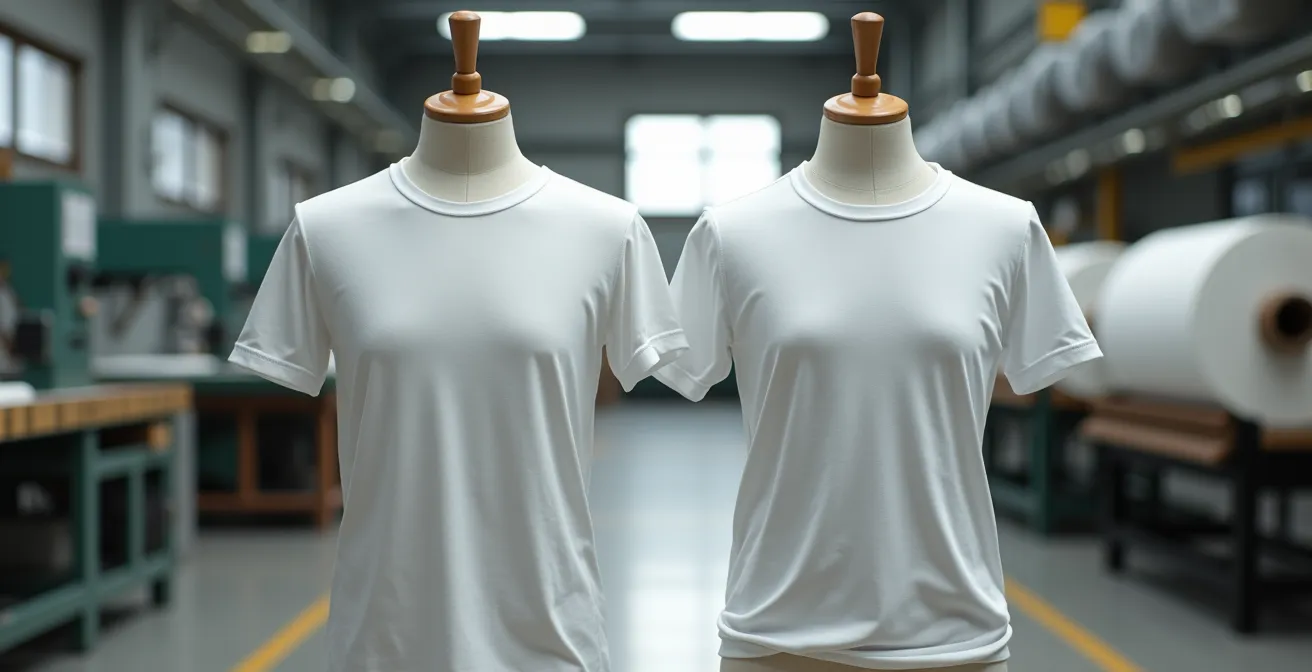
The question is both simple and maddening. You hold two cotton t-shirts, both originating from the same high-quality facility, yet one carries a price tag ten times higher than the other. The only discernible difference is a small, embroidered logo. Common logic suggests we are paying for marketing, brand prestige, or perhaps a marginally superior thread count. These are the comfortable, rational justifications we offer ourselves for a decision that is fundamentally irrational. But this explanation only scratches the surface of a much deeper, more complex human behavior.
The truth is, the value of that t-shirt is not contained within its fabric. It resides in a shared, unspoken language of social signaling. We are not just buying a garment; we are purchasing a specific place within a social narrative. The real mechanism at play is a sophisticated and often subconscious ‘grammar of status,’ a set of codes that we have been trained to read our entire lives. This grammar dictates what has value, why it has value, and how that value is communicated, often in the quietest of ways. The logo is merely the most obvious form of punctuation in this language; the real mastery lies in understanding the nuances.
This article decodes that grammar. We will move beyond the loud declaration of a logo to explore the subtle whisper of unbranded cashmere, the investment lexicon of an Hermès bag, the forensic details that betray a counterfeit, and even how this social syntax has migrated from our closets to our vacation photos. By understanding these rules, we can finally grasp why that t-shirt costs what it does, and what we are truly buying when we pay the price.
To fully explore the intricate world of luxury and perceived value, this guide breaks down the core components of this status grammar. The following sections will provide a detailed analysis, from the psychology of ‘quiet luxury’ to the tangible investment returns of iconic pieces.
Summary: Why Do We Pay 10x More for a Logo T-Shirt Made in the Same Factory?
- Why Billionaires Are Switching to Unbranded Cashmere?
- Hermès or Gucci: Which Bag Is a Better Store of Value?
- The Stitching Detail That Gives Away a “Superfake” Handbag
- The Packaging Mistake That Lowers the Perceived Value of Luxury Goods
- When to Buy From a Reseller vs Direct From the Boutique?
- The “It Bag” Mistake That Loses 60% of Value in One Season
- Why Seeing Vacation Photos Triggers Anxiety and How to Stop It?
- Why Is Vintage Haute Couture Outperforming Gold in Some Investment Portfolios?
Why Billionaires Are Switching to Unbranded Cashmere?
The most advanced level of the status grammar involves not displaying logos, but deliberately omitting them. When a billionaire forgoes a branded garment for a simple, unadorned cashmere sweater, they are making a powerful statement. This is the essence of ‘quiet luxury’: a signal so subtle it is legible only to those with a similar level of “signal literacy.” The message is not “I can afford this brand,” but rather, “My status is so secure, I don’t need a brand to validate it.” The quality of the material and the perfection of the cut become the new logos, understandable only to a select few.

This shift is not merely an aesthetic choice but a strategic one, reflecting a deeper change in consumer psychology. As Behavioral Science Consultant Dan Bennett observes, this trend gains traction in times of economic uncertainty. It allows the wealthy to signal their standing to peers without appearing ostentatious to the general public. This move toward understated, sustainable luxury is also a growing market force; analysis suggests that by 2025, 10% of the luxury fashion market will consist of sustainable, often less conspicuously branded, fashion. This demonstrates a move from value-as-logo to value-as-ethos.
Quiet luxury is having its moment in the sun. Consumer preference for quiet luxury is ever more relevant in times of economic hardship, as it allows consumers to signal their wealth to their peers, while avoiding being seen as someone who uses luxury ostentatiously.
– Dan Bennett, Behavioral Science Consultant
Ultimately, unbranded cashmere is the sartorial equivalent of a knowing nod. It is a communication device that filters its audience, proving that for the truly affluent, the most potent luxury is the ability to be understood without having to speak loudly. The garment itself is secondary to the message of confident and unassailable self-worth it projects.
Hermès or Gucci: Which Bag Is a Better Store of Value?
Once we understand that luxury is a language, it becomes clear that certain items are not just sentences, but entire, enduring stories. These are ‘narrative assets,’ and the debate between an Hermès Birkin and a seasonal Gucci bag is less about style and more about financial linguistics. A Gucci bag, often tied to a specific season’s trend, speaks a dialect that can quickly become dated. An Hermès Birkin, however, speaks a classic, universal language of scarcity, heritage, and craftsmanship that allows it to function as a legitimate store of value, much like a piece of art or a rare wine.
The numbers are stark. While most fashion items depreciate the moment they leave the store, the Birkin bag has demonstrated remarkable financial performance. Comprehensive Baghunter investment analysis shows that Birkin bags delivered an average of 14.2% annual returns between 1980 and 2015, significantly outperforming traditional assets like the S&P 500 (8.7%) and gold (-1.5%) over the same period. This transforms the bag from a mere accessory into a tangible investment vehicle.
Case Study: The Birkin That Doubled in Value
James Firestein, the founder of OpenLuxury, provides a concrete example of this phenomenon. He tracked a Black Togo 30 Birkin that doubled its market value in just five years. This appreciation is most pronounced with classic colorways and leathers, reinforcing the idea that timeless ‘brand codes’ are what hold value, not fleeting trends. Interestingly, he notes that while 75% of the owners he works with use their bags, a significant 25% treat them as pure investments, stored and admired like sculptures before their eventual resale. This highlights a conscious understanding of the bag’s dual role as both a status symbol and a financial asset.
So, which is the better store of value? The answer lies in the object’s narrative. A bag that tells a story of fleeting fashion is a consumable good. A bag that tells a story of enduring exclusivity and iconic design is an asset. Gucci may offer a thrilling chapter, but Hermès offers a volume that consistently appreciates on the shelf.
The Stitching Detail That Gives Away a “Superfake” Handbag
If a genuine Birkin is a ‘narrative asset’ written in a perfect grammar of status, then a counterfeit is an attempt to plagiarize it. In the past, this plagiarism was clumsy and easily spotted. Today, the rise of ‘superfakes’—high-end replicas that can cost thousands of dollars—has made the task of authentication exponentially more difficult. These are not cheap knockoffs; they are meticulously crafted forgeries designed to fool even discerning eyes. The market for these items is enormous; in 2023 alone, U.S. Customs and Border Protection seized $2 billion worth of counterfeit goods, with luxury items being the prime target.
As Sarah Davis, founder of the luxury resale site Fashionphile, notes, the quality of fakes has skyrocketed. “Twenty years ago, counterfeits were terrible,” she states. “Now, some counterfeit Birkins are $6,000 plus, handmade.” In this high-stakes environment, the difference between authentic and fake often comes down to the most minute details—the “accent” in the grammar of the bag. The most telling detail is often the saddle stitching. Authentic Hermès bags are hand-stitched by artisans using two needles, creating a slightly angled, imperfect pattern. No two stitches are identical. A machine, by contrast, produces a perfectly straight, uniform line of stitches. This small, almost imperceptible imperfection is the paradoxical proof of human craftsmanship and authenticity.
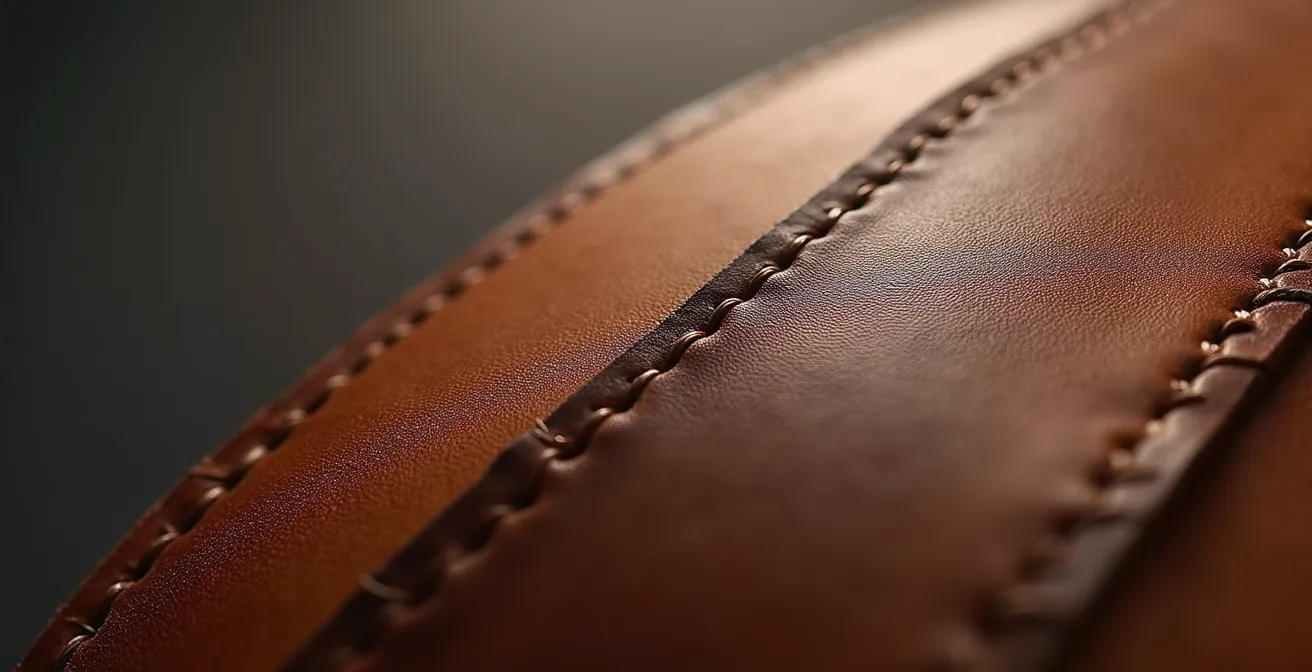
Other tell-tale signs include the weight and quality of the hardware, the precision of the heat-stamped logo, and the specific scent of the leather. However, it is the stitching that remains the most reliable indicator for an expert. It reveals the difference between a product made by a single artisan over many hours and one produced by a machine in minutes. It is the signature that cannot be perfectly forged, a subtle testament to the human element that superfakes, for all their sophistication, can never fully replicate.
The Packaging Mistake That Lowers the Perceived Value of Luxury Goods
The grammar of status extends far beyond the product itself. The experience of acquiring and unboxing an item is a crucial part of its narrative, and packaging is the opening chapter. A common mistake is to view packaging as a mere container. For luxury brands, packaging is a ritualistic tool designed to build anticipation and reinforce the item’s value before it’s even seen. Flimsy materials, poor construction, or a thoughtless unboxing sequence can shatter this carefully constructed perception, effectively lowering the product’s worth in the consumer’s mind, regardless of the quality of the item inside.
Luxury packaging is a multi-sensory performance. The weight of the box, the sound of a magnetic clasp, the texture of the ribbon, and even the scent of the tissue paper are all deliberately choreographed. This process serves to slow down the moment of revelation, transforming it from a simple transaction into a memorable event. In an age of social media, this “unboxing” ritual has also become a powerful form of user-generated marketing, turning the customer’s living room into a stage for the brand’s story.
Your Action Plan: The 5 Elements of Premium Packaging Psychology
- Weight and haptic feedback: Use heavy, substantial boxes with satisfying magnetic clasps to subconsciously trigger a perception of quality.
- Multi-sensory coherence: Ensure that the visual aesthetic, tactile feel of the materials, and even the scent of the packaging are aligned.
- Ritual choreography: Design a deliberate, multi-step unboxing sequence with layers of tissue, ribbons, or dust bags to build anticipation.
- Decompression zones: Create an initial 3-5 seconds of neutral visual space (e.g., a simple inner card) before revealing the main product.
- Instagrammable moments: Engineer the packaging to be inherently photogenic, encouraging customers to share their unboxing experience as free marketing content.
Case Study: LVMH’s Evolution of the Luxury Box
Luxury conglomerates like LVMH understand this implicitly. Their 2024 Social and Environmental Responsibility Report highlights significant investment in redesigning packaging for a ‘second life.’ By creating boxes and bags that are beautiful and durable enough to be kept and reused, they extend the brand experience indefinitely. This strategy cleverly meets modern sustainability goals while simultaneously ensuring the packaging continues to act as a physical embodiment of the brand’s value long after the initial purchase, turning a disposable wrapper into a permanent household fixture.
Therefore, skimping on packaging is not a cost-saving measure; it’s a value-destroying mistake. It’s like mumbling the first line of a great speech. The opportunity to establish prestige, create a lasting memory, and generate organic marketing is lost before the customer even touches the product.
When to Buy From a Reseller vs Direct From the Boutique?
Acquiring a ‘narrative asset’ like a Birkin bag presents a fundamental choice that speaks volumes about the buyer’s priorities: navigating the brand’s official channels or turning to the secondary resale market. This decision is a strategic trade-off between price, patience, and access. Buying directly from the boutique is the ‘official’ path, but it is a game of its own, often requiring a significant pre-spend on other items just to be offered the chance to purchase a top-tier bag. This process is about building a relationship with the brand and earning access—it’s the luxury equivalent of being invited into a private club.
The reseller market, in contrast, offers immediacy for a price. It bypasses the waitlists and purchase history requirements, but this convenience comes at a significant premium. The decision matrix is complex, as it pits the retail price against a much higher market price, and the certainty of authenticity against the need for rigorous verification.
The following table, based on recent market data, breaks down the key decision factors in this high-stakes choice. As an analysis of the investment potential of these bags shows, the path to ownership is as much a part of the asset’s profile as the bag itself.
| Factor | Direct from Boutique | From Reseller |
|---|---|---|
| Price Premium | Retail price (if available) | 1.4x to 2.2x retail (2024 data) |
| Wait Time | Up to 5 years for Birkin | Immediate availability |
| Purchase History Required | Often 2x bag value pre-spend | No requirements |
| Authentication Risk | Zero risk | Requires verification services |
| Future Access Benefits | Builds client relationship | No relationship building |
As OpenLuxury’s James Firestein emphasizes, the economics are not as simple as comparing two prices. The true investment value of a Birkin is unlocked by being able to acquire it at retail, a privilege that itself has a high, unwritten cost. This “buy-in” cost of required pre-spending must be factored into any serious investment calculation. The boutique path is for the player invested in the long game of brand relationship, while the reseller path is for the one who wants the asset now and is willing to pay market price for the privilege.
The “It Bag” Mistake That Loses 60% of Value in One Season
The allure of luxury investment can be misleading. While classic pieces like the Birkin have shown impressive returns, a common and costly mistake is confusing a fleeting ‘It Bag’ with a timeless asset. An ‘It Bag’ is a product of hype—a specific, often novel design heavily promoted for a single season. Its value is tied to its trendiness, and like all trends, it is destined to fade. When the hype recedes, its resale value can plummet, sometimes by more than 60% in a single season, leaving the buyer with a rapidly depreciating asset.
The key differentiator is the source of the bag’s value. An ‘It Bag’ derives its worth from novelty and marketing momentum. A true ‘narrative asset,’ conversely, derives its value from heritage, consistent brand codes, and proven scarcity. Even within a top-tier brand like Hermès, this distinction is crucial. Recent market fluctuations illustrate this point perfectly. As Bernstein Research’s tracking reveals, the resale premium for Birkin and Kelly bags fell from a peak of 2.2 times retail value in 2022 to a more modest 1.4 times in 2024, showing that even the strongest assets are subject to market corrections.
The Sellier Birkin: An Exception to the Rule
Amid this general market cooldown, a specific model defied the trend. According to Rebag’s Elizabeth Layne, the Hermès Sellier Birkin—a more structured, rigid version of the classic bag—saw its value increase by a staggering 52% year-over-year in 2024. Why? The Sellier construction represents a deeper, more historic ‘brand code’ of craftsmanship compared to the softer, more common Togo or Clemence leather versions. This demonstrates that sophisticated buyers are not just buying the ‘Birkin’ name; they are investing in specific, nuanced elements of its ‘grammar.’ The Sellier’s performance proves that heritage outlasts hype, and that true value resides in the details of craftsmanship, not the noise of a season.
The mistake, therefore, is buying the trend instead of the story. Chasing the ‘It Bag’ is a short-term gamble on fashion’s fickle mood. Investing in a piece with deep roots in a brand’s heritage is a long-term position on the enduring power of its narrative.
Why Seeing Vacation Photos Triggers Anxiety and How to Stop It?
The grammar of status is no longer confined to physical goods. In the digital age, experiences have become the new currency of social standing, and social media is the public ledger. A curated feed of exotic vacation photos functions in precisely the same way as a logo t-shirt or a luxury car: it is a public signal of one’s resources, taste, and position in the social hierarchy. This shift from material to experiential signaling is what can trigger a palpable sense of anxiety, often referred to as comparison anxiety or FOMO (Fear Of Missing Out), when we scroll through our feeds.

This anxiety is a primal response to a perceived gap in social standing. As luxury consumer psychology researcher Helena Moreau explains, “Social media has turned experiences like travel and fine dining into the new status symbols, functioning exactly like a logo T-shirt to signal social standing.” The problem is that we intellectually know these images are highly curated ‘highlight reels,’ yet our emotional brain processes them as reality. This creates a dissonance—an ‘aspiration gap’ between our perceived life and the seemingly perfect lives of others. Moreau points out that our rational brain then scrambles to create justifications for the feelings of inadequacy our emotional systems have already triggered.
Combating this requires a conscious effort to re-engage our rational brain. One effective technique is to practice the ‘Gratitude Reframe’: the moment anxiety hits, immediately list three specific, personal experiences you have recently enjoyed, no matter how small. This shifts the brain’s focus from lack to abundance. Another powerful method is to develop ‘Curated Reality’ awareness by actively viewing vacation posts not as documentary evidence, but as personal marketing campaigns. By reframing these posts as advertisements, you can appreciate them aesthetically without internalizing them as a personal benchmark. This cognitive shift transforms passive anxiety into an objective analysis of modern status signaling.
Key Takeaways
- True luxury value is not in logos but in a ‘grammar of status’—subtle codes like craftsmanship, materials, and heritage.
- Certain luxury items, or ‘narrative assets’ like the Hermès Birkin, function as investments that can outperform traditional markets.
- The language of status has evolved, with ‘quiet luxury’ (unbranded quality) and curated experiences (digital posts) becoming powerful new forms of signaling.
Why Is Vintage Haute Couture Outperforming Gold in Some Investment Portfolios?
The final, and perhaps most compelling, proof of the ‘grammar of status’ having real-world power is the emergence of tangible goods as a formal asset class. Beyond the well-documented case of handbags, vintage haute couture—one-of-a-kind, custom-fitted garments from legendary design houses—is now being recognized by sophisticated investors as a serious alternative investment. These pieces are the absolute pinnacle of craftsmanship and exclusivity, representing a unique moment in fashion history. Their irreplaceability makes them the ultimate ‘narrative asset,’ and their performance in some portfolios is beginning to challenge traditional safe havens like gold.
The investment thesis rests on extreme scarcity and cultural significance. A vintage Dior or Chanel couture piece is a work of art, and as a new generation of wealthy collectors enters the market, demand for these finite pieces is soaring. This asset class offers a unique benefit in turbulent economic times. As Elizabeth Layne, Chief Marketing Officer at Rebag, points out, “Designer bags, particularly from brands like Hermès, Chanel, and Louis Vuitton, are among the least volatile collectible assets and have some of the lowest correlations to stocks.” This low correlation makes them an attractive tool for portfolio diversification, acting as a hedge against volatility in conventional equity markets.
This is the ultimate validation of the initial premise. The value of a logo t-shirt, a Birkin bag, or a piece of vintage couture is not arbitrary. It is determined by a complex and consistent set of rules based on scarcity, narrative, craftsmanship, and signaling power. When an item masters this grammar, it transcends its material form to become a recognized store of value—a cultural artifact so potent that it can compete with, and even outperform, something as fundamental as gold. It proves that the stories we tell with our possessions have a tangible, measurable, and highly profitable worth.
The first step toward making smarter decisions—whether as a consumer or an investor in this space—is to develop your own ‘signal literacy.’ Begin by analyzing the items you desire not for their logos, but for the deeper stories they tell through their construction, history, and cultural resonance.