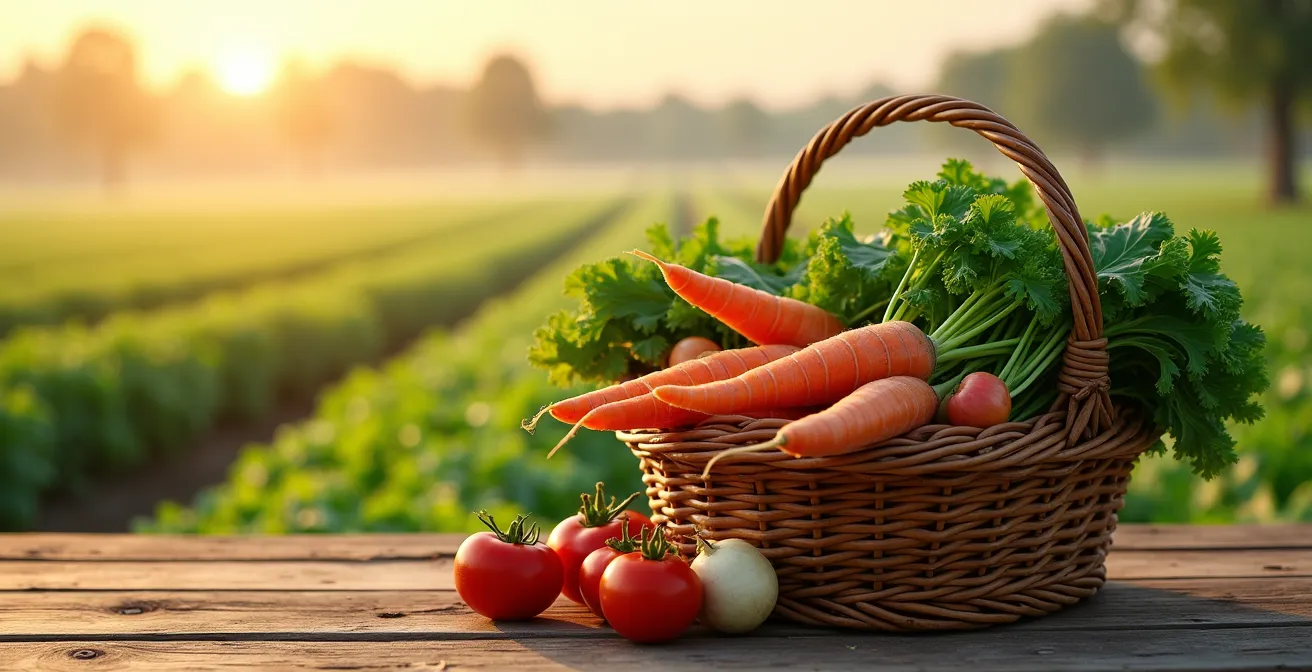
A Community Supported Agriculture (CSA) share is best understood not as a grocery expense, but as a direct micro-investment in a food-producing asset that hedges against retail price volatility.
- The upfront payment provides critical, stable capital to the farmer, eliminating market-driven price fluctuations for your family throughout the season.
- By learning basic preservation techniques, you transform seasonal abundance into year-round savings, drastically increasing the financial return on your initial investment.
Recommendation: Before dismissing a CSA on price, calculate your current weekly spending on produce and factor in the “hidden costs” of waste and nutrient loss from the conventional supply chain.
For a budget-conscious family, the initial price tag of a Community Supported Agriculture (CSA) share can induce sticker shock. A single, large payment at the start of the season feels counterintuitive compared to the familiar rhythm of weekly grocery bills. The common refrain is that this cost is justified because you’re “supporting a local farmer” and getting fresh food, which is true, but it misses the fundamental economic argument. This perspective often fails to satisfy the household’s chief financial officer, who needs to see a clear return on investment.
But what if we reframe the question entirely? What if a CSA share isn’t a simple purchase, but a strategic financial decision? Viewing it as a direct micro-investment in a food production asset changes the entire calculation. It’s a move that insulates your family from the price volatility of retail markets, reduces exposure to fragile global supply chains, and, when managed correctly, yields dividends far beyond a simple box of vegetables. This isn’t just about buying food; it’s about owning a slice of the harvest.
For those who prefer a visual format, the following video offers a glimpse into the community and agricultural realities that make the CSA model a unique partnership between producers and consumers.
In this article, we will act as agricultural economists, breaking down the true financial lifecycle of a CSA share. We will analyze the upfront investment, dissect the hidden costs of the conventional system you’re bypassing, and provide actionable strategies to maximize the financial and nutritional return for your family, proving why the higher upfront cost leads to greater value over time.
Summary: Why Does Local CSA Produce Cost More Upfront But Less Over Time?
- How to Cook Turnips for 3 Weeks Straight Without Getting Bored?
- Day 1 or Day 10:Why Are Traditional Banks Closing 15% of Their Branches Annually?
- The Supply Chain Mistake That Keeps Farmers in Poverty
- The Carbon Footprint of an Avocado: Why Local Apples Are Better?
- When to Blanch and Freeze Your CSA Surplus?
- Small Wind Turbine or Solar Array: Which Is Better for an Acre of Land?
- GMO vs. Organic: Which Is More Sustainable for Feeding 10 Billion People?
- How to Switch to a Plant-Based Diet Without Nutrient Deficiencies?
How to Cook Turnips for 3 Weeks Straight Without Getting Bored?
The question of dealing with a sudden abundance of a single vegetable, like turnips, is a metaphor for a core principle of CSA economics: maximizing the return on your food asset. Unlike a supermarket where you buy exactly what you need for a recipe, a CSA provides what the land yields. The initial reaction might be fatigue, but the economic reality is that this “surplus” is where the greatest value is unlocked. It forces a shift from a consumer mindset to a producer or resource manager mindset. Learning to transform this abundance is how you convert your initial investment into long-term savings.
Thinking like a chef or a homesteader is key. Each preparation method is a tool to extend shelf life and create value. Roasting provides immediate, delicious meals. Pickling and fermenting transform the vegetable into a high-value, probiotic-rich condiment that can last for months, effectively stopping the clock on spoilage. As one professional chef demonstrated, combining fermented and fresh turnips can even create a premium dish. This isn’t about enduring turnips; it’s about converting a low-cost bulk item into multiple, high-value food products for your pantry, effectively “locking in” the value you paid for in spring for consumption in fall or winter.
This approach has tangible health benefits as well. Embracing a variety of preparations for cruciferous vegetables like turnips is linked to positive health outcomes, with one meta-analysis showing a 15% reduction in breast cancer risk with consistent intake. By diversifying how you use your share, you are not just avoiding boredom; you are actively maximizing both the financial and nutritional ROI of your CSA investment.
Day 1 or Day 10:Why Are Traditional Banks Closing 15% of Their Branches Annually?
This title poses a question about institutional stability, which is precisely what a CSA offers to both the farmer and the member, in stark contrast to the volatility of traditional systems. The upfront payment at the start of the season (Day 1) is not a simple pre-payment; it’s an act of financial de-risking for the farm. It provides the farmer with a predictable, stable cash flow for purchasing seeds, maintaining equipment, and paying labor *before* the season even begins. This model is a radical departure from the conventional agricultural economy, where farmers often wait months for payment from distributors.
For the family, this direct investment acts as a powerful hedge against the price volatility seen in grocery stores. Your food cost is fixed for the entire season. Whether fuel prices spike, a drought in another region affects national supply, or market speculation drives up the cost of lettuce, your price remains the same. You have effectively locked in your produce costs, bringing a level of predictability to your family budget that is impossible to achieve through retail shopping. As agricultural systems expert John Hendrickson states, “CSA membership is not just buying produce: it’s making a commitment to support a farm, farmer, and farm family.”
This model is a significant and growing part of the local food economy. The data from the USDA Local Food Marketing Survey shows that direct-to-consumer sales, including CSAs, represent a substantial market, demonstrating its viability as a stable alternative to the traditional, debt-laden agricultural model. Your investment is part of a real, functioning economic system that prioritizes stability over speculation.
The Supply Chain Mistake That Keeps Farmers in Poverty
The single greatest mistake of the conventional food supply chain is the financial structure that places all the risk on the farmer while siphoning profits to middlemen. Farmers invest heavily in planting a crop with no guaranteed buyer or price, and once harvested, they often face significant payment delays from large distributors. The CSA model corrects this fundamental flaw by eliminating the middlemen. Your upfront payment is a direct infusion of capital to the producer, ensuring they have the resources to operate. According to a Michigan State University Extension report, CSAs provide 100% of seasonal revenue upfront, compared to the 60-90 day payment delays common in the wholesale system.
This direct relationship doesn’t just benefit the farmer; it translates into superior value for the member. Without the costs of transportation, long-term storage, packaging, and retailer markups, a larger portion of your dollar goes directly to the food itself. A landmark 1996 study in Wisconsin tracked CSA value against retail prices and found that CSA shares consistently offered better value than natural food stores, especially considering the superior freshness and diversity, with farms delivering over 60 different types of vegetables.
By investing in a CSA, you are not just buying produce; you are actively participating in a more efficient, ethical, and financially sound supply chain. You are cutting out the layers of cost and waste that define the industrial food system, ensuring the farmer earns a living wage and your family receives the highest quality food for your dollar. It is a direct vote for a system that values producers and consumers over distributors.
The Carbon Footprint of an Avocado: Why Local Apples Are Better?
As an economist, one must consider all costs, including those not reflected on a price tag. These are “externalities,” and the conventional food system is rife with them. The carbon footprint of transporting produce across continents, the nutrient loss during weeks of transit, and the market instability of global commodities are all real costs—they just aren’t paid at the checkout counter. They are paid through environmental degradation and lower-quality food. A CSA share, by its very nature, internalizes these costs, offering a more honest and ultimately lower “true cost.”
The comparison between a locally grown apple and an imported avocado is a stark illustration of this principle. The imported item carries a heavy burden of “food miles,” refrigeration, and price volatility tied to international markets. The local item does not. This efficiency has a measurable environmental impact; research published in the Journal of Cleaner Production demonstrates a potential 50% reduction in greenhouse gas emissions for CSA models compared to traditional food systems. The following table breaks down this economic and environmental disparity:
| Factor | Local CSA Apple | Imported Avocado |
|---|---|---|
| Food Miles | <50 miles | 1,500+ miles |
| Days from Harvest | 1-2 days | 2-3 weeks |
| Nutrient Retention | 95-98% | 60-75% |
| Price Volatility | Low (local factors) | High (global markets) |
| Carbon Footprint | 0.1 kg CO2e/lb | 2.5 kg CO2e/lb |
When you invest in a CSA, you are paying for food that is nutritionally superior and has a dramatically lower environmental impact. You are trading the hidden costs of the global supply chain for the transparent, all-in cost of local, sustainable production. For the budget-conscious family, this means you are not just getting vegetables; you are getting maximum nutrition and minimal environmental impact for your dollar.
When to Blanch and Freeze Your CSA Surplus?
Knowing when and how to preserve your surplus produce is not just a domestic skill; it is a critical financial strategy for maximizing the return on your CSA investment. The upfront cost of the share covers a season of abundance. Allowing any of that abundance to go to waste is, in economic terms, like throwing away dividends. Proper preservation is the mechanism by which you capture the full value of your “food asset” and extend its benefits throughout the year, directly combating food price inflation.
The financial impact of this is not trivial. By converting fresh, seasonal produce into frozen, canned, or fermented goods for winter consumption, you avoid buying expensive, out-of-season, and often imported equivalents from the supermarket months later. The University of Illinois Extension calculates that an average family can save up to $1,500 annually through effective food preservation. This saving is a direct financial return generated by your initial CSA share investment and your own labor.
Timing and technique are essential for preserving not just the food, but its nutritional and monetary value. Processing items at their peak freshness ensures you are locking in the highest possible quality. Freezing in meal-sized portions prevents future waste and makes weeknight cooking more efficient. This strategic approach to your kitchen transforms it from a place of consumption to a hub of food asset management.
Action Plan: Auditing Your Preservation Strategy
- Points of Contact: Identify the most perishable items first. Leafy greens (kale, chard) and delicate herbs need to be processed or frozen within 1-2 days.
- Collect & Inventory: Group similar items. If you have a surplus of root vegetables (carrots, beets, turnips), plan a single session for blanching and freezing.
- Check for Coherence: Does your preservation method match your family’s eating habits? If you never use canned beets, don’t can them. Focus on freezing pre-chopped vegetables for future soups or roasting.
- Assess Value: Prioritize preserving high-value items you would otherwise buy in winter. Freezing summer berries and bell peppers offers a greater financial return than freezing cabbage.
- Integration Plan: Label everything clearly with the item and date. Organize your freezer with a “use first” section for older items to ensure proper rotation and minimize waste.
Small Wind Turbine or Solar Array: Which Is Better for an Acre of Land?
While a family may not be deciding between a wind turbine and solar panels, this question highlights a crucial aspect of the CSA investment: farm resilience and diversification. The CSA farms that are the most stable and successful are often those that are not solely reliant on a single crop or revenue stream. They are diversified businesses. They may incorporate agritourism, raise livestock, or, as the title suggests, invest in renewable energy to lower their operating costs.
When you invest in a CSA, you are often supporting this more resilient and intelligent model of agriculture. Your upfront payment may help a farmer invest in high-tunnel greenhouses to extend the growing season, cover crops to improve soil health for future years, or infrastructure that makes the farm less vulnerable to weather and market shocks. This diversification is a hallmark of a healthy business and a secure investment. A farm that is financially healthy is one that can reliably deliver on its promise to its members.
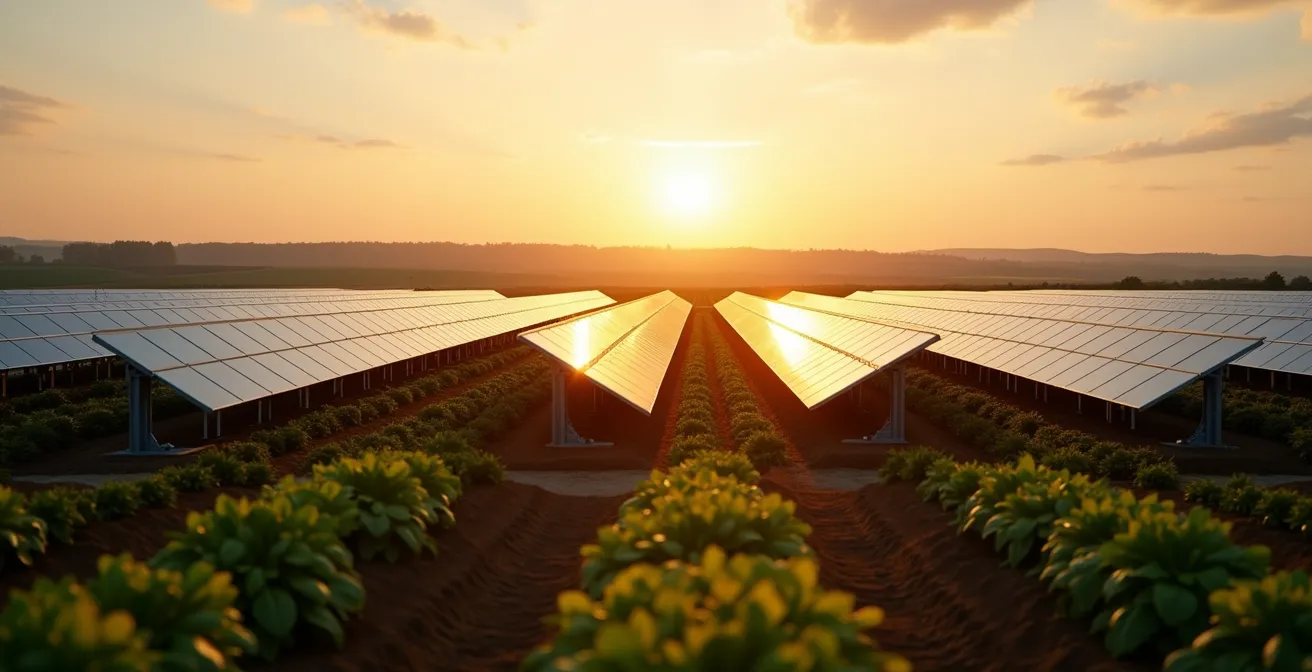
This business resilience contributes directly to the stability of local economies. For example, Idaho Preferred data shows that agriculture, largely from its 25,000 diversified farms, contributes 18% of the state’s total economic output. Your CSA share is a small but meaningful stake in a business model that is not only good for the environment but is also a cornerstone of local economic health. You are investing in a farm that is built to last.
GMO vs. Organic: Which Is More Sustainable for Feeding 10 Billion People?
The debate between large-scale agricultural models often misses a critical point that is central to the CSA ethos: sustainability is not just about yield per acre, but about the economic and social viability of the system as a whole. As an agricultural economist, the most sustainable system is one that can provide healthy food while ensuring its producers can earn a dignified living. The CSA model is a powerful engine for this kind of human-scale, equitable sustainability.
The sustainability question isn’t just about total tonnage, but about creating viable livelihoods for millions of small farmers.
– Dr. Tim Woods, Department of Agricultural Economics, University of Kentucky
Your investment directly supports this “human return.” By providing guaranteed income, the CSA model empowers small-scale farmers to compete against industrial agriculture. It creates opportunities for new farmers to enter the field and fosters more equitable social structures. For instance, data indicates that the CSA model is a more accessible path to farm ownership and operation for women than conventional agriculture. This is not just an ethical “feel-good” benefit; it is a fundamental component of a resilient and just food economy.
By choosing a CSA, you are investing your capital in a system that prioritizes farmer livelihoods, community health, and economic equity. This is a powerful social dividend that accompanies the financial and nutritional returns. It ensures that the people who grow your food are treated as skilled professionals and essential partners, not as interchangeable cogs in a massive industrial machine.
Key Takeaways
- A CSA share shifts your family’s role from passive consumer to active investor in a local food asset.
- The fixed upfront cost acts as a powerful hedge against retail food price inflation and market volatility.
- Maximizing your share through preservation techniques is the key to unlocking its full financial value and achieving significant year-round savings.
How to Switch to a Plant-Based Diet Without Nutrient Deficiencies?
Ultimately, the decision to join a CSA comes down to a personal financial calculation. This final question, while framed around dietary choices, is really about the bottom line: what will this cost, and what will I get? To determine if a CSA is a wise investment for *your* family, you must run the numbers. The first step is to track your current weekly spending on produce. Be honest and thorough. Include everything from the bag of onions to the fresh herbs to the organic salad mix.
Once you have a weekly average, multiply it by the number of weeks in the CSA season (typically 20-24). This gives you a baseline for comparison against the CSA’s upfront cost. According to Jefferson County data, typical CSA costs range from $20-$50 weekly for a diverse array of organic produce. Often, families find the CSA cost is at or below what they were already spending, especially when comparing organic-to-organic.
However, this simple comparison is incomplete. You must then factor in the “dividends” of your CSA investment: the superior nutritional value of just-picked produce, the savings from preserving surplus for the off-season, and the value of avoiding food waste. When you account for the reduced “true cost” and the strategies for maximizing your return, the initial upfront payment is revealed not as a high cost, but as the foundation of a smart, season-long investment in your family’s financial and physical health.
The next logical step is to move from analysis to action. We encourage you to research the CSA farms in your local area, compare their share sizes and prices, and perform this cost-benefit analysis for your own family’s budget.