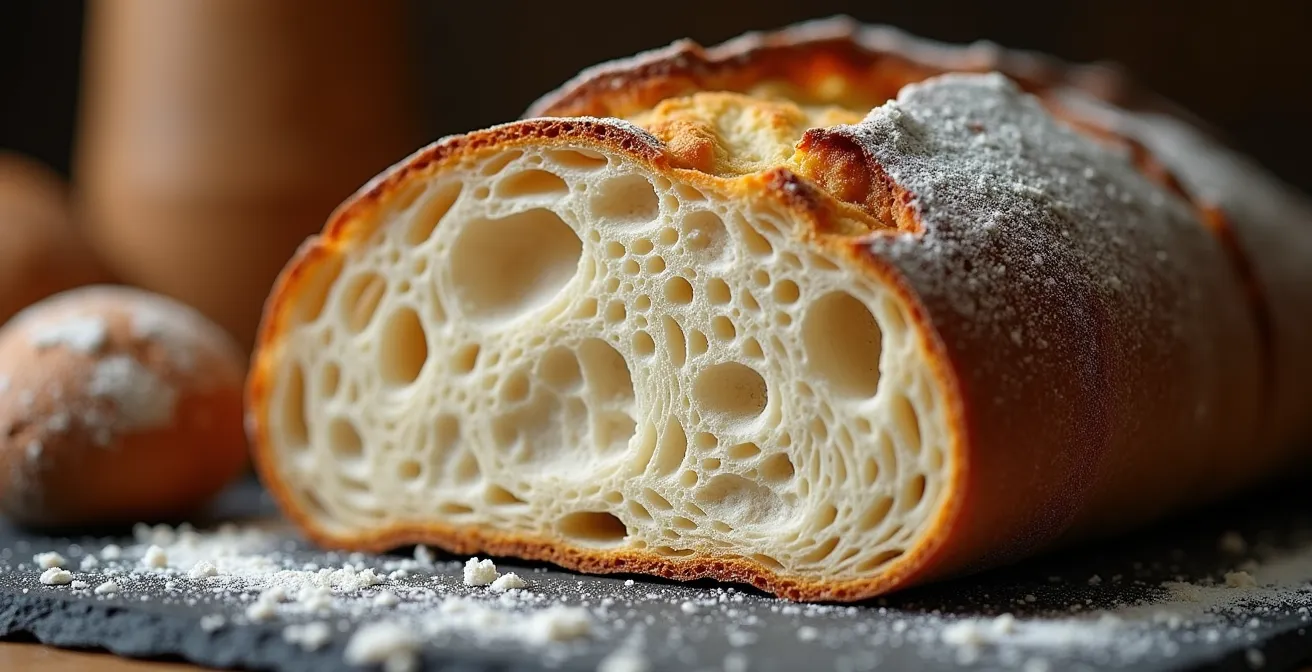
The digestive discomfort from modern bread often isn’t just about gluten; it’s the result of a sterile, ultra-fast baking process that leaves inflammatory compounds intact.
- Sourdough’s secret is a living microbial ecosystem that “pre-digests” the flour, breaking down complex carbohydrates (like fructans) and proteins.
- This slow fermentation process significantly reduces irritants, neutralizes anti-nutrients, and makes vitamins and minerals more bioavailable to your body.
Recommendation: Embrace whole, fermented foods like sourdough not as mere ingredients, but as complete, living food systems that work with your gut, not against it.
That familiar, uncomfortable feeling after eating a sandwich—the bloating, the gas, the general digestive malaise. For many, the immediate suspect is gluten. This leads to a frustrating journey through the world of often-disappointing gluten-free alternatives. But what if the problem isn’t just the gluten itself, but the way we’ve been preparing our bread for the last century? Commercial yeast bread is a marvel of speed and efficiency, but that speed comes at a cost to our digestive systems. It’s a sterile and rapid process that bypasses the ancient, transformative magic of slow fermentation.
This is where sourdough enters, not as a trendy fad, but as a return to a biologically intelligent way of making bread. The answer to its digestibility lies in a concept I call the living food system. A sourdough starter is not just “natural yeast”; it’s a complex, symbiotic city of wild yeasts and lactic acid bacteria working in concert. This microbial ecosystem fundamentally transforms the flour before it ever enters the oven. They don’t just make the bread rise; they pre-digest it for us. It’s crucial, however, to be clear: sourdough is not gluten-free and is absolutely unsafe for individuals with celiac disease. For those with a non-celiac sensitivity, however, this transformation can make all the difference.
In this article, we’ll explore the powerful mechanisms of this living food system. We’ll look beyond bread and see how the same principles of microbial transformation apply to turning cabbage into a superfood, preserving meats safely, and why a whole fermented food offers more than any isolated probiotic pill ever could. This is the story of how partnering with microbes can help us reclaim our food.
Contents: Unlocking the Science of Fermentation for Better Digestion
- How Does Salt and Water Turn Cabbage Into a Superfood?
- Water Bath or Pressure Canner: Which Is Safe for Green Beans?
- The Curing Mistake That Makes Your Homemade Bacon Too Salty
- The Ceramic vs Glass Crock Debate for Sauerkraut
- When to Move Your Kimchi to the Fridge to Stop the Sourness?
- Prebiotics vs. Probiotics: Which Is Missing From Your Diet?
- San Marzano or Local Tomatoes: Which Preserves the Authentic Taste of Nonna’s Sauce?
- Why Are Fermented Foods More Effective Than Probiotic Pills?
How Does Salt and Water Turn Cabbage Into a Superfood?
To understand the magic in sourdough, we first need to look at one of the simplest and most ancient forms of fermentation: making sauerkraut. The process seems almost too simple to be transformative. You take two basic ingredients, cabbage and salt, and end up with a nutrient-dense superfood teeming with beneficial bacteria. How does this happen? The secret lies in creating the perfect environment for the right kind of microbes to thrive while discouraging the ones that cause spoilage.
When you massage salt into shredded cabbage, it begins to pull water out of the vegetable’s cells through osmosis. This creates a natural brine that submerges the cabbage, cutting off its access to oxygen. This anaerobic (oxygen-free) environment is the first critical step. It immediately inhibits the growth of many undesirable molds and yeasts that need air to survive. But the salt does more than just create a brine; it acts as a bouncer at the door of a very exclusive club.
Only certain salt-tolerant microorganisms can survive in this brine. Chief among them are various species of Lactic Acid Bacteria (LAB), which are naturally present on the surface of the cabbage. These are the heroes of our story. They consume the natural sugars in the cabbage and, as a byproduct, produce lactic acid. This acid further lowers the pH of the environment, making it even more inhospitable to spoilage microbes. It is this controlled microbial takeover that transforms the cabbage, creating new flavors, preserving it for months, and producing a host of probiotics. This is the foundational principle of our living food system at work.
Water Bath or Pressure Canner: Which Is Safe for Green Beans?
While lacto-fermentation uses beneficial bacteria to create an acidic, self-preserving environment, other preservation methods like canning rely on heat to eliminate dangerous microbes. Understanding the science here, particularly the risk of Clostridium botulinum, is non-negotiable. This bacterium produces the deadly botulism toxin, but it cannot grow in high-acid environments. This is why the acidity of a food dictates the safe canning method.
There is a clear dividing line in the world of canning. According to food safety experts, the critical safety threshold for water bath canning is a pH of 4.6. Foods that are naturally high in acid, like most fruits, pickles, and properly fermented sauerkraut, have a pH below 4.6. They can be safely processed in a boiling water bath canner. The combination of their natural acidity and the heat of boiling water (212°F or 100°C) is sufficient to destroy any mold, yeast, or bacteria.
However, low-acid foods like fresh vegetables (including green beans), meats, and unfermented soups are a different story. Their pH is above 4.6, creating a potential breeding ground for botulism spores. Boiling water isn’t hot enough to kill these spores. To render them safe, you must use a pressure canner. This device traps steam to build pressure, allowing the internal temperature to reach 240°F (116°C) or higher—the only temperature that reliably destroys botulism spores. Mistaking one method for the other is one of the most dangerous mistakes a home preserver can make.
Your Essential Safety Checklist: Canning Low-Acid Foods
- Test your produce: Only high-acid foods (with a pH below 4.6) are safe for the water bath method. If in doubt, assume it’s low-acid.
- Use the right tool: For low-acid foods like green beans, you must use a pressure canner capable of reaching 240°F (116°C).
- Follow tested recipes: Always adhere to scientifically tested recipes and adjust processing times based on your altitude, as water boils at lower temperatures higher up.
- Never improvise acidification: Do not add acid (like lemon juice or vinegar) to low-acid foods unless you are following a specific, tested recipe that guarantees a safe final pH.
The Curing Mistake That Makes Your Homemade Bacon Too Salty
The principles of microbial control and environmental selection extend from vegetables to meat preservation, like curing bacon. A common mistake for beginners is simply burying the pork belly in salt. This “salt box” method is imprecise and often results in an overly salty, inedible product. A more scientific and reliable approach is equilibrium curing. This method involves using a precise amount of salt and cure calculated based on the weight of the meat. The goal is not to overwhelm the meat with salt, but to achieve a perfect balance—or equilibrium—where the meat is safely preserved without becoming a salt bomb.
This controlled approach has significant benefits. In fact, studies show that equilibrium curing methods can reduce sodium content by up to 30-40% compared to overly salted traditional methods, without compromising safety. The science behind this involves managing “water activity.” Salt and other curing agents draw moisture out of the meat’s cells and bind with the remaining water, making it unavailable for spoilage bacteria to use. This slows down and inhibits their growth.
This process is beautifully illustrated when you see the salt working on the meat’s surface. It’s not a passive process; it’s an active transformation of the muscle fibers.
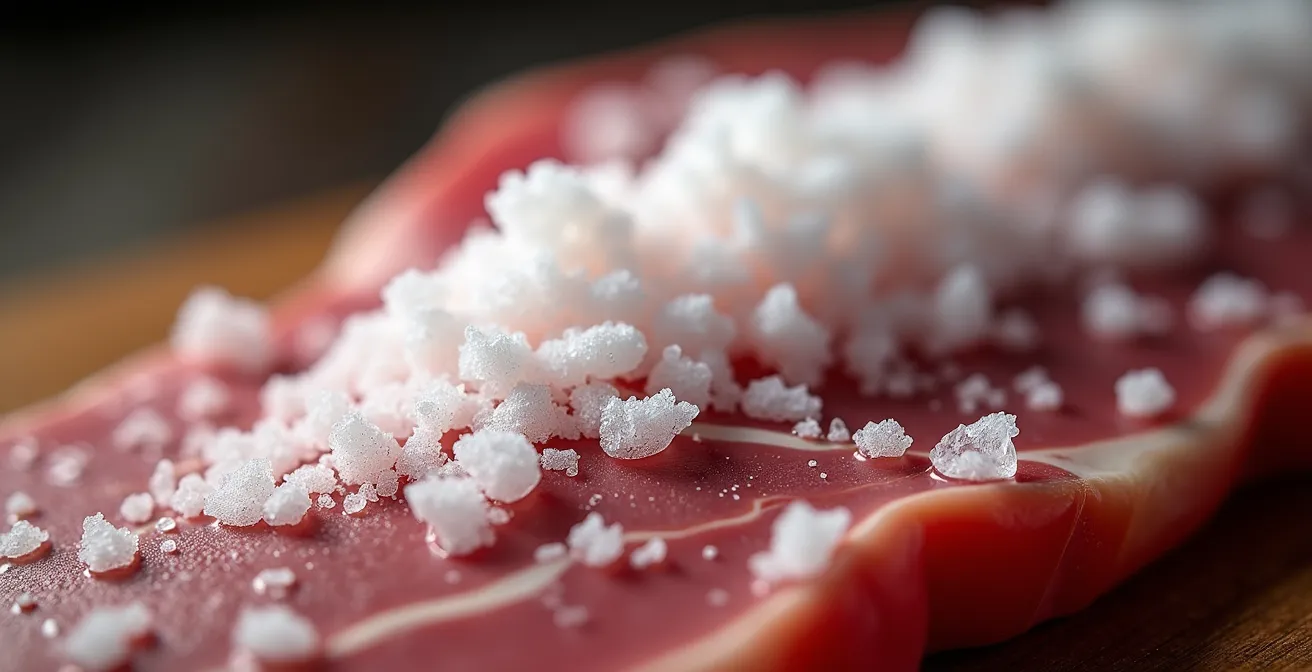
As the image shows, the salt crystals begin to denature the proteins and draw out moisture, changing the texture and color of the meat. Some curing processes also involve beneficial microbes that produce acids, further lowering the water activity and adding complex flavors, much like in sourdough or sauerkraut. This demonstrates that preservation is a delicate dance of chemistry and biology, where precision leads to a safer and more delicious result.
Case Study: The Role of Acetic Acid in Curing
Research highlights that organic acids, particularly acetic acid produced during some fermentation cures, are crucial for preservation. As one study notes, “Acetic acid slows down bacterial growth by lowering water activity, meaning the curing process occurs at a more measured pace while inhibiting harmful microorganisms.” This shows that, just like in sourdough, beneficial microbial byproducts play a key role in creating a safe and flavorful final product.
The Ceramic vs Glass Crock Debate for Sauerkraut
Fermentation by yeast and bacteria can alter the levels and bioavailability of phenolic compounds, sterols, vitamins, and minerals. They can also make the fiber more soluble, hence easier to digest!
– Cultured Guru Research Team, What Makes Sourdough Healthier and Easy to Digest
To achieve the kind of powerful transformation described above, you need to provide the ideal home for your microbial allies. When making fermented vegetables like sauerkraut, the vessel you choose plays a significant role in managing the fermentation environment. The two most common choices are traditional ceramic crocks and simple glass jars. While both can work, they offer very different levels of control over key environmental factors.
The primary advantage of an opaque ceramic crock is its ability to block out all UV light. Light can degrade certain vitamins (like riboflavin and vitamin C) and can encourage the growth of undesirable yeasts or molds on the surface of the ferment. Glass, being transparent, offers no such protection. Furthermore, the thick walls of a ceramic crock provide a high degree of thermal mass. This means it resists rapid temperature changes, keeping the fermentation environment stable—a condition that lactic acid bacteria love. Glass jars, on the other hand, heat up and cool down quickly, which can stress the microbial culture.
Finally, traditional ceramic crocks are designed with a water moat or channel around the rim. When the lid is placed, this channel is filled with water, creating a perfect anaerobic seal that lets carbon dioxide escape while preventing oxygen and contaminants from entering. To achieve this with a glass jar, you must purchase a separate airlock lid. For the artisan focused on creating the most stable and optimal environment, the ceramic crock is often the superior choice.
This table breaks down the key differences, sourced from an analysis of fermentation vessels.
| Feature | Ceramic Crock | Glass Jar |
|---|---|---|
| UV Light Protection | 100% opaque protection | Minimal protection |
| Thermal Mass | High – stable temperature | Low – temperature fluctuations |
| Anaerobic Seal | Water seal design | Requires airlock addition |
| Vitamin Preservation | Better retention of light-sensitive vitamins | Potential UV degradation |
When to Move Your Kimchi to the Fridge to Stop the Sourness?
Kimchi, the fiery and complex Korean fermented cabbage, is a dynamic, living food. Unlike sauerkraut, which often undergoes a long, slow fermentation, kimchi’s flavor evolution is more rapid and is managed through temperature. The question of when to refrigerate it is crucial to achieving your desired taste profile. Leaving it on the counter for too long results in an intensely sour product, as the lactic acid bacteria continue to proliferate and produce acid.
The process is a two-stage journey. The first stage is a short, active fermentation at room temperature. This is where the primary microbial activity happens, with various strains of LAB, including *Leuconostoc* and *Lactobacillus*, getting to work. This phase is where you see the most bubbling and activity. The goal here is to kickstart the fermentation and develop the initial tangy complexity. Scientific studies on kimchi production suggest that research indicates optimal kimchi fermentation occurs at 25°C for the initial phase, before moving to cold storage.
You can see this active phase in the tiny bubbles of carbon dioxide rising through the brine, a clear sign that your microbial ecosystem is hard at work.
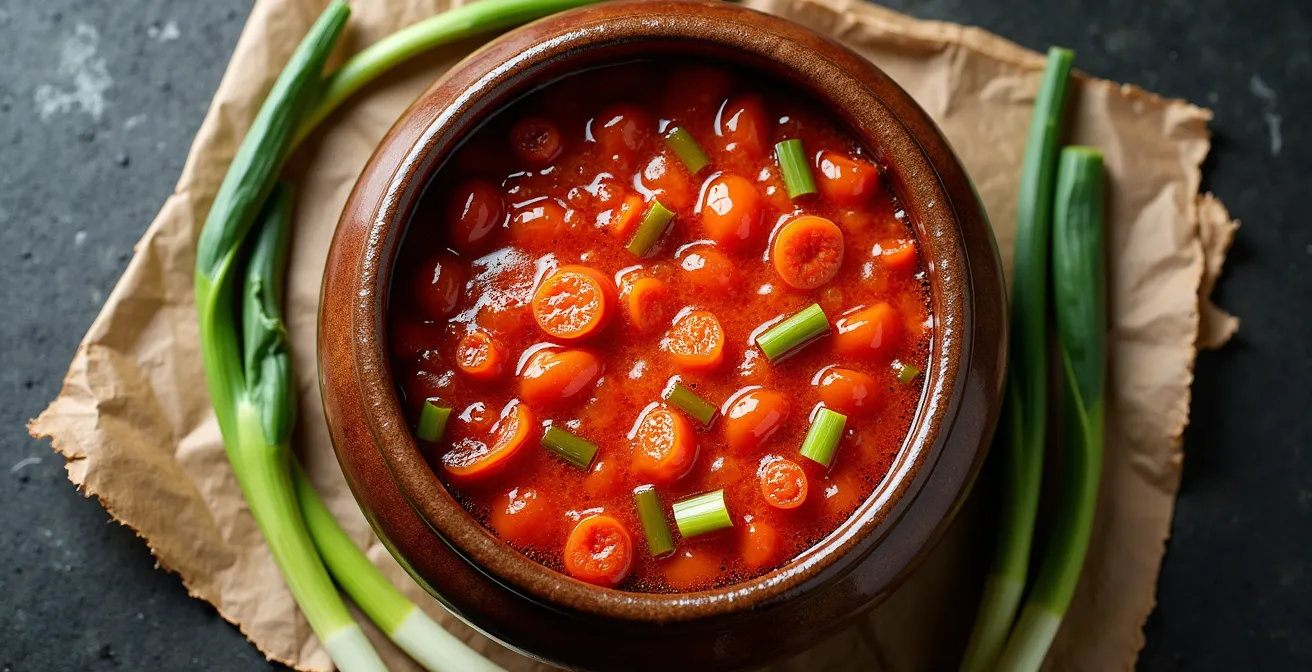
The second stage begins when you move the kimchi to the refrigerator, typically around 4°C (about 40°F). This is the “aging” or “ripening” phase. The cold doesn’t stop fermentation entirely, but it slows it down dramatically. The flavor continues to deepen and meld, but the explosive production of lactic acid is curtailed. So, when do you make the move? It’s a matter of taste. Start tasting your kimchi after 24 hours at room temperature. When it reaches a pleasant, fizzy tanginess that you enjoy, it’s time to move it to the fridge. This puts the brakes on the souring process, preserving it at that perfect stage of flavor for weeks or even months.
Prebiotics vs. Probiotics: Which Is Missing From Your Diet?
The terms “probiotic” and “prebiotic” are often used interchangeably, but they represent two sides of the same gut-health coin. Understanding the difference is essential to understanding why fermented foods like sourdough are so beneficial. It’s a classic case of the seeds versus the fertilizer.
Both are essential for gut health, but they serve different roles: Probiotics are live beneficial bacteria found in foods like yogurt, kimchi, and kefir. They help maintain a healthy balance of gut bacteria. Prebiotics are fibre found in foods like sourdough, beans, onions, garlic, and bananas. They feed the good bacteria, helping them thrive and support digestion.
– Good In Bread Research, Why Sourdough is good for your gut
Essentially, probiotics are the beneficial live bacteria themselves. When you eat kimchi or yogurt, you are directly introducing these good microbes into your gut. Prebiotics, on the other hand, are the food for these microbes. They are specific types of indigestible fibers that pass through your upper digestive tract and reach the colon, where they become a feast for your resident gut bacteria.
This is where sourdough truly shines for sensitive individuals. Wheat flour contains fructans, a type of carbohydrate known as a FODMAP (Fermentable Oligo-, Di-, Mono-saccharides And Polyols). For people with IBS and other sensitivities, FODMAPs can cause significant bloating and discomfort. During the long, slow fermentation of sourdough, the bacteria and yeast in the starter consume these fructans. The transformation is dramatic; studies have shown that proper sourdough fermentation can reduce FODMAP levels by 50-80%. But it gets better: the byproducts of this process include new, more soluble fibers that act as powerful prebiotics. So, sourdough simultaneously removes a major gut irritant and adds the perfect fuel to support a healthy microbiome.
San Marzano or Local Tomatoes: Which Preserves the Authentic Taste of Nonna’s Sauce?
The principle of starting with the best raw materials is as true for a simple tomato sauce as it is for an artisanal loaf of bread. The final quality of any product, whether fermented or cooked, is intrinsically linked to the inherent properties of its ingredients. The debate between using imported San Marzano tomatoes versus fresh, local varieties for an “authentic” sauce touches on this very idea of terroir and biological makeup.
San Marzano tomatoes, grown in the volcanic soil near Mount Vesuvius in Italy, are prized for a reason. They have a unique genetic makeup that gives them a lower seed count, thinner skins, and a less acidic, sweeter flavor profile. But from a structural perspective, one of their most important characteristics is their dense flesh and higher pectin content. Pectin is a natural structural polysaccharide found in plants that acts as a gelling agent. In fact, some analyses suggest that, on average, San Marzano tomatoes contain 20-30% higher pectin than many standard globe tomatoes.
This higher pectin level means that when the tomatoes are cooked down, the sauce naturally thickens to a luscious consistency without becoming watery or needing a long reduction time. This preserves a fresh, vibrant tomato flavor. While a beautiful, sun-ripened local tomato might have an incredible flavor eaten raw, it might lack the structural integrity to produce a classic sauce. This doesn’t mean local tomatoes are inferior; it simply means they are biologically different. True authenticity, therefore, comes from understanding the inherent properties of your ingredients and choosing the right one for the job, just as a baker chooses a specific wheat variety for its protein content and fermentation potential.
Key takeaways
- Fermentation is an act of “pre-digestion” where microbes break down complex compounds before you eat them.
- The slow sourdough process dramatically reduces common gut irritants like FODMAPs (fructans) found in wheat.
- A whole fermented food provides a diverse ecosystem of bacteria and nourishing prebiotics, a synergy that isolated pills cannot replicate.
Why Are Fermented Foods More Effective Than Probiotic Pills?
In our quest for better gut health, it’s tempting to reach for a quick fix in the form of a probiotic supplement. While these pills can be beneficial in certain situations, they are a pale imitation of the complex, living ecosystem found in a truly fermented food. The difference comes down to three key factors: diversity, synergy, and bioavailability.
First, diversity. A typical probiotic supplement contains a handful of lab-grown bacterial strains, often between one and ten. A naturally fermented food, however, is a bustling metropolis of microbial life. Studies show that fermented foods contain 100+ strains vs 1-10 strains in supplements, a staggering difference in microbial diversity. This rich community works together, performing a wide range of functions that a few isolated strains simply cannot. A healthy gut thrives on this kind of diversity.
Second, synergy. Fermented foods don’t just contain probiotics; as we’ve discussed, they are also rich in prebiotics—the very food these bacteria need to thrive. As Fermentelli’s research team notes, “During the fermentation process, sourdough creates prebiotics, compounds that feed healthy gut bacteria.” This creates a synbiotic package: you are delivering not just the workers (probiotics), but their lunchbox (prebiotics) as well. Furthermore, the microbes have already started the digestive process for you. They “partially digest some of the bread’s components before it even reaches your stomach,” which means less work for your gut and better nutrient absorption.
Finally, there’s the food matrix itself. The nutrients in the food are transformed and made more bioavailable. In-vivo studies confirm that the entire system of fermented bread leads to better digestibility compared to its unfermented counterparts. The food acts as a protective vehicle, ensuring more of the beneficial bacteria survive the harsh journey through the stomach to colonize the gut. A pill is an isolated ingredient; a fermented food is a complete, living delivery system, and that makes all the difference.
Begin your journey into the world of fermentation today. Start by exploring a local bakery for a true, slow-fermented sourdough loaf, or try making your own sauerkraut. Embrace food as a living system and discover how partnering with these microscopic allies can transform your health.